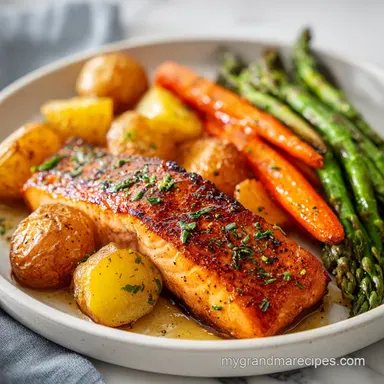
One Pan Garlic Herb Salmon Veggies: Failure-Proof
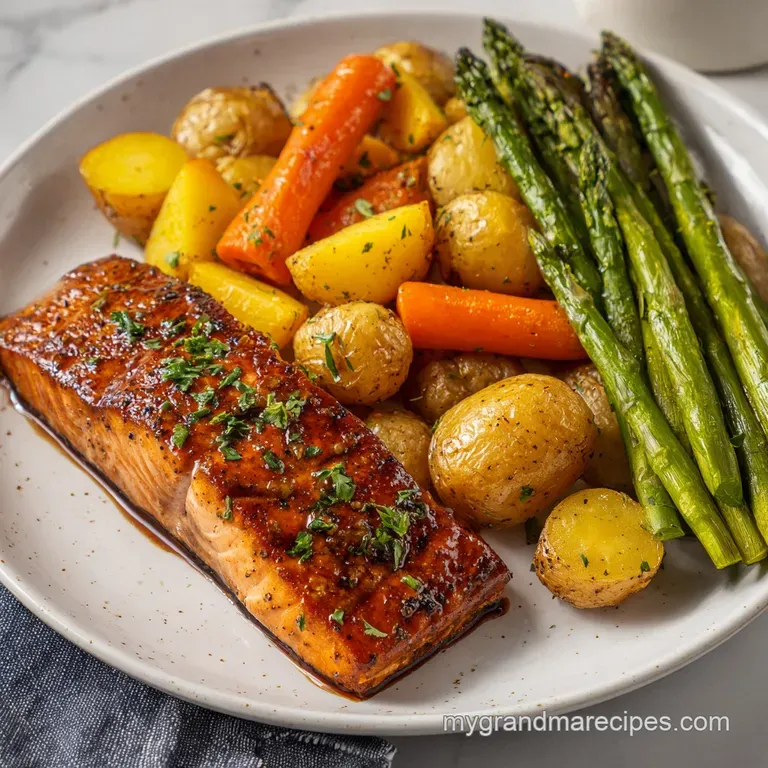
- Time: 10 min active + 20 min cooking = Total 30 mins
- Flavor/Texture Hook: Velvety garlic butter with shatter crisp potato edges
- Perfect for: Busy weeknights or a low stress date night
Ever catch that smell of roasting garlic and lemon hitting the oven heat? It's the kind of aroma that actually makes you stop whatever you're doing and walk straight into the kitchen. I remember the first time I tried to do a "one pan" meal.
I threw everything in at once - the potatoes, the salmon, the greens - and it was a disaster. The salmon was basically a piece of leather, and the potatoes were raw in the middle. I almost gave up on the whole "sheet pan" trend.
But then I realized the secret isn't about the pan; it's about the timing. Once I started treating the pan like a schedule rather than a bucket, everything changed. This one pan garlic herb salmon veggies approach is basically a cheat code for dinner.
You get the richness of the butter, the zing of the lemon, and a complete meal with almost zero cleanup.
Trust me, once you see how the salmon juices mingle with the roasted carrots and potatoes, you'll never go back to cooking these separately. It's a modern way to handle a classic protein, and it's honestly the most reliable way to ensure your fish stays juicy while your veggies actually get some color.
Why one pan garlic herb salmon veggies work
The real trick here is managing the different cooking speeds of your ingredients. If you've ever wondered why some sheet pan dinners feel soggy, it's usually because the vegetables released too much moisture at the same time the protein was trying to sear.
By roasting the denser roots first, we evaporate that excess water before the salmon even touches the pan.
The Staggered Start: Potatoes and carrots need way more heat and time than fish. Giving them a 10 minute head start ensures they are tender without overcooking the salmon.
Fat Based Flavor Delivery: Butter is a carrier. By whisking the herbs and garlic into melted butter, the flavors bond to the salmon and veggies more effectively than oil alone.
Over High heat Roasting: 400°F is the sweet spot. It's hot enough to brown the edges of the potatoes but not so hot that it burns the garlic before the salmon is done.
Moisture Control: Using parchment paper prevents the salmon skin from sticking and keeps the vegetable juices from scorching onto the metal.
| Prep Style | Time Investment | Texture Outcome | Best For |
|---|---|---|---|
| Fresh Ingredients | 10 mins | Crisp, bright, aromatic | Weekend dinners |
| Shortcut (Pre cut) | 5 mins | Softer, more uniform | Ultra fast weeknights |
I've found that using fresh herbs makes a massive difference here. While dried parsley is fine in a pinch, fresh dill adds a grassy, bright note that cuts through the richness of the salmon.
If you're in a rush, pre cut baby potatoes are a lifesaver, but they tend to be a bit softer than the fresh ones you chop yourself.
Component Analysis
| Ingredient | Science Role | Pro Secret |
|---|---|---|
| Salmon Fillets | Main protein & fat source | Keep skin on to protect the flesh from direct heat |
| Unsalted Butter | Flavor emulsifier | Brown it slightly for a nuttier taste |
| Garlic | Aromatic base | Mince finely to avoid large, burnt chunks |
| Lemon Juice | Acidic balancer | Add at the end to keep the flavor "bright" |
The Essential Gear
You don't need a professional kitchen for this, but a few specific tools make it a breeze. First, a large rimmed sheet pan is non negotiable. If the pan is too small, the vegetables will crowd each other and steam instead of roast, leaving you with mushy carrots.
I always use parchment paper. Not just for the easy cleanup, but because it creates a slight buffer between the pan and the food, which helps the salmon skin stay intact when you lift it off. You'll also want a small whisk or fork for the garlic butter and a sharp chef's knife to get those potato halves uniform.
Step-by-step Instructions
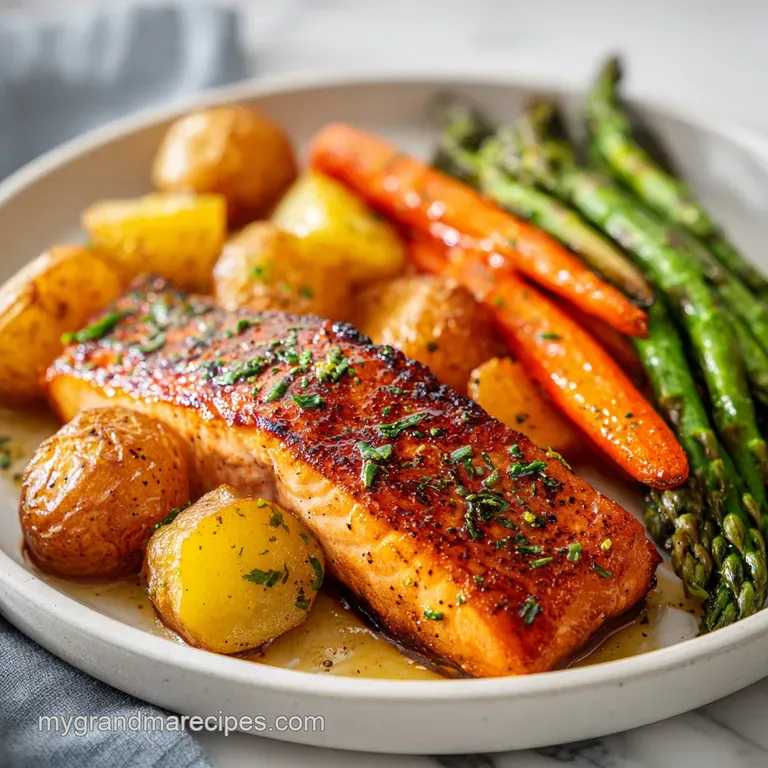
Phase 1: Preparing the Base
- Preheat your oven to 400°F (200°C) and line your large rimmed sheet pan with parchment paper. Note: Doing this first ensures the oven is fully up to temperature for that initial sizzle.
- Toss the halved baby potatoes and sliced carrots with olive oil, salt, and pepper directly on the pan.
- Spread the potatoes and carrots across the pan, leaving four clear spaces in the center for the salmon fillets.
- Roast the potatoes and carrots alone for 10 minutes until they start to soften and smell fragrant.
Phase 2: Creating the Herb Glaze
- While the vegetables are in their first roast, whisk together the melted butter, minced garlic, parsley, dill, lemon juice, salt, and pepper in a small bowl. Note: Use melted butter, not softened, so it coats the fish evenly.
Phase 3: The over High heat Roast
- Remove the pan from the oven. Push the roasted vegetables to the edges and place the 4 salmon fillets in the center spaces.
- Arrange the asparagus around the salmon fillets, filling in the gaps.
- Brush the garlic herb butter generously over each salmon fillet and drizzle the remaining glaze over the asparagus and potatoes.
- Return the pan to the oven and roast for 10–12 minutes until the salmon flakes easily with a fork and vegetables are golden brown.
Phase 4: Finishing Touches
- Let the pan rest for 2-3 minutes before serving. This allows the juices to redistribute in the fish, ensuring every bite is velvety.
Chef's Tip: If you have an oven with a broiler, you can pop the pan under the broiler for the last 60 seconds to get a slightly charred, crackling top on the salmon.
Troubleshooting Guide
| Issue | Solution |
|---|---|
| Why Your Salmon Is Dry | Overcooking is the most common culprit here. Salmon continues to cook for a few minutes after it leaves the oven. If you wait until it looks "done" in the oven, it'll be overdone by the time it hits t |
| Why Your Veggies Are Soggy | This usually happens if the pan is overcrowded. If the carrots and potatoes are piled on top of each other, they steam in their own moisture. Make sure there is a thin layer of space between each piec |
| Why Your Garlic Tastes Bitter | Garlic burns quickly at 400°F. If you put the garlic on the potatoes for the full 20 minutes, it will turn bitter. That's why we mix it into the butter and add it during the second phase of roasting. |
Common Mistakes Checklist:
- ✓ Avoid using frozen asparagus unless you pat it completely dry first.
- ✓ Don't skip the parchment paper; salmon skin loves to stick to bare metal.
- ✓ Ensure salmon fillets are roughly the same thickness for even cooking.
- ✓ Use unsalted butter so you can control the salt level across the whole pan.
- ✓ Don't overcrowd the pan; use two pans if you're doubling the recipe.
Dietary Adaptations
If you're looking for a low carb or keto version, simply swap the baby potatoes for cauliflower florets or extra asparagus. Cauliflower roasts in about the same time as the carrots, so it fits perfectly into the staggered timeline.
For those avoiding dairy, you can replace the butter with a high-quality vegan butter or just increase the olive oil and add a pinch of nutritional yeast for that savory depth.
If you want to add a bit more zing to the side, this dish pairs beautifully with a Classic Tartar Sauce recipe for dipping the salmon. The creaminess of the sauce balances the acidity of the lemon herb butter.
For a Zesty Mediterranean Twist
Swap the dill for fresh oregano and add a handful of halved cherry tomatoes during the final roast. The tomatoes will burst and create a natural sauce that coats the potatoes.
For a Spicy Kick
Add 1/2 teaspoon of red pepper flakes or a pinch of smoked paprika to the butter mixture. This adds a subtle warmth that complements the sweetness of the roasted carrots.
Freezing and Reheating Guide
While I always recommend eating this fresh for that shatter crisp potato texture, you can certainly store leftovers. Place the salmon and veggies in airtight containers. They'll stay good in the fridge for up to 3 days.
Fridge Storage
Keep the salmon and vegetables together. The fats from the salmon actually help keep the vegetables moist during storage.
Reheating for Best Texture
Avoid the microwave if you can. Microwaving salmon makes it rubbery and the potatoes soggy. Instead, put the leftovers back on a baking sheet and heat at 350°F (175°C) for about 5-8 minutes. This restores some of the crispness to the vegetables.
If you've got a lot of salmon left and don't want to eat it three days in a row, you can flake the cold salmon into a salad with lemon vinaigrette. If you're craving something entirely different for your next meal prep night, you might enjoy a hearty One Pot Classic Beef Stew for those colder evenings.
Serving Suggestions
This meal is a complete package, but a few additions can make it feel like a feast. A squeeze of fresh lemon juice over everything right before serving wakes up all the flavors. I also love serving this with a side of quinoa or wild rice if I'm feeding a crowd and need extra bulk.
Zero Waste Tips
Don't throw away those carrot peels! Collect them in a freezer bag along with the asparagus woody ends. Once the bag is full, simmer them with some water and a bay leaf to make a quick, aromatic vegetable stock.
The Final Presentation
For a nicer look, place a fillet in the center of the plate and arrange the colorful carrots and green asparagus radiating outward. It looks like it took way more effort than it actually did.
Right then, you're all set. This one pan garlic herb salmon veggies recipe is all about working with the clock and the heat. Once you get the rhythm of the staggered roast, you've got a reliable, healthy dinner that doesn't leave you with a sink full of dishes. Let's get cooking!
Recipe FAQs
Can I use frozen salmon fillets?
Yes, but thaw them completely first. Pat the fillets dry with paper towels to ensure the garlic herb butter adheres and the fish roasts instead of steaming.
How to prevent the vegetables from getting soggy?
Spread the potatoes and carrots in a single layer. Avoid overcrowding the pan, as piling vegetables causes them to steam in their own moisture rather than browning.
Is it true that all vegetables should be added to the pan at once?
No, this is a common misconception. Potatoes and carrots require a 10-minute head start to ensure they are tender before the salmon and asparagus are added.
How to tell when the salmon is finished cooking?
Check that the fish flakes easily with a fork. Remove the pan from the oven slightly before it looks fully done, as the salmon continues to cook for a few minutes while resting.
Can I substitute the asparagus for another vegetable?
Yes, most quick roasting greens work well. If you prefer a different side, this meal pairs beautifully with creamed spinach.
Why did my garlic taste bitter?
The garlic likely burned at 400°F. Because garlic has a low burn point, ensure it is thoroughly whisked into the melted butter glaze rather than left in large clumps.
How to store and reheat the leftovers?
Place in an airtight container for up to 3 days. Reheat gently in the oven at a low temperature or in the microwave to avoid overcooking the salmon.
Garlic Herb Salmon Veggies