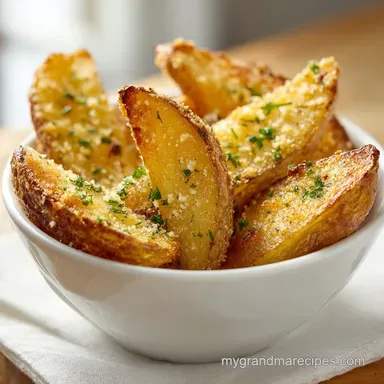
Baked Garlic Parmesan Potato Wedges: Ultra-Crispy
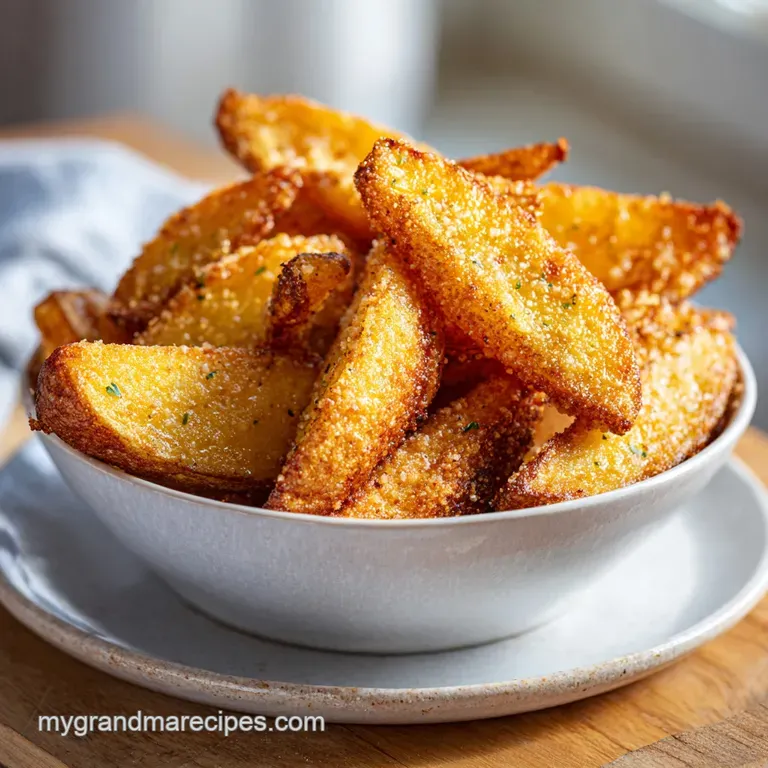
- Time:10 minutes active + 35 minutes baking = 45 minutes total
- Flavor/Texture Hook: Crispy, salty, garlic forward exterior with a velvety center
- Perfect for: Game day snacks or a reliable weeknight side dish
- Perfectly Crispy Baked Garlic Parmesan Potato Wedges
- Why This Works
- Essential Recipe Specifications
- Gathering Your Ingredients
- Reliable Equipment List
- Simple Step-by-Step Instructions
- Solving Common Wedge Problems
- Adjusting the Batch Size
- Unique Flavor Variations
- Storage and Zero Waste
- The Best Way to Serve
- Recipe FAQs
- 📝 Recipe Card
Perfectly Crispy Baked Garlic Parmesan Potato Wedges
The second those potatoes hit the hot pan, you hear it, that sharp, rhythmic sizzle that promises a serious crunch. There is something about the aroma of garlic and toasted cheese wafting through a kitchen that just feels like home.
Growing up in Tennessee, my grandmother always said that a potato wasn't finished until it had enough "crust" to stand up on its own. She didn't use fancy gadgets or air fryers, just a hot oven and a heavy hand with the seasoning.
I've tried making these a dozen different ways, but the hero of this story is always the Russet potato. It has that high starch content that transforms in the heat, becoming light and airy inside while the outside turns into a golden shell.
If you try to use a waxy red potato, you'll end up with something tasty, sure, but it won't have that iconic "wedge" texture we're after. This version is all about that contrast between the salt crusted skin and the steaming, soft middle.
We are keeping things straightforward here. No complicated breading stations or weird ingredients you can't find at the local corner store. This is honest comfort food, the kind that disappears from the baking sheet before it even makes it to the dinner table.
Trust me, once you see how that parmesan melts and then crisps into little "lace" edges around the potato, you won't want to make them any other way.
Why This Works
- Starch Removal: Soaking the cut wedges in cold water washes away surface starch, which otherwise becomes gummy and prevents the potatoes from getting truly crispy.
- Thermal Blast: Starting the bake at 400°F creates immediate steam inside the potato, puffing up the cells while the oil begins to fry the skin.
- Delayed Cheesing: Adding the parmesan during the final 10-12 minutes ensures the cheese toasts into a savory crust without burning or becoming bitter.
- Parchment Insulation: Using a lined sheet prevents the wedges from sticking and tearing, allowing the bottom "foot" of the wedge to brown evenly.
| Method | Time | Texture | Best For |
|---|---|---|---|
| Stovetop | 25 minutes | Soft with charred spots | Quick breakfast hash |
| Oven | 35 minutes | Uniformly crispy and airy | Authentic wedge experience |
| Air Fryer | 20 minutes | Very dry and crunchy | Small batches (1-2 people) |
When you are deciding which route to take, remember that the oven provides the most consistent heat for a larger batch. While a stovetop might seem faster, you often end up with some bits that are burnt and others that are still firm.
The oven allows that garlic and paprika to really sink into the oil, creating a seasoned coating that sticks to every nook and cranny.
| Ingredient | Science Role | Pro Secret |
|---|---|---|
| Russet Potatoes | High starch, low moisture | Always peel on for better structural integrity |
| Olive Oil | Heat conductor | Use just enough to coat; excess causes steaming |
| Parmesan | Protein/Fat binder | Finely grated (dust like) sticks better than shreds |
| Smoked Paprika | Color and depth | Adds a "roasted" look even before they are done |
Essential Recipe Specifications
When you are planning your meal, timing is everything. For these baked garlic parmesan potato wedges, you'll need exactly 10 minutes of prep time to get the potatoes scrubbed, sliced, and soaked.
The actual bake time is divided into two parts: an initial 25 minute roast to cook the potato through, followed by a final 10-12 minute blast once the cheese is added.
This brings your total time to 45 minutes. It is a predictable window that gives you just enough time to sear off some steaks or prep a big salad while the oven does the heavy lifting.
I usually set my timer for that first 25 minute mark and don't even peak; you want that heat to stay trapped in the oven to work its magic on the potato skins.
Gathering Your Ingredients
The beauty of this dish lies in its simplicity, but the quality of your components matters. We are using 1.5 lbs of Russet potatoes, which usually works out to about 3 large spuds. For the fat, 3 tbsp of Extra Virgin Olive Oil provides the necessary richness and helps the spices adhere.
Speaking of spices, you'll want 1 tsp of garlic powder and 1 tsp of smoked paprika to give it that punchy, campfire adjacent flavor.
Don't forget the 1/2 tsp of kosher salt and 1/2 tsp of freshly cracked black pepper. If you use table salt, cut the amount back slightly, as it is much finer and saltier by volume. The star, of course, is the 1/2 cup of finely grated parmesan cheese.
If you have the time, grating it yourself from a block yields a much better melt than the pre shredded stuff in a tub, which is often coated in potato starch to keep it from clumping. Finally, 2 tbsp of fresh parsley adds that bright, grassy finish that cuts through the salt.
| Original Ingredient | Substitute | Why It Works |
|---|---|---|
| Olive Oil | Avocado Oil | Higher smoke point; very neutral flavor profile |
| Smoked Paprika | Chili Powder | Adds heat and color but loses the smoky depth |
| Parmesan | Pecorino Romano | Saltier and tangier; use 25% less salt in base |
| Fresh Parsley | Dried Oregano | Earthier flavor; add during the last 5 minutes |
Choosing the right potato is the most important decision you'll make today. If you're looking for a similar texture in other dishes, you might enjoy my ultimate roasted potatoes which use a slightly different technique but offer that same satisfying crunch. The Russet is king here because its flesh is porous, meaning it drinks up that garlic infused oil.
Reliable Equipment List
You don't need a kitchen full of gadgets for this one. A large rimmed baking sheet is the most critical tool. If it's too small, the potatoes will be crowded and will steam instead of roast. You also need parchment paper, it’s a non negotiable for me.
It makes cleanup a breeze and ensures the parmesan stays on the potato rather than becoming one with the metal pan.
A sharp chef's knife is your best friend for getting those uniform eighths. If the wedges are different sizes, the small ones will turn into carbon while the big ones stay raw in the middle. Beyond that, a large mixing bowl for tossing and a clean kitchen towel for drying the potatoes are all you really need.
It’s a low maintenance recipe that yields high maintenance results.
Simple step-by-step Instructions
- Preheat your oven to 400°F (200°C). Line your large baking sheet with parchment paper so nothing sticks.
- Cut each of your 1.5 lbs of Russet potatoes in half lengthwise. Cut those halves into quarters, then eighths. Aim for uniform wedges so they all finish at the same time.
- Submerge the wedges in a bowl of cold water for 2 minutes. Note: This removes the starch that makes potatoes gummy.
- Drain the water and use a clean kitchen towel to pat the wedges completely dry. Do not skip this, or they will steam.
- Toss the dry wedges in a large bowl with the 3 tbsp of olive oil until every surface is shiny.
- Whisk the garlic powder, smoked paprika, salt, and pepper in a small dish. Sprinkle this over the potatoes and toss again to distribute the color evenly.
- Lay the wedges on the baking sheet in a single layer. Make sure they are not touching until they look lonely and spaced out.
- Bake for 25 minutes. The edges should just be starting to turn golden.
- Pull the tray out. Shower the 1/2 cup of parmesan over the wedges and give them a quick flip with tongs.
- Return to the oven for 10-12 minutes until the cheese is golden brown and the potatoes are tender.
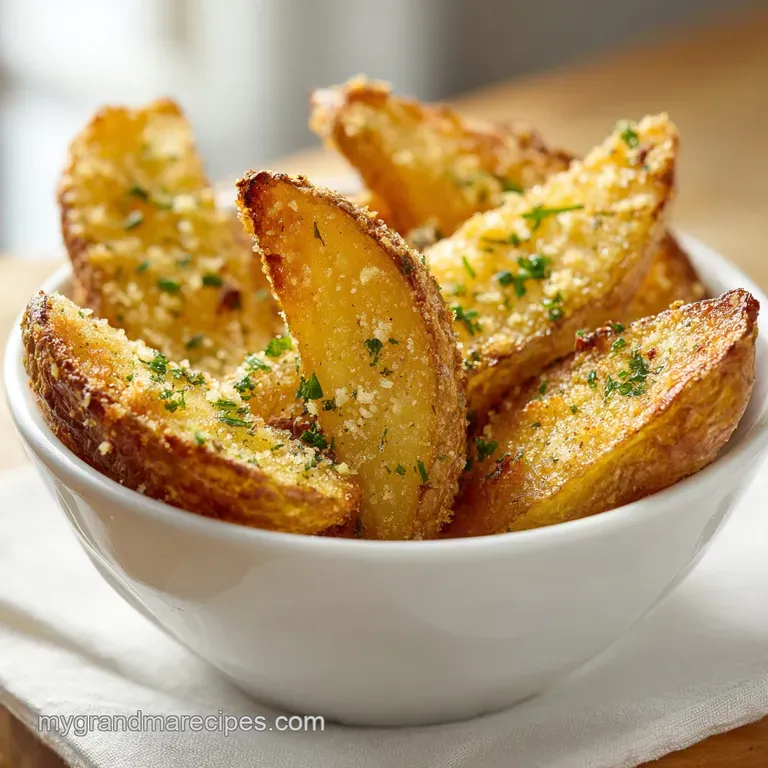
- Scatter the 2 tbsp of fresh parsley over the hot wedges and serve immediately.
Solving Common Wedge Problems
The most common heartbreak with homemade wedges is the "soggy bottom." This usually happens because of trapped moisture. If you don't dry your potatoes after the soak, that water turns to steam under the potato, preventing the oil from crisping the skin. Another culprit is overcrowding the pan.
Each wedge needs its own little "air zone" to allow the heat to circulate. If they are touching, they'll just soften each other up.
Why Your Parmesan Burnt
If the cheese looks black and tastes bitter, it was likely in the oven too long or the oven temperature was running high. Parmesan has a low moisture content and high protein, meaning it browns very quickly. Always wait until the final 10-12 minutes of the total bake time to add it.
This gives it just enough time to melt, adhere, and crisp up without losing its nutty flavor.
| Problem | Root Cause | Solution |
|---|---|---|
| Soft/Soggy Wedges | Excess surface moisture | Pat dry with a towel until the skin feels tacky |
| Uneven Cooking | Different wedge sizes | Cut potatoes into 8 equal pieces regardless of total size |
| Cheese Falling Off | Potatoes too dry | Toss with cheese while the oil is still hot and bubbling |
- ✓ Always use Russet potatoes for the fluffiest interior texture.
- ✓ Ensure the oven is fully preheated before the tray goes in.
- ✓ Pat the potatoes dry like your life depends on it.
- ✓ Use parchment paper to prevent the cheese from sticking to the pan.
- ✓ Space the wedges at least half an inch apart on the sheet.
Adjusting the Batch Size
If you are cooking for a crowd, doubling the recipe is easy, but you must use two separate baking sheets. If you try to pile 3 lbs of potatoes onto one tray, they will never get crispy.
Rotate the pans halfway through (when you add the cheese) to ensure the one on the bottom rack gets the same direct heat as the one on top. For the spices, you don't necessarily need to double the salt, start with 1.5x and taste a finished wedge before adding more.
For a solo dinner, you can easily halve the recipe. Use a smaller toaster oven pan or just a standard sheet, but keep the temperature at 400°F. The cook time usually stays about the same because the thickness of the individual wedges hasn't changed.
Just be sure to beat one egg and use half if you were using an egg wash method, though our oil based version is even easier to scale down.
Unique Flavor Variations
If you want a bit of a kick, try adding a 1/2 tsp of cayenne pepper to the spice mix. It plays beautifully with the smokiness of the paprika. For a "truffle" version, swap the olive oil for truffle oil, though keep in mind that truffle oil can be quite strong, so maybe do half and half.
You could also lean into a Mediterranean vibe by using dried oregano and lemon zest instead of the paprika.
If you are looking for something even more decadent, you could take inspiration from my loaded potato skins and top these wedges with bacon bits and chives during the last five minutes of baking. It turns a simple side dish into a full blown appetizer. For a vegan friendly swap, nutritional yeast provides a similar "cheesy" umami flavor and stands up well to the high heat of the oven.
Storage and Zero Waste
These wedges are definitely best eaten fresh, but if you have leftovers, they’ll keep in the fridge for about 3 days. To reheat, avoid the microwave at all costs, it will turn them into sad, limp sponges.
Instead, pop them back into a 400°F oven or an air fryer for 5 minutes until the cheese sizzles again. You can also freeze them for up to 2 months; just freeze them in a single layer on a tray first so they don't clump together.
For a zero waste approach, don't throw away those potato scraps if you end up trimming the ends. You can toss those small bits in the same oil and spice mix and roast them right alongside the wedges; they’ll turn into little "potato croutons" that are excellent on top of a salad the next day.
If you have leftover parmesan and parsley, mix them with a bit of butter to create a quick compound butter for steaks or bread.
The Best Way to Serve
These wedges are the ultimate companion to a juicy burger or a piece of grilled chicken. They have enough flavor to stand on their own, but a side of cool ranch dressing or a spicy garlic aioli takes them over the top. Because they are so robust, they don't get lost next to heavy meats or rich sauces.
I’ve even served them as a base for "wedge nachos," topping them with pickled jalapeños and extra cheese.
There are a few myths about potatoes that we should clear up while we're here. For instance, many people think you have to boil the potatoes before roasting to get them soft. That’s just extra work and often leads to the wedges falling apart.
A simple soak in cold water does the job by managing the starch, and the oven heat handles the rest. Also, don't worry about the skins, they contain half the nutrients and provide the best "grip" for the parmesan crust.
If you're hosting a big party and need a variety of potato options, these wedges pair beautifully with other finger foods. You might consider serving them alongside garlic parmesan wings for a themed platter. The flavor profiles match perfectly, and you can usually use the same bowl of grated cheese for both recipes. It's all about making the most of your ingredients while keeping the kitchen chaos to a minimum.
Recipe FAQs
How to ensure my wedges get maximum crispiness?
Soak the potatoes in cold water for 2 minutes and pat them completely dry. Removing surface starch is the most effective way to prevent steaming, which is a technique that also ensures a golden crust in our Chicken Parm Sandwiches.
Is it true I should bake these at 350°F to prevent burning?
No, this is a common misconception. You must use a 400°F oven to properly render the starch and achieve that signature crispy exterior while keeping the center fluffy.
How to reheat leftovers without making them soggy?
Reheat them in a 400°F oven for 5 minutes. Avoid the microwave entirely, as it creates trapped moisture that ruins the texture of the cheese and potato.
How to prevent the parmesan from burning during the bake?
Add the parmesan only during the final 10-12 minutes of baking. If you add the cheese at the beginning, it will scorch and turn bitter before the potatoes are fully tender.
Can I stack the wedges on the baking sheet to save space?
How to tell when the wedges are fully cooked?
Look for golden-brown cheese and use a fork to test tenderness. The potatoes are ready when they offer no resistance to a fork and the parmesan has formed a savory, crispy crust.
Is it okay to leave the skins on the Russet potatoes?
Yes, keep them on for the best texture. Scrubbing the potatoes clean is enough, as the skins provide the structural integrity needed to hold the weight of the olive oil and seasoning during the 35-minute bake.
Baked Garlic Parmesan Potato Wedges for 4 Servings