Three Cheese Risotto: Creamy and Authentic

- Time: Active 25 minutes, Passive 10 minutes, Total 35 minutes
- Flavor/Texture Hook: Silky, savory, and rich with a distinct "wave" consistency
- Perfect for: A cozy weeknight treat or a low stress dinner party centerpiece
- Mastering a Velvety Three Cheese Risotto Recipe at Home
- Secrets to Achieving Ideal Creamy Texture
- Essential Ratios and Timing Specs
- Selecting Premium Elements for Depth
- Modern Kitchen Tools for Success
- Executing the Perfect Stovetop Finish
- Correcting Common Texture and Flavor Issues
- Adapting Your Dish for Dietary Needs
- Preserving Freshness and Reducing Kitchen Waste
- Creative Serving Ideas and Pairing Inspiration
- Recipe FAQs
- 📝 Recipe Card
Mastering a Velvety Three Cheese Risotto Recipe at Home
Close your eyes and imagine the sound of a dry white wine hitting a hot, heavy pan that sharp, celebratory hiss that fills the kitchen as the steam carries the aroma of toasted rice and softened shallots straight to your nose.
It is one of those kitchen sounds that tells you something truly special is happening. I used to be terrified of making this. I thought you had to be a classically trained chef with forearms of steel to get that legendary "wave" (the all’onda texture) just right.
I was convinced I would end up with either crunchy grains or a bowl of sticky, sad porridge.
But here is the thing I learned after many messy attempts: this three cheese risotto recipe is actually quite forgiving if you just pay attention to the sensory cues. When the rice grains start to look like tiny glowing pearls with translucent edges, you know the toasting is right.
When the liquid bubbles and thickens into a velvety sauce that coats the back of your spoon, you know the starch is doing its job. It is not about being a pro; it is about finding a rhythm in the stirring and watching the transformation happen right in front of you.
Honestly, the most satisfying part is the very end. The moment you take the pan off the heat and beat in that cold butter and the mountain of cheese Fontina, Parmigiano, and Pecorino it stops being just "rice" and becomes something ethereal.
The cheese melts into the starch thickened stock, creating a glossy, shimmering emulsion that tastes like a warm hug. If you have ever felt intimidated by Italian classics, let this be the dish that changes your mind. It is simple, it is rhythmic, and the payoff is incredibly rewarding.
Secrets to Achieving Ideal Creamy Texture
Many first time cooks think the creaminess in a cheese risotto recipe comes from adding heavy cream at the end. In a traditional kitchen, that is actually considered a bit of a shortcut. The real magic happens through a process of physical agitation and temperature control.
By stirring the rice frequently, you are essentially knocking the starch (specifically amylopectin) off the outside of the grains and into the stock. This creates a natural gravy that is thick and rich without needing a drop of cream.
Amylopectin Release: Frequent stirring causes rice grains to rub together, sloughing off surface starches that thicken the cooking liquid into a sauce.
Thermal Stability: Using simmering stock prevents the rice temperature from dropping, which ensures the starches release steadily rather than seizing up.
Mantecatura Emulsification: Adding cold butter to the hot rice at the very end creates a fat in-water emulsion, resulting in a glossy, professional finish.
Toasting Resistance: Sautéing the dry rice in oil before adding liquid creates a protective shell that prevents the grains from exploding or becoming mushy.
Impact of Rice Selection
Not all rice is created equal when it comes to this three cheese risotto recipe. You need a high starch, short grain or medium grain variety like Arborio or Carnaroli. Arborio is widely available and very reliable for beginners because it releases starch quickly, giving you that creamy fix early on.
Carnaroli is often called the "king" of risotto rice because it has a higher starch content and a firmer structure, making it harder to overcook. If you are a novice, stick with Arborio first; it is the most common and behaves beautifully in a modern kitchen.
Why Maintain Simmering Stock?
One of the biggest mistakes people make is adding cold or room temperature stock to the pan. When you do that, the temperature of the rice drops instantly, and the cooking process halts.
You then have to wait for the pan to heat back up, which messes with the starch release and often results in rice that is "blown out" on the outside but still hard in the middle. Keeping your 5.5 cups of stock in a separate saucepan at a low simmer ensures that every time a ladle hits the rice, the cooking continues without skipping a beat.
| Feature | Stovetop Method | Oven Baked Method |
|---|---|---|
| Texture | High creaminess due to constant starch release | Less creamy, grains are more distinct |
| Attention | Requires 20-25 minutes of active stirring | Mostly hands off after the initial boil |
| Consistency | Easy to adjust liquid levels as you go | Harder to fix if it comes out too dry |
The stovetop method is the gold standard for a reason. While oven versions exist, they lack that signature silky emulsion because the grains aren't being agitated enough to release their starches into the stock.
Essential Ratios and Timing Specs
When you are working in a modern kitchen, timing is everything. For this recipe, you are looking at 10 minutes of prep and exactly 25 minutes of cook time.
Consistency in your measurements like the 1.5 cups of rice to 5.5 cups of stock is what prevents the dish from turning into a dry brick or a watery soup. If you follow the 35 minutes total time, you will find that the rice hits that perfect al dente bite right when the liquid has been mostly absorbed but the pan still looks "juicy."
| Component | Science Role | Pro Secret |
|---|---|---|
| Arborio Rice | Structural Starch | Toast until the edges are translucent to keep grains intact |
| Dry White Wine | Acidic Balance | Use a crisp Pinot Grigio to cut through the heavy fats |
| Fontina Cheese | Melting Base | Shred it yourself; pre shredded has starches that prevent melting |
| Cold Butter | Final Emulsifier | Must be cold from the fridge to create the glossy "wave" finish |
Using cold butter at the very end is a non negotiable step in my kitchen. If the butter is room temperature, it just melts into oil. If it is cold, it binds with the starchy liquid to create a thick, velvety sauce that clings to the rice.
It’s a tiny detail that makes a massive difference in the final mouthfeel of the dish.
Selecting Premium Elements for Depth
Building the flavor profile of this three cheese risotto recipe starts with the aromatics. We use 1 small shallot and 2 cloves of garlic. Shallots are the secret weapon of the home cook they offer a sweetness and subtlety that white onions just can't match.
Grating the garlic instead of chopping it ensures it melts into the base without leaving any harsh, crunchy bits behind. Then comes the "Three Cheese Trio": Parmigiano Reggiano for that salty, nutty punch; Fontina Val d'Aosta for its incredible melting properties; and Pecorino Romano for a sharp, tangy finish.
For the Aromatics and Base
- 1.5 cups Arborio or Carnaroli rice: Why this? Essential for the high starch content needed for a creamy texture. (Substitute: Sushi rice in a pinch, though it’s stickier.)
- 2 tbsp unsalted butter: Why this? Provides fat for sautéing and the final "Mantecatura" finish. (Substitute: Salted butter, but reduce added salt.)
- 1 tbsp extra virgin olive oil: Why this? Prevents the butter from burning during the over high heat toasting phase. (Substitute: Grapeseed or avocado oil.)
- 1 small shallot, finely minced: Why this? Delivers a delicate, sweet onion flavor that doesn't overpower the cheese. (Substitute: Half a small yellow onion.)
- 2 cloves garlic, grated: Why this? Grating creates a paste that distributes flavor evenly through the rice. (Substitute: 0.5 tsp garlic powder.)
- 0.5 cup dry white wine: Why this? The acidity brightens the dish and deglazes the toasted rice starches. (Substitute: 1 tbsp lemon juice plus extra stock.)
The Three Cheese Trio
- 0.5 cup Parmigiano Reggiano, freshly grated: Why this? Provides the "umami" backbone and saltiness the dish requires. (Substitute: Grana Padano.)
- 0.5 cup Fontina Val d'Aosta, shredded: Why this? A superior melting cheese that gives the risotto its gooey stretch. (Substitute: Mild Provolone or Gruyère.)
- 0.25 cup Pecorino Romano, finely grated: Why this? Adds a sharp, sheep's milk tang that cuts through the richness. (Substitute: Extra Parmigiano.)
The Liquid Gold
- 5.5 cups chicken or vegetable stock: Why this? The primary flavor builder; use low sodium to control the saltiness. (Substitute: Bone broth for more protein.)
- 0.5 tsp sea salt: Why this? Enhances the natural flavors of the rice and aromatics. (Substitute: Kosher salt.)
- 0.5 tsp freshly cracked black pepper: Why this? Provides a subtle heat to balance the creamy cheeses. (Substitute: White pepper for a cleaner look.)
Modern Kitchen Tools for Success
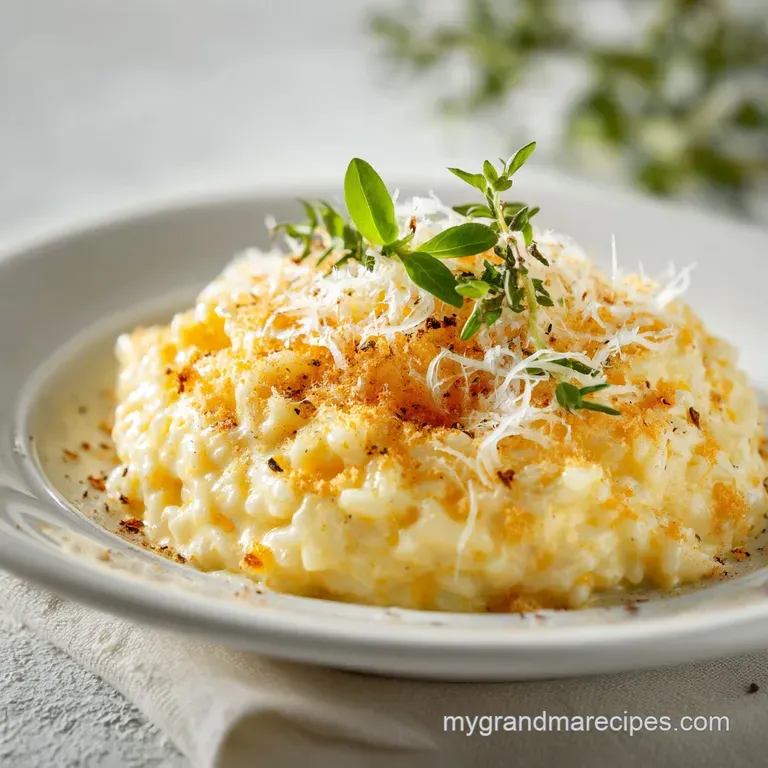
You don't need a pantry full of gadgets, but a few specific tools make this process much less intimidating for a first time cook. The most important is a heavy bottomed, wide saucepan or a Dutch oven. You want a wide surface area so the rice can spread out and cook evenly.
If your pan is too narrow and deep, the rice at the bottom will turn to mush while the rice at the top stays raw.
Chef's Tip: Use a silicone spatula or a wooden spoon with a hole in the middle (a "risotto spoon"). This allows the rice to flow through the spoon as you stir, which prevents the grains from breaking while maximizing starch release.
Another essential tool is a microplane or a fine grater. For the cheeses, you want a very fine, snowy texture. Large chunks of cheese won't melt evenly and might create clumps in your otherwise smooth sauce. If you’re looking for other comforting cheesy dishes, you might enjoy my Homemade Mac and Cheese which uses a similar cheese blending philosophy but with a different thickening technique.
Executing the Perfect Stovetop Finish
This process is all about the flow. I like to set everything out before I even turn on the stove what chefs call mise en place. Once the stirring starts, you won't want to step away to mince a shallot or grate cheese.
Follow this timeline: 10 minutes to prep your ingredients, then 25 minutes of focused, rhythmic cooking.
- Simmer the stock. Heat the 5.5 cups of chicken or vegetable stock in a saucepan until it reaches a low simmer. Note: Keep this on the burner next to your rice pan so it stays hot.
- Sauté the aromatics. In a heavy bottomed pan, melt 1 tablespoon of butter with the olive oil over medium heat. Sauté the shallot and grated garlic until translucent and fragrant (about 2-3 minutes).
- Perform the 'Tostatura'. Add the 1.5 cups of rice. Stir constantly for 2–3 minutes until the grain edges are see through but the centers are still bright white.
- Deglaze with wine. Pour in the 0.5 cup of dry white wine. Stir until the liquid is fully evaporated and you can no longer smell the raw alcohol.
- Start the ladle and stir dance. Add one ladle of hot stock. Stir frequently until the liquid is almost gone before adding the next ladle.
- Maintain the rhythm. Continue adding stock ladle by ladle for 18-20 minutes. Note: You are looking for a creamy consistency where the rice is tender but firm to the bite.
- Check for doneness. Taste the rice. If it’s still crunchy, add another half ladle of stock. The pan should still be quite saucy when you stop adding liquid.
- Begin the 'Mantecatura' phase. Remove the pan from the heat entirely. This is crucial for the emulsion.
- Beat in the finishings. Vigorously stir in the remaining 1 tablespoon of cold butter and all three cheeses. Stir until the cheese is a glossy, velvety sauce.
- Season and serve. Add the sea salt and black pepper. Serve immediately while the risotto still "slumps" on the plate.
Correcting Common Texture and Flavor Issues
Even the best cooks run into trouble with rice. The most common struggle is the "crunchy center" or the "sticky paste." If your rice feels like it’s stuck in a thick glue, you likely aren't adding enough liquid or you're cooking it at too high a heat, causing the stock to evaporate before it can penetrate the grain.
Fixing Crunchy Rice Results
If your timer hits 20 minutes and the rice still feels like pebbles, don't panic. You likely didn't have enough liquid in the pan or your stock wasn't hot enough. Simply add another half cup of warm stock (or even warm water) and keep stirring for another 3-4 minutes.
The heat of the rice will eventually soften that core.
Avoiding Sticky Paste Textures
This usually happens if you overwork the rice at the very end or if you use too much cheese relative to the liquid. If the risotto looks like mashed potatoes, stir in a splash of warm stock right before serving. It should be fluid enough that if you shake the plate, the rice moves like a gentle wave.
| Problem | Root Cause | Solution |
|---|---|---|
| Grains are mushy | Too much stirring or overcooking | Stop cooking when grains are still "al dente" (firm to bite) |
| Dish is too salty | Stock reduced too much or cheese was very salty | Use low sodium stock and add salt only at the very end |
| Rice is unevenly cooked | Pan was too small or stock was added cold | Use a wider pan and keep stock at a simmer throughout |
Common Mistakes Checklist:
- ✓ Never wash the rice before cooking; you’ll wash away the precious starch needed for creaminess.
- ✓ Don't let the shallots brown; if they turn dark, they will leave bitter flecks in your white risotto.
- ✓ Avoid using "cooking wine" from the grocery store; if you wouldn't drink it, don't cook with it.
- ✓ Ensure the butter used at the end is ice cold to help the emulsion stabilize properly.
- ✓ Don't wait too long to serve; risotto continues to absorb liquid and will stiffen up in minutes.
Adapting Your Dish for Dietary Needs
Risotto is naturally gluten-free, which makes it a fantastic option for hosting. However, you can easily tweak the ingredients to fit different lifestyles without losing that gourmet feel. If you want a punchier flavor, you could even look into a Penne Pomodoro style of seasoning by adding a burst of tomato acidity to the base, though the cheese is the star here.
| Original Ingredient | Substitute | Why It Works |
|---|---|---|
| Chicken Stock | Vegetable Broth | Makes the dish vegetarian. Note: Use a high-quality broth for depth. |
| White Wine | Verjus or Lemon/Water | Provides the necessary acidity without the alcohol content. |
| Fontina Cheese | Gruyère | Similar melting point. Note: Gruyère adds a slightly nuttier, more intense flavor. |
Crafting Four Cheese Variations
To turn this into a "four cheese risotto recipe," I highly recommend adding 2 tablespoons of Gorgonzola Dolce during the Mantecatura phase. The blue cheese melts beautifully and adds a creamy, funky depth that pairs perfectly with the sharpness of the Pecorino.
It's a bold move that makes the dish feel even more high end.
Vegetarian Friendly Substitution Options
Most Parmigiano Reggiano uses animal rennet. To make this 100% vegetarian, look for "Italian style hard cheese" labeled as vegetarian friendly. Many modern grocery stores now carry these versions that use microbial rennet but still offer that salty, aged punch we need.
Preserving Freshness and Reducing Kitchen Waste
Risotto is notorious for being "best in the moment," but that doesn't mean leftovers are a loss. In fact, cold risotto is the secret ingredient to one of the best Italian snacks ever: Arancini. Because the starches and cheeses solidify in the fridge, the rice becomes easy to shape and fry.
- Storage: Keep leftovers in an airtight container in the fridge for up to 3 days. Do not freeze risotto; the rice grains will break down and become unpleasantly grainy when thawed.
- Zero Waste: If you have leftover stock, freeze it in ice cube trays for future pan sauces. If you have extra cheese rinds (especially the Parmigiano), toss them into your next pot of soup or broth to extract every bit of umami.
- Reheating: To reheat, add the rice to a small pan with 2 tablespoons of water or stock per cup of rice. Heat over low, stirring gently until it loosens back into a creamy state. Never microwave it on high power, or the cheese will separate into oil.
Creative Serving Ideas and Pairing Inspiration
The beauty of a three cheese risotto recipe is its versatility. You can serve it as a main dish in a shallow bowl, topped with a few cracks of black pepper and a drizzle of high-quality olive oil.
If you want to make it a fuller meal, it pairs beautifully with roasted asparagus or a simple green salad with a sharp vinaigrette to cut through the richness of the cheese.
For a special occasion, I love topping the finished risotto with crispy fried sage leaves or a few drops of truffle oil. The earthiness of the truffle plays incredibly well with the Fontina and Parmigiano. If you're looking for a simpler side to go with a different pasta night, check out these Cheesy Cheddar Biscuits which share that same love for bold cheese flavors.
Defining the Mantecatura Phase
This is the most important term you'll learn today. "Mantecatura" comes from the word manteca (butter/fat). It is the final, vigorous beating of cold fat and cheese into the rice. This step isn't just about mixing; it’s about creating an emulsion.
You want to see the rice transform from "wet grains" into a cohesive, shimmering sauce. It’s the difference between a home cooked side dish and a restaurant quality masterpiece. Trust the process, stir with energy, and you'll see exactly what I mean.
Recipe FAQs
How to achieve the perfect "all’onda" wavy texture?
Stir frequently during the ladle and-stir process to maximize starch release. By adding hot stock only after the previous ladle is nearly absorbed, you allow the grains to release the starch necessary to create that signature creamy, flowing consistency.
Is it true I must toast the rice before adding liquid?
Yes, this is a critical step for flavor and structure. You must stir the grains for 2 3 minutes until the edges are translucent to ensure the rice maintains its integrity and develops a nutty depth while cooking.
How to tell when the risotto is finished cooking?
Look for rice that is al dente and a texture that coats the back of a spoon. This usually takes about 18-20 minutes of consistent stirring, and if you enjoyed mastering the emulsion in this recipe, you can apply similar sensory checks when making our velvety gravy to ensure perfect thickness.
Why must the butter be cold during the Mantecatura phase?
Cold butter helps create a more stable, glossy emulsion. By beating the cold fat into the hot rice off the heat, you ensure the cheese and butter meld into a rich, velvety sauce rather than separating into oily pockets.
How to prevent the shallots and garlic from burning?
Sauté the aromatics over medium heat and stir constantly. Keep the heat controlled so they turn translucent and fragrant without taking on any color, as browning will introduce bitter notes that clash with the delicate cheeses.
Can I use different types of rice for this recipe?
No, stick exclusively to Arborio or Carnaroli rice. These specific varieties contain the high amylopectin starch content required to achieve the creamy, luxurious consistency that makes this dish work.
How to keep the stock at the right temperature?
Maintain a low simmer in a separate medium saucepan throughout the cooking process. Adding cold or room temperature stock to the hot rice will shock the grains, stopping the cooking process and preventing the necessary starch release.
Three Cheese Risotto

Ingredients:
Instructions:
Nutrition Facts:
| Calories | 527 kcal |
|---|---|
| Protein | 18 g |
| Fat | 19 g |
| Carbs | 64 g |
| Fiber | 1 g |
| Sugar | 2 g |
| Sodium | 720 mg |
