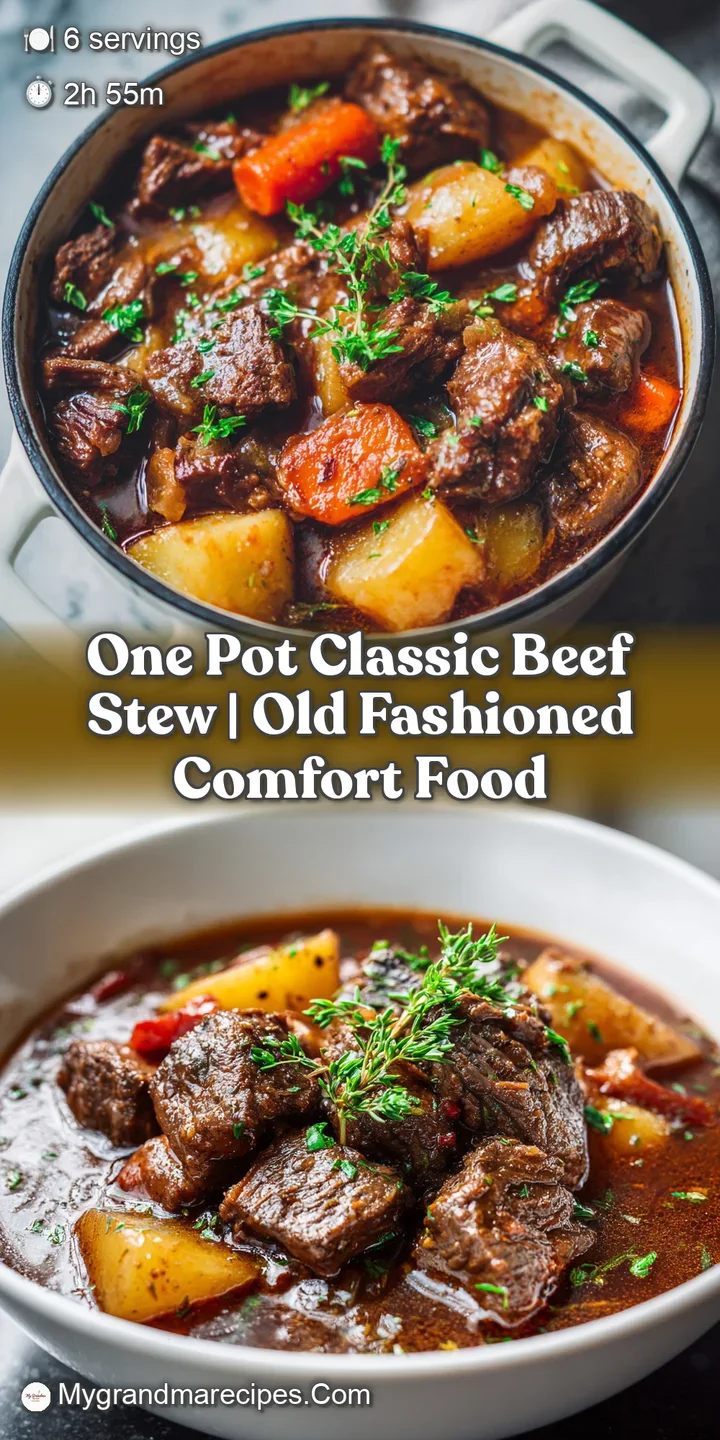
One Pot Classic Beef Stew: Rich and Tender
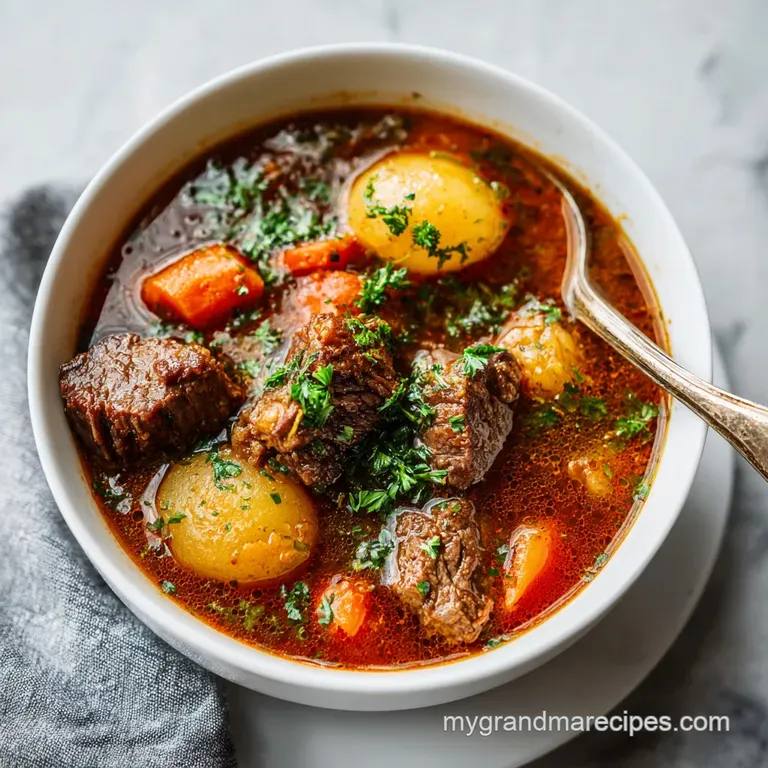
- Time: Active 25 minutes, Passive 150 minutes, Total 175 minutes
- Flavor/Texture Hook: Melty, velvety beef with a thick, savory sweet wine reduction sauce.
- Perfect for: Cold Sunday afternoons, family gatherings, or meal prep for a busy week.
- The Secret to One Pot Classic Beef Stew
- Essential Recipe Timing and Specs
- Deep Dive into Quality Ingredients
- Best Equipment for Better Braising
- Master the Braising Method Steps
- Solving Common Cooking Texture Issues
- Easy Swaps and Flavor Twists
- Safe Storage and Freezing Secrets
- Plating and Serving Your Stew
- Very High in Sodium
- Recipe FAQs
- 📝 Recipe Card
The Secret to One Pot Classic Beef Stew
The secret to a truly soul warming stew doesn't come from a packet or a shortcut, it comes from the heavy cast iron pot sitting on your stove and a piece of beef chuck roast. When I was a kid growing up in Tennessee, Grandma’s kitchen always smelled of searing fat and sweet onions on Sunday mornings.
She taught me that the beef is the hero of the story, but only if you treat it right. If you grab those pre cut "stew meat" packs at the store, you're rolling the dice on a mix of different muscles that cook at different rates. One piece will be soft while the next is like chewing a rubber band.
We use a full 3 lbs of Beef Chuck Roast because it is marbled with the kind of connective tissue that makes a one pot classic beef stew actually work. That fat and collagen don't just disappear, they melt into the broth, creating a velvety mouthfeel that you just can't get from leaner cuts.
When that cold beef hits the hot grapeseed oil, you should hear a loud, aggressive sizzle. That sound is the beginning of the "mahogany crust" we’re looking for. It’s not just about color, it's about creating a complex, savory foundation that flavors every single drop of the bone broth later on.
This recipe is a lesson in patience and tradition. We aren't just boiling meat, we are braising it. The difference is the gentle bubble and the tight fitting lid that keeps all that moisture locked inside.
By the time those Yukon Gold potatoes and carrots go in during the final 30 minutes, the beef has already done the hard work of softening up. You’ll know it’s ready when the aroma fills every corner of your house, and the liquid has thickened into a glossy, dark gravy that clings to the back of a wooden spoon.
Essential Recipe Timing and Specs
To get this one pot classic beef stew right every single time, you have to respect the clock. Braising is a game of thermodynamics. If you try to pull this off the stove in an hour, you'll be left with tough, stringy meat.
The collagen in the beef doesn't even begin to break down significantly until it has been simmering for at least 90 minutes. That is why our total cook time is 150 minutes.
We give the meat two full hours on its own before we even think about adding the vegetables, ensuring everything reaches the finish line at the exact same moment.
Harnessing the Collagen Transformation
The reason we simmer for so long is simple. Beef chuck is high in collagen, a tough protein that keeps the muscle fibers together. Around 160°F, that collagen begins to turn into gelatin.
Gelatin is what gives the stew its body and makes the meat feel "juicy" even though it’s technically overcooked by steak standards. If you rush this, the meat stays knotted and dry.
By 150 minutes, that transformation is complete, leaving you with beef that yields to the slightest pressure of a fork.
The Maillard Reaction Masterclass
Searing isn't about "sealing in juices," it's about creating new flavor compounds. When you toss the beef in flour and sear it until it forms a dark crust, you are triggering a reaction between amino acids and sugars. This creates the "fond," those little brown bits stuck to the bottom of the pot.
When we add the red wine to deglaze, we are literally dissolving those flavor molecules back into the sauce. Without this step, your stew will look gray and taste flat.
| Method | Total Time | Beef Texture | Best For |
|---|---|---|---|
| Classic Stovetop | 175 minutes | Melt in-mouth tender | Sunday dinner, maximum flavor |
| Pressure Cooker | 60 minutes | Soft but less integrated | Quick weeknight fix |
| Slow Cooker | 8 hours | Very soft, slightly shredded | Set and forget morning prep |
A classic stovetop simmer allows for evaporation and reduction, which concentrates the flavors in a way a sealed pressure cooker simply cannot. The liquid becomes richer and the potatoes stay intact rather than turning to mush.
If you find yourself in a rush, the pressure cooker is a fine tool, but for that old-fashioned Tennessee flavor, the pot on the stove is the only way to go.
Deep Dive into Quality Ingredients
Every ingredient in this one pot classic beef stew has a job to do. We don't just throw things in the pot for the sake of it. Take the potatoes, for example. We use Yukon Golds because they have a medium starch content.
They hold their shape through the final 30 minutes of simmering but release just enough starch to help thicken the gravy. A Russet potato would simply disintegrate, turning your stew into a thick, gritty mash.
| Component | Science Role | Pro Secret |
|---|---|---|
| Beef Chuck Roast | Provides collagen and fat | Hand cut into large 1.5 inch cubes for even cooking |
| Beef Bone Broth | Liquid base with high protein | Use bone broth over standard stock for a richer mouthfeel |
| Dry Red Wine | Acids break down fibers | Use a Cabernet to add tannins that balance the heavy fat |
The red wine is another critical player. You don't need an expensive bottle, but you should use something you’d actually drink. The acidity in the wine helps to cut through the richness of the beef fat, keeping the dish from feeling too heavy on the palate.
As it reduces, the alcohol evaporates, leaving behind a complex fruitiness that rounds out the savory notes of the garlic and onions.
The Foundation (Proteins & Aromatics)
- 3 lbs Beef Chuck Roast: Hand cut this yourself. Remove any massive chunks of hard white gristle, but keep the internal marbling. Why this? The high collagen content is the only way to get tender results after long braising.
- 1 large Yellow Onion: Chipped into rustic chunks. These will almost melt into the sauce. Why this? Yellow onions have a higher sugar content than white, aiding in caramelization.
- 4 cloves Garlic: Smashed and minced. Why this? Smashed garlic releases more allicin, giving a punchier flavor than sliced.
The Braising Liquid & Flavor Boosters
- 0.5 cup Dry Red Wine: Cabernet or Merlot are my favorites. Why this? The tannins and acidity are necessary to deglaze the pot and brighten the beef.
- 4 cups Beef Bone Broth: Look for low sodium if you can. Why this? Bone broth has more gelatin than regular stock, leading to a silkier gravy.
- 3 tbsp All Purpose Flour: For coating the beef. Why this? This creates the initial roux that thickens the stew as it simmers.
The Garden (The "Hearty" Elements)
- 1 lb Yukon Gold potatoes: Cut into 1 inch pieces. Why this? Their buttery texture holds up perfectly to a 30 minute final simmer.
- 3 large Carrots: Peeled and sliced into thick rounds. Why this? Carrots add a necessary natural sweetness to balance the salty bone broth.
- 2 tbsp Grapeseed or Avocado oil: High smoke point is key. Why this? You need high heat to sear the beef without the oil burning and turning bitter.
Best Equipment for Better Braising
You don't need a kitchen full of gadgets for a one pot classic beef stew, but you do need one very specific pot. A heavy bottomed Dutch oven, preferably enameled cast iron, is the gold standard.
The thick walls hold onto heat and distribute it evenly, which prevents the bottom of your stew from scorching during those long two hours of simmering. If you use a thin stainless steel pot, you'll likely find "hot spots" where the flour and beef sugars burn, ruining the entire batch.
A good wooden spoon is also non negotiable. You need something sturdy enough to scrape the "fond" off the bottom of the pot during the deglazing step. Silicone spatulas are too soft, and metal spoons can scratch the enamel of your pot.
I’ve been using the same wooden spoon for fifteen years, and it has seen more stews than I can count. It feels right in the hand and gets into the corners of the pot where the flavor likes to hide.
When it comes to prepping your vegetables, a sharp chef's knife makes quick work of those carrots and potatoes. Try to keep your cuts uniform. If some potatoes are twice the size of others, you'll end up with some crunchy bits and some mushy bits.
In grandma's kitchen, we didn't use fancy scales, but we did use our eyes to make sure every piece of carrot was about a half inch thick. Consistency is what separates a good cook from a great one.
Master the Braising Method Steps
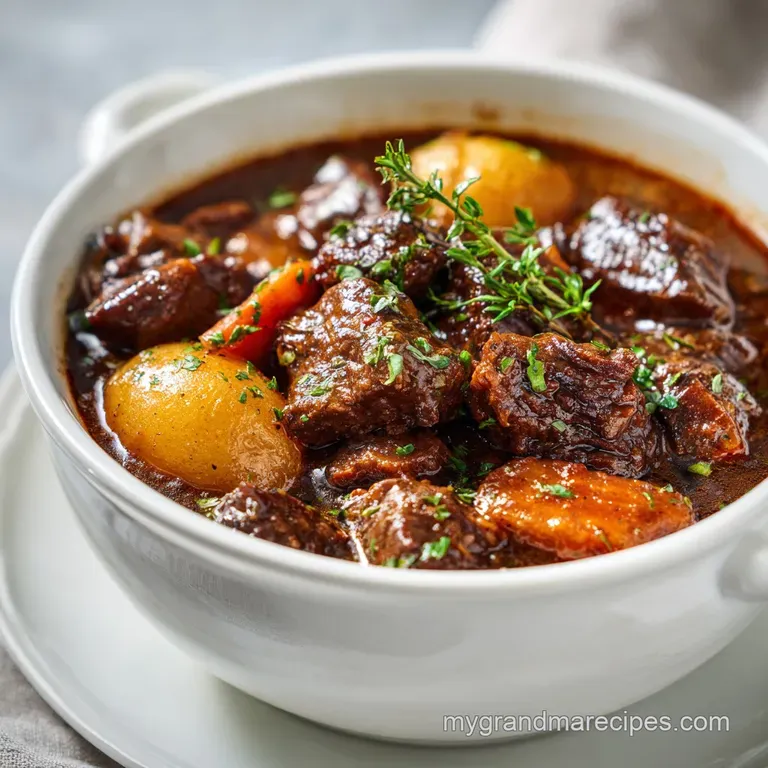
Before you even turn on the stove, make sure your beef is ready. If it's straight from the fridge and damp, it won't sear; it will steam. Pat it down with paper towels until it’s bone dry. This is the first step to achieving that mahogany crust we keep talking about.
Once the meat is dry, you're ready to start the flow of the cook.
- Prep the beef. Pat the 3 lbs of beef cubes dry with paper towels. Toss them in a large bowl with the 3 tbsp flour, 1 tsp sea salt, and 1 tsp cracked black pepper until every side is coated. Note: The flour acts as a thickener for the sauce later.
- Sear in batches. Heat 2 tbsp oil in your Dutch oven over medium high heat. Add the beef in small groups, making sure there is space between each piece. Cook until a dark mahogany crust forms on all sides, about 3-4 minutes per side. Remove and set aside.
- Sauté the aromatics. In the same pot, toss in the chopped yellow onion. Cook 4-5 minutes until they soften and turn translucent, picking up the brown bits from the beef.
- Add the garlic. Throw in the 4 minced garlic cloves and cook for 60 seconds until fragrant. Don't let the garlic turn dark brown or it will taste bitter.
- Deglaze the pot. Pour in the 0.5 cup of dry red wine. Scrape the bottom of the vessel with a wooden spoon to release all that flavor (the fond).
- Start the long braise. Return the beef and any juices to the pot. Pour in the 4 cups of beef bone broth. Bring it to a gentle boil, then immediately turn the heat to low.
- Simmer covered. Place the lid on tight and simmer for 2 hours. The liquid should be just barely bubbling.
- Add the vegetables. Carefully stir in the 1 lb of Yukon Gold potatoes and the sliced carrots.
- The final stretch. Cover again and simmer for an additional 30 minutes. The beef should be melt in-your mouth tender and the vegetables fork tender.
- Rest and serve. Turn off the heat and let the stew sit for 5-10 minutes before serving. This allows the sauce to thicken slightly more as it cools.
This long, slow process is what builds the flavor profile of a one pot classic beef stew. If you're looking for something lighter but with a similar flavor profile, you might enjoy my Beef Vegetable Soup recipe, which uses a lighter broth base.
Solving Common Cooking Texture Issues
Even with the best intentions, things can sometimes go sideways in the kitchen. The most common complaint with any beef stew is tough meat. Usually, this isn't because the meat is "bad," but because it hasn't cooked long enough. If you poke the beef at the 2 hour mark and it still feels tight, don't panic.
Just give it another 20-30 minutes. Every cow is different, and some cuts just need a little extra time to surrender.
If Your Beef is Still Tough
The connective tissue in beef chuck requires a sustained temperature of around 190°F (internally) to fully dissolve into gelatin. If your simmer was too low, the meat might still be resisting.
Conversely, if you boiled the stew vigorously, the muscle fibers might have tightened up and squeezed out all their moisture. Keep the heat at a whisper just a few bubbles breaking the surface now and then.
If Your Gravy is Too Thin
Sometimes the vegetables release more moisture than expected, or the lid was so tight that no evaporation occurred. If your stew looks more like soup, don't worry. You can fix this by taking the lid off for the last 15 minutes of cooking to let some steam escape.
Alternatively, mash one or two of the cooked potatoes against the side of the pot; the released starch will thicken the sauce instantly without changing the flavor.
| Problem | Root Cause | Solution |
|---|---|---|
| Meat is chewy | Collagen hasn't melted | Simmer for an extra 20-30 minutes until tender |
| Sauce is greasy | Excess fat from the chuck roast | Skim the surface with a wide spoon or a piece of bread |
| Vegetables are mushy | Added to the pot too early | Always wait until the final 30 minutes to add potatoes/carrots |
Common Mistakes Checklist
- ✓ Never crowd the pan when searing; steam is the enemy of a good crust.
- ✓ Don't skip the deglazing step; the red wine releases the best flavors from the pot's bottom.
- ✓ Keep the lid on during the first 2 hours to prevent the beef from drying out.
- ✓ Always use Yukon Gold or red potatoes; Russets will disappear into the sauce.
- ✓ Let the meat reach room temperature for 20 minutes before searing for a better crust.
Easy Swaps and Flavor Twists
While this recipe is a one pot classic beef stew through and through, there’s always room for a little personal flair. If you don't have red wine on hand, or prefer not to use it, you can swap it for an equal amount of beef broth plus a tablespoon of balsamic vinegar.
The vinegar provides the acidity needed to balance the fat, though you'll miss out on the deep fruitiness of the wine.
| Original Ingredient | Substitute | Why It Works |
|---|---|---|
| Dry Red Wine | Beef Broth + 1 tbsp Balsamic | Provides the necessary acidity to cut through fat |
| All Purpose Flour | Cornstarch (slurry) | Makes the dish gluten-free; add at the very end |
| Grapeseed Oil | Beef Tallow | Adds an incredible depth of traditional beef flavor |
For a Guinness Style Twist
If you want a deeper, slightly bitter profile, replace the red wine with 12 ounces of Guinness or another stout. The maltiness of the beer pairs beautifully with the beef and adds a dark, rich color to the gravy.
If you go this route, I recommend adding a teaspoon of brown sugar to help balance the bitterness of the hops. It creates a very different, but equally comforting, experience.
For those looking for a different kind of one pot comfort, you should try my Braised Cabbage with Beef. It uses similar techniques but focuses on the sweetness of slow cooked cabbage.
Safe Storage and Freezing Secrets
One of the best things about a one pot classic beef stew is that it actually tastes better on Tuesday than it did on Sunday. As the stew cools, the starches from the potatoes and the gelatin from the beef continue to thicken the sauce, and the flavors of the garlic, onions, and wine permeate the meat more deeply.
- Fridge: Store in an airtight container for up to 4 days. When reheating, you might need to add a splash of water or broth, as the sauce will thicken significantly in the cold.
- Freezer: This stew freezes beautifully for up to 3 months. However, be aware that potatoes can sometimes change texture after freezing, becoming slightly grainy. To minimize this, make sure the stew is completely cold before freezing.
- Zero Waste Tip: If you have a small amount of leftover gravy but no meat, use it as a base for a shepherd's pie or pour it over a pile of mashed potatoes for a quick lunch. You can also freeze the leftover "pot liquor" to use as a flavor starter for your next batch of soup.
To reheat, the stovetop is always better than the microwave. Place the stew in a small pot over medium low heat and stir occasionally. This ensures the beef heats through without becoming rubbery and the sauce maintains its silky consistency.
Plating and Serving Your Stew
When it comes to serving your one pot classic beef stew, simplicity is key. In our house, this always hits the table in big, wide bowls. Because the stew is so rich and heavy, you really don't need much else.
A thick slice of crusty sourdough or a piece of buttered cornbread is the perfect tool for wiping the bowl clean. You want something with enough structure to soak up that gravy without falling apart.
If you want to brighten up the plate, a sprinkle of fresh parsley or a few chives adds a pop of color and a fresh, herbaceous note that contrasts the deep, earthy flavors of the braise.
Some people like a dollop of sour cream or a bit of prepared horseradish on the side to add a sharp kick, which is a great way to wake up the palate halfway through the meal.
Decision Shortcut
- If you want a thicker, velvet like sauce, mash two potatoes into the broth at the end.
- If you want a brighter, more acidic finish, stir in a teaspoon of red wine vinegar just before serving.
- If you want a smokier flavor profile, add two slices of chopped bacon to the pot before sautéing the onions.
Regardless of how you serve it, remember that this is a meal meant for slow enjoyment. It took nearly three hours to build those flavors, so don't rush through the eating part. Take a moment to appreciate the way the beef falls apart and how the carrots have soaked up all that wine infused bone broth.
It's the kind of meal that reminds you why we cook in the first place to turn simple, honest ingredients into something that feels like home.
Very High in Sodium
945 mg of sodium per serving (41% of daily value)
The American Heart Association recommends no more than 2,300mg of sodium per day for most adults, with an ideal limit of about 1,500mg.
Tips to Reduce Sodium in Your Beef Chuck Roast
-
Choose Low-Sodium Bone Broth-30%
Swap the regular 4 cups of Beef Bone Broth with a low-sodium or no-salt added version. This is the biggest contributor to sodium in this recipe.
-
Halve Added Salt-25%
Reduce the 1 tsp of Sea salt to 0.5 tsp. You can always add more at the table if needed.
-
Boost Flavor with Herbs and Spices
Enhance the flavor without salt by adding more herbs like rosemary, thyme, and bay leaves, and increase the cracked black pepper. Consider adding onion powder and garlic powder (ensure they are salt free).
-
Use Unsalted Wine-5%
Ensure the 0.5 cup of Dry Red Wine you use is unsalted or low-sodium. Most wines have very little natural sodium.
Recipe FAQs
Is it better to use pre-cut stew meat from the store?
No, avoid pre-cut stew meat. These packages often contain a mix of different muscle cuts that cook at uneven rates, leading to some pieces being tough while others are tender. You will get the best results by hand cutting a fresh chuck roast into uniform 1.5 inch cubes yourself.
How to achieve the perfect mahogany crust on the beef?
Sear the beef in small batches over medium high heat. Ensure the pot is not crowded, as too much meat lowers the temperature and causes the beef to steam instead of developing that essential, flavor packed crust.
Is it true that I should add all vegetables at the same time as the beef?
No, this is a common misconception. Adding potatoes and carrots at the beginning will cause them to disintegrate during the 2-hour simmer; add them only during the final 30 minutes to ensure they remain fork tender.
How to ensure the gravy is thick and flavorful?
Deglaze the pot thoroughly with red wine after searing. By scraping up the browned bits, or fond, from the bottom of the pot, you incorporate all those concentrated savory flavors into the base of your sauce. If you enjoy building deep flavor foundations like this, see how the same principle works in our Slow Braised Beef Roast.
Can I speed up the cooking process?
No, the 175-minute total time is necessary for the collagen to break down. The connective tissue in the chuck roast requires a slow, low-temperature simmer to transform into a melt-in-your mouth texture.
How to store leftovers for the best taste?
Refrigerate the stew in an airtight container for up to three days. The flavors actually meld and improve significantly overnight, making it an ideal candidate for meal prep.
What should I look for when checking the beef for doneness?
Test the meat by pressing a cube with a fork. It should yield and pull apart with zero resistance; if it feels firm or bouncy, it requires more time to simmer in the beef bone broth.
One Pot Classic Beef Stew
Ingredients:
Instructions:
Nutrition Facts:
| Calories | 768 calories |
|---|---|
| Protein | 48g |
| Fat | 38g |
| Carbs | 24g |
| Fiber | 3.5g |
| Sugar | 4g |
| Sodium | 945mg |
