Old-Fashioned Potato Soup Recipe

- Effort/Time: 20 minute prep, 30 minute simmer
- Flavor Hook: Nutty sautéed aromatics paired with a tangy Greek yogurt finish
- Perfect for: Chilly weeknights or a reliable make-ahead lunch
- Mastering the Comfort of an Old-Fashioned Potato Soup Recipe
- Understanding the Essential Specs for a Hearty Meal
- The Humble Pantry Staples: Selecting Your Soup Elements
- Keeping It Simple with Basic Kitchen Tools
- From Simmer to Soulful: The Step-by-Step Method
- Avoiding Common Pitfalls and Ensuring Velvet Texture
- Creative Flavor Twists for This Classic Comfort Bowl
- ⚗️ The Scaling Lab: The Physics of Quantity
- Common Myths about Potato Soup
- Keeping the Leftovers Fresh and Freezing for Later
- Simple Touches for a Beautiful Tableside Finish
- Your Top Burning Questions about Making Potato Soup
- Recipe FAQs
- 📝 Recipe Card
Have you ever wondered why some soups feel thin and watery while others have a rich, velvet like weight that hugs the spoon? Growing up in my grandma’s kitchen in Tennessee, I watched her transform a few humble spuds and a yellow onion into something that could stop a winter chill in its tracks.
It wasn't about fancy ingredients; it was about the simple mastery of starch and patience in crafting the ultimate potato soup recipe.
This recipe skips the heavy cream in favor of a clever technique that uses the potatoes themselves to build body. We are looking for that specific moment when the edges of the potato cubes begin to soften and fray, naturally thickening the broth without the need for a flour based roux.
It is a straightforward, honest way of cooking that honors the ingredients, resulting in a superior potato soup recipe.
I remember the first time I tried to make this on my own in a tiny apartment with nothing but a beat-up pot and a wooden spoon. I realized then that you don't need a kitchen full of gadgets to find comfort.
All you need is the rhythmic sizzle of celery and onions hitting warm olive oil and the fragrant steam of simmering thyme to make a house feel like a home, using this fantastic potato soup recipe.
Mastering the Comfort of an Old-Fashioned Potato Soup Recipe
When you set out to make this potato soup recipe, you are participating in a tradition of resourceful cooking. The magic lies in the "Two-Potato Strategy." By using both Yukon Gold and Russet potatoes, we solve the age-old problem of texture.
The Yukons hold their shape, providing those buttery, tender bites, while the Russets break down, releasing amylose starch to create a thick, naturally creamy base, which is key to any great potato soup recipe.
The Chemistry of Starch Release
As the potatoes simmer in the low-sodium chicken bone broth, the starch granules swell and eventually burst. This process, known as starch gelatinization, turns the thin liquid into a hearty soup. If you use only waxy potatoes like Red Bliss, the soup stays thin.
If you use only starchy potatoes like Russets, the soup can become grainy. This balanced potato soup recipe uses both to ensure a silky mouthfeel. A successful thickener is what defines this classic potato soup recipe.
Layering the Aromatic Foundation
We start by sweating the "holy trinity" of this dish: diced yellow onion, thin sliced celery, and shredded carrot. This isn't just about softening vegetables; it's about the Maillard reaction.
By sautéing them in Bertolli extra virgin olive oil until the onions turn translucent and the carrots release their natural sugars, we create a deep, savory base that water alone could never provide for your potato soup recipe.
Understanding the Essential Specs for a Hearty Meal
Before we reach for the peeler, let's look at the logistics of this dish. This is a high yield, low-stress meal designed for busy households looking for the perfect potato soup recipe.
| Metric | Detail |
|---|---|
| Total Time | 50 minutes |
| Prep Time | 20 minutes |
| Cook Time | 30 minutes |
| Yield | 6 servings (approx. 1.5 cups each) |
| Primary Texture | Velvety with tender chunks |
| Difficulty | Beginner friendly |
Precision Checkpoints for Success
- The Cube Rule: Cut all potatoes into consistent 1/2 inch pieces. This ensures they reach the "fork tender" stage simultaneously, preventing some bits from being mushy while others are crunchy.
- The Simmer Signal: Keep the liquid at a gentle bubble, not a rolling boil. A hard boil can toughen the potato proteins and cause the broth to cloud excessively when making this potato soup recipe.
- The Texture Test: At the 20 minute mark, press a potato cube against the side of your Lodge Dutch Oven. If it shatters easily with light pressure, it is ready for the finish, signaling success for this potato soup recipe.
The Humble Pantry Staples: Selecting Your Soup Elements
Selecting the right components is the difference between a flat flavor and a vibrant one. We focus on high-quality basics that grandma would approve of for this comforting potato soup recipe.
- 2 lbs Yukon Gold Potatoes: Why this? Medium starch content provides a buttery flavor and holds shape through simmering.
- 1 lb Russet Potatoes: Why this? High starch content (amylose) breaks down to naturally thicken the soup base.
- 6 cups Chicken Bone Broth: Why this? Bone broth provides collagen for a richer mouthfeel than standard vegetable stock.
- 1 cup Plain 2% Greek Yogurt: Why this? Adds acidity and fat for a creamy finish without the heaviness of 36% fat cream.
- 1 large Yellow Onion: Provides the sulfurous backbone of the flavor profile.
- 1 large Carrot (shredded): Adds a subtle sweetness and a golden hue to the finished broth.
- 2 stalks Celery: Offers a clean, herbal undertone that cuts through the starch.
- 3 cloves Garlic: Mince these fresh to ensure the pungent allicin compounds are at their peak.
Ingredient Chemistry Breakdown
| Ingredient | Chemical/Physical Role (Science) | The Pro Secret (Why This Matters) |
|---|---|---|
| Russet Potatoes | Starch gelatinization and cell wall breakdown | Acts as a "hidden" thickener, removing the need for flour or cornstarch. |
| Extra Virgin Olive Oil | Fat-soluble flavor extraction | Carries the aromatic compounds of the garlic and thyme throughout the water based broth. |
| Greek Yogurt | Protein stabilized emulsion | The lactic acid brightens the heavy starches, making the soup feel lighter on the palate. |
| Dried Thyme | Terpene release via heat | Long simmering extracts thymol, which provides a woodsy, earthy aroma that complements potatoes. |
Keeping It Simple with Basic Kitchen Tools
You don't need a high end food processor for this potato soup recipe. In fact, a bit of manual labor often yields a better texture.
- Lodge 6 Quart Cast Iron Dutch Oven: This is the workhorse of the Tennessee kitchen. The heavy bottom prevents the potatoes from scorching as they settle during the simmer.
- Y-Shaped Vegetable Peeler: More ergonomic for peeling 3 lbs of potatoes quickly.
- Chef's Knife (8 inch): A sharp blade is essential for uniform 1/2 inch cubes.
- Wooden Spoon: Ideal for scraping the "fond" (browned bits) off the bottom of the pot.
- Immersion Blender (Optional): If you prefer a smoother soup, a KitchenAid immersion blender allows you to blend directly in the pot. If you don't have one, a simple potato masher works for a chunky, rustic finish.
Chef's Note: If using a standard upright blender, never fill it more than halfway with hot liquid. The steam expansion can blow the lid off. Blend in small batches and hold the lid down with a folded kitchen towel.
From Simmer to Soulful: The step-by-step Method
Follow these atomic steps to ensure your potato soup recipe turns out perfect every time. This method focuses on building flavor from the bottom up.
- Sauté the aromatics. Heat 2 tbsp extra virgin olive oil in your Dutch oven over medium heat for 2 min until the oil shimmers and a drop of water sizzles instantly.
- Soften the vegetables. Add the diced yellow onion, sliced celery, and shredded carrot. Sauté for 6 min until the onions turn translucent and the celery loses its rigid snap.
- Bloom the garlic. Stir in the 3 minced garlic cloves for 1 min until a pungent, nutty aroma fills the kitchen. Note: Adding garlic too early causes bitterness from burning.
- Toast the herbs. Add 1 tsp dried thyme and 1 bay leaf, stirring for 30 seconds until the herbal fragrance intensifies.
- Incorporate the potatoes. Add the 2 lbs Yukon Gold and 1 lb Russet cubes. Toss well to coat in the aromatic oil for 2 min until the edges of the potatoes look slightly shiny.
- Add the liquid. Pour in 6 cups of chicken bone broth. Increase heat to medium high until a vigorous bubble begins.
- Simmer gently. Reduce heat to low-medium, add 1 tsp sea salt and 0.5 tsp cracked black pepper. Cover partially and simmer for 20 25 min until the potatoes are fork tender and the broth has thickened slightly.
- Texture adjustment. Use an immersion blender to pulse the soup 3 4 times. Stop when about half the potatoes are pureed but distinct chunks remain.
- Temper the yogurt. In a small bowl, whisk 1/2 cup of the hot broth into the 1 cup of Greek yogurt. Note: This prevents the yogurt from curdling when added to the pot.
- Final finish. Stir the tempered yogurt into the pot. Heat for 2 min until the soup is uniform in color and steaming, but not boiling.
- Garnish and serve. Remove the bay leaf. Ladle into bowls and top with fresh minced chives.
Avoiding Common Pitfalls and Ensuring Velvet Texture
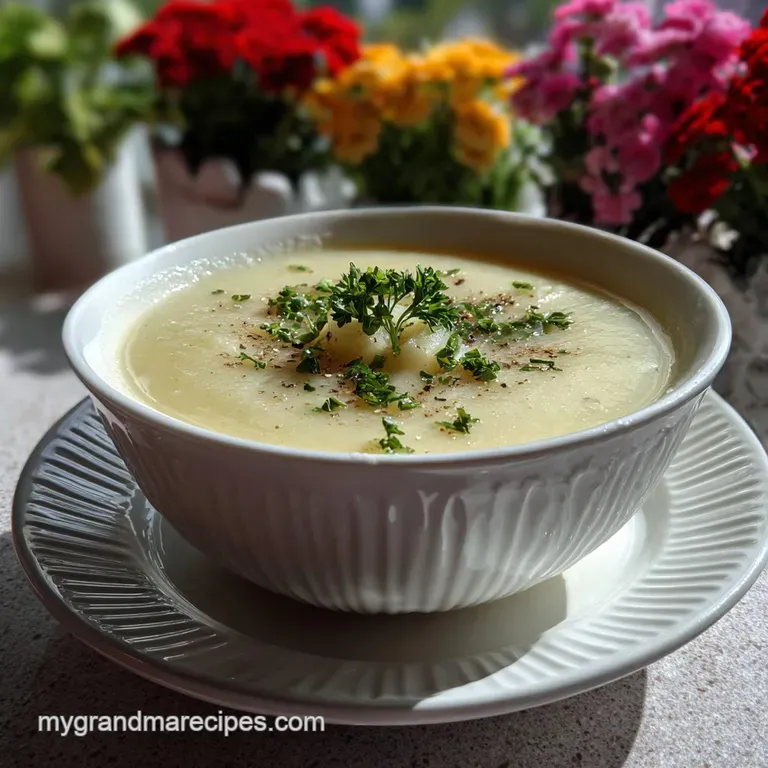
Even with the best intentions, a potato soup recipe can go sideways if the science isn't respected. This is particularly true when it comes to the texture of the starch.
Why Your Soup Becomes Gummy
If you over process potatoes, specifically with a high speed blender, you shear the starch molecules. This releases too much starch at once, creating a texture similar to glue or wallpaper paste. This is why I always recommend a few pulses with an immersion blender or a manual masher.
You want to preserve some of the cellular structure of the Yukon Golds.
| Problem | Root Cause | The Fix | Pro Protocol |
|---|---|---|---|
| Gummy Texture | Excessive starch shearing from over blending. | Switch to a manual masher for half the batch. | Pulse the blender for 2 seconds at a time; never run it continuously. |
| Bland Flavor | Lack of salt or acid to balance the starch. | Add a splash of apple cider vinegar or more salt. | Season in layers: once at the sauté stage and once at the finish. |
| Thin/Watery | Not enough Russet potatoes used. | Mash a larger portion of the potatoes into the broth. | Simmer uncovered for 10 extra minutes to evaporate excess liquid. |
Fresh vs. Shortcut Comparison
| Feature | Fresh Potato Blend (This Recipe) | Canned/Frozen Shortcut |
|---|---|---|
| Texture | Complex: mix of creamy and chunky | Uniformly soft or mushy |
| Nutrients | High (collagen from bone broth, fiber from fresh veg) | Lower (often high in sodium/preservatives) |
| Flavor Profile | Bright and aromatic with fresh thyme | Flat, often overly salty |
Creative Flavor Twists for This Classic Comfort Bowl
Once you've mastered the base potato soup recipe, you can tweak it to suit your mood or what’s in the pantry. This soup pairs beautifully with a Coleslaw Recipe for a cool, crunchy contrast on the side.
- Adding a Smoky Kick: Stir in 1/2 cup of crumbled cooked bacon and 1/2 tsp of smoked paprika at the end. The smoke cuts through the creaminess of the yogurt perfectly.
- Going Fully Plant Based: Swap the chicken bone broth for vegetable broth and use a full fat coconut milk or cashew cream instead of Greek yogurt.
- The Loaded Baked Potato Version: Top your bowl with shredded sharp cheddar cheese, extra chives, and a dollop of sour cream. It’s a favorite for Sunday dinner alongside a crispy Fried Chicken Recipe.
"If you want X, do Y" Decision Shortcut
- If you want a silkier soup, blend 75% of the potatoes and leave only 25% chunky. This maintains the texture integrity of the classic potato soup recipe.
- If you want more protein, stir in shredded rotisserie chicken during the last 5 minutes of simmering.
- If you want it spicier, sauté a diced jalapeño (seeds removed) with the onions and celery.
⚗️ The Scaling Lab: The Physics of Quantity
Doubling this potato soup recipe for a crowd involves more than just doubling the numbers. You have to account for thermodynamics.
- The Evaporation Paradox: When you double the ingredients in a standard large pot, the surface area doesn't necessarily double. This means less steam escapes relative to the volume. Reduce your total broth by 10% (about 1/2 cup less) to avoid a watery result when scaling this potato soup recipe.
- Flavor Saturation: Scale the salt and thyme to 1.5x rather than 2x. You can always add more salt at the end, but potatoes absorb salt at a non-linear rate, and over salting a large batch is a common disaster when making a large potato soup recipe.
- Thermal Mass: A double batch of potatoes (6 lbs total) will take significantly longer to reach a boil. Do not rush this by turning the heat to "High." The potatoes at the bottom will scorch before the liquid at the top is hot. Use "Medium High" and stir every 3 4 minutes.
- Carry Over Cooking: A larger volume of soup holds heat much longer. Pull the pot off the stove when the potatoes are just tender. If you wait until they are falling apart, the residual heat will turn the whole batch into mashed potatoes by the time you serve it.
Common Myths about Potato Soup
Myth: You must peel every potato for a "professional" soup.Truth: Leaving a few strips of skin on the Yukon Golds adds texture and rustic charm, not to mention extra potassium and fiber. Just ensure they are scrubbed clean.
Myth: Boiling the soup hard makes it cook faster.Truth: A hard boil knocks the potatoes against each other, creating "potato dust" that makes the soup cloudy and gritty.
A gentle simmer preserves the integrity of the cubes, ensuring a better result for your potato soup recipe.
Myth: Heavy cream is necessary for a rich mouthfeel.Truth: The starch from the Russet potatoes combined with the protein in Greek yogurt provides a rich, "fatty" mouthfeel with significantly fewer calories and a much brighter flavor profile.
Keeping the Leftovers Fresh and Freezing for Later
Potato soup is a legendary make-ahead meal. It often tastes better the second day as the starches and aromatics have more time to meld. Mastering the storage of this potato soup recipe is key to enjoying it all week.
- Storage: Store in an airtight container in the fridge for up to 4 days.
- Freezing: This soup freezes well for up to 3 months. However, the Greek yogurt may separate slightly upon thawing. Pro Tip: If freezing, stop before adding the yogurt. Add fresh yogurt when you reheat.
- Reheating: Reheat on the stovetop over low heat. If the soup has thickened too much in the fridge (which it will, as starch continues to hydrate), whisk in a splash of broth or water to loosen it up.
💡 ZERO WASTE PHILOSOPHY
Don't discard those potato peels! Transform: Toss the clean peels with olive oil and salt, then roast at 400°F until crispy. Science: The peels are rich in pectin and fiber, making them a crunchy, nutritious garnish that adds a "toasted" flavor to your bowl.
You can also save your celery hearts and onion ends in a bag in the freezer to make your next batch of homemade broth.
Simple Touches for a Beautiful Tableside Finish
Presentation isn't about being fancy; it's about the sensory anticipation of a good meal. A pale bowl of soup can look uninviting without a pop of color when serving your potato soup recipe.
- The Green Contrast: Fresh minced chives are non-negotiable. The bright green color and mild onion bite break up the visual and flavor density of the potatoes.
- Texture Topping: A few reserved cubes of potato that haven't been mashed provide a visual "anchor" for the dish.
- The Finishing Oil: A tiny drizzle of high-quality extra virgin olive oil right before serving adds a fruity aroma that hits the nose as soon as the bowl is placed on the table.
- Side Pairing: Serve this alongside some Deviled Eggs Recipe for a classic lunch spread that feels complete and traditional.
Your Top Burning Questions about Making Potato Soup
Can I leave the skins on for this potato soup recipe?
Yes, but I recommend peeling the Russets. Their skin is thick and can feel papery in a soup. The Yukon Gold skins are thin and tender enough to leave on if you prefer a more rustic, "farmhouse" style soup.
How do I know when the potatoes are done?
Use the "Fork Test." If you can pierce a cube and the fork slides out without the potato lifting off the bottom of the pot, it's done. Typically, this takes 20 to 25 minutes at a gentle simmer.
Can I make this in a slow cooker?
Absolutely. Sauté the aromatics in a pan first (don't skip this it builds the flavor base!), then add everything except the yogurt to the slow cooker. Cook on Low for 6 7 hours or High for 3 4 hours. Stir in the yogurt right before serving.
What if I don't have an immersion blender?
Use a standard potato masher or even a large fork to crush about half of the potatoes against the side of the pot. It results in a chunkier, more "home style" texture that many people actually prefer over a smooth puree when making this potato soup recipe.
Can I use red potatoes instead?
You can, but since red potatoes are very waxy (low starch), the soup will be much thinner. If you go this route, you may need to mash more of the potatoes or add a small cornstarch slurry (1 tbsp cornstarch mixed with 1 tbsp water) at the end to get the right thickness.
How do I make this soup even lower in calories?
This potato soup recipe is already quite light because it uses Greek yogurt instead of cream. To lower it further, you can increase the ratio of celery and carrots and decrease the potatoes slightly, or use a fat-free Greek yogurt, though the mouthfeel won't be quite as velvety.
Recipe FAQs
Can I use only one type of potato in this recipe?
No. Using only Russets results in mush; only Yukon Golds result in a thin broth. The two-potato strategy is crucial because Russets release amylose starch for thickening, while Yukons maintain buttery structure.
Does browning the vegetables (the Maillard reaction) really matter?
Yes. Sautéing builds savory depth before liquid is added. Browning the onions and carrots caramelizes their sugars, creating a non-watery, complex flavor foundation essential to the soup's character.
Why is my soup thick and gummy after blending?
Excessive starch shearing causes gummy, glue like texture. High speed blending ruptures too many starch granules simultaneously, releasing unbound amylose that thickens past creaminess into a paste.
- Use an immersion blender on pulse settings only
- Manually crush half the potatoes with a masher
- Maintain 25% visible potato chunks for structure
Is it better to use heavy cream or Greek yogurt for richness?
Greek yogurt offers necessary acidity and body without heaviness. Cream adds pure fat saturation, resulting in a flatter, richer mouthfeel, while yogurt’s lactic acid brightens the starch base.
Myth: Washing raw chicken spreads bacteria onto kitchen surfaces.
Myth: Washing raw chicken spreads bacteria onto kitchen surfaces. Reality: USDA confirms this action splashes Salmonella via aerosols, contaminating sinks. Cooking to 165°F is the only true pathogen killer.
Must I use bone broth instead of standard chicken broth?
Bone broth provides superior mouthfeel due to collagen content. Standard broth lacks the dissolved gelatin that bone broth contributes, which helps the final soup feel richer even without added dairy fat.
Myth: Boiling the soup speeds up the cooking time significantly.
Myth: Boiling the soup speeds up the cooking time significantly. Reality: A hard boil causes mechanical damage, potentially clouding the broth and creating gritty starch dust. A gentle simmer is required for uniform softening.
Old Fashioned Potato Soup Recipe
Ingredients:
Instructions:
Nutrition Facts:
| Calories | 281 kcal |
|---|---|
| Protein | 10.4 g |
| Fat | 5.7 g |
| Carbs | 49 g |
| Fiber | 5.2 g |
| Sugar | 5.8 g |
| Sodium | 512 mg |
