Masterclass Apple Pie Recipe from Scratch
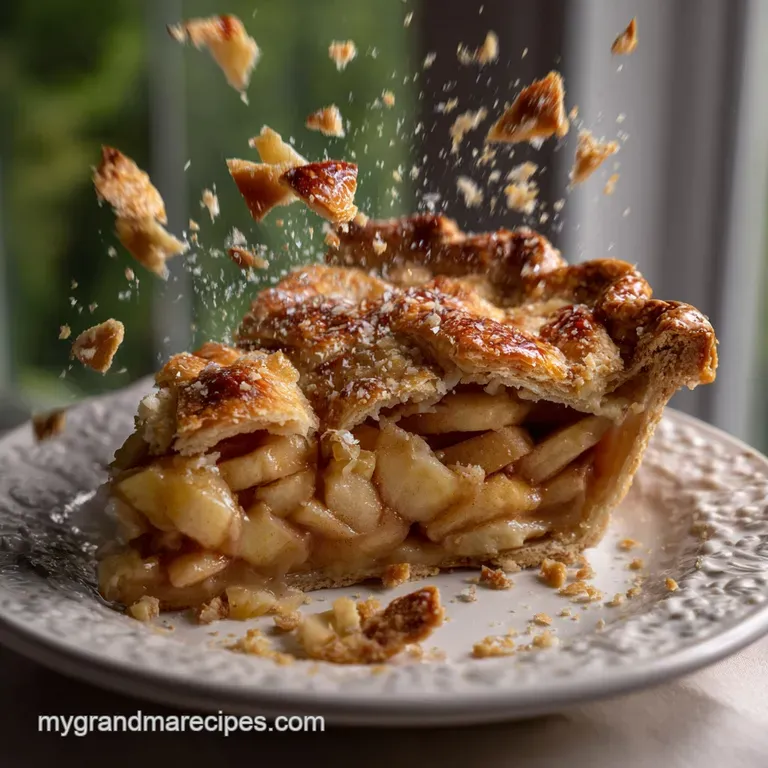
- Effort/Time: 1 hour 40 mins (plus chilling)
- Flavor Hook: Warm cinnamon and buttery, salt-kissed pastry.
- Perfect for: Sunday family gatherings and holiday centerpieces.
- Perfecting Your Family Heritage: The Apple Pie Recipe from Scratch
- The Physics of the Perfect Flake
- Selecting Your Pantry Essentials
- Engineering the Perfect Bake
- Rescuing Your Crust from Disaster
- The Math of Multiplication: Batch Expansion Protocol
- Debunking Kitchen Folklore
- Preservation Protocols and Scraps Transformation
- Recipe FAQs
- 📝 Recipe Card
Perfecting Your Family Heritage: The Apple Pie Recipe from Scratch
Sunday afternoons in my Tennessee kitchen always start with the rhythmic thud of a rolling pin and the sweet, sharp scent of peeled fruit. There is something deeply grounding about building an apple pie recipe from scratch, a skill passed down through generations that requires more instinct than high tech gadgets.
Whether it is for a celebratory feast or a quiet weekend treat, this dish represents the pinnacle of home baked comfort.
We often compare the speed of a store-bought crust to the labor of a classic handmade dough, but the results are worlds apart. A classic crust offers a structural integrity and a rich, buttery depth that pre-made options simply cannot replicate.
While a fast version might save 30 minutes, it loses the distinct layers of fat that define a truly world class dessert.
This specific method focuses on reliability and minimal tool usage, perfect for a busy cook who still values the old-fashioned way. You do not need an expensive food processor; a simple pastry cutter or even your cold fingertips will do the trick.
By following these traditional steps, you are not just making dessert; you are preserving a piece of culinary history that tastes better with every slice.
Comparing Fast vs. Classic Methods
| Feature | Fast (store-bought) | Classic (From Scratch) |
|---|---|---|
| Texture | Uniform, often crumbly | Layered, shattering, and flaky |
| Flavor Profile | Neutral or artificial | Nutty butter notes and real spice |
| Structural Integrity | Prone to "soggy bottom" | Crisp base that supports heavy fruit |
The Physics of the Perfect Flake
Success in baking is rarely about luck; it is about managing the temperature and moisture of your ingredients to control chemical reactions. When you master an apple pie recipe from scratch, you are essentially conducting a lesson in thermodynamics.
- Laminated Fat Pockets: Frozen 225g unsalted butter remains solid until it hits the oven's heat, where it evaporates instantly. This steam forces the flour layers apart, creating the "shatter" effect.
- Gluten Inhibition: Keeping the 120ml ice water and flour cold prevents the over development of gluten. This ensures the crust remains tender and short rather than tough and bread like.
- Pectin Stabilization: The addition of 15ml lemon juice lowers the pH of the filling. This acidity strengthens the pectin in the 1.3kg mixed apples, allowing them to soften without turning into mush.
- Osmotic Pressure Management: Mixing the 150g granulated sugar with the fruit draws out excess moisture before baking. This prevents a "soupy" filling that would otherwise compromise the bottom crust.
Deciphering the Material Science of Pastry
| Ingredient | Chemical/Physical Role (Science) | The Pro Secret (Why This Matters) |
|---|---|---|
| 315g All-Purpose Flour | Provides the starch matrix for gluten formation | Chilling the flour prevents fat from melting during the initial mix. |
| 225g Unsalted Butter | Creates steam vents via water evaporation | Using frozen butter ensures distinct fat chunks for a visible "flake." |
| 25g Cornstarch | Gelatinizes at high heat to thicken fruit juices | It creates a clear, glossy set that does not cloud the fruit's color. |
| 1.3kg Mixed Apples | Provides structural cellulose and natural sugars | Mixing varieties balances the tartness of Granny Smith with the sweetness of Honeycrisp. |
Selecting Your Pantry Essentials
For a successful apple pie recipe from scratch, every element must be chosen for its functional properties. We use 315g all-purpose flour because it has the middle ground protein content required for both strength and tenderness. Similar to the principles used in a Fried Chicken Recipe, the temperature of your components dictates the final texture.
- 315g All-Purpose Flour (Chilled): Why this? Medium protein levels allow for a flexible dough that doesn't become rubbery.
- 225g Unsalted Butter (Frozen and Cubed): Why this? High fat-to-water ratio is essential for the steam leavening process.
- 5g Fine Sea Salt: Enhances the sweetness of the fruit and the nuttiness of the butter.
- 12g Granulated Sugar: Provides just enough sweetness to encourage browning in the crust.
- 120ml Ice Water: Hydrates the flour while keeping the fat chunks intact.
- 1.3kg Mixed Apples (Granny Smith and Honeycrisp): Why this? Mixed varieties provide a complex flavor profile and varying textures.
- 150g Granulated Sugar: Sweetens the fruit and aids in moisture release.
- 50g Light Brown Sugar (Packed): Why this? Molasses content adds depth and a slight caramel note to the filling.
- 2g Ground Cinnamon: The primary aromatic driver for the filling.
- 1g Ground Nutmeg: Adds a warm, earthy undertone that complements the fruit.
- 15ml Lemon Juice: Prevents oxidation and balances the sugars.
- 25g Cornstarch: Why this? Thickens juices into a velvety sauce that clings to the fruit.
- 1 Large Egg: For the egg wash.
- 15ml Water: To thin the egg wash for even application.
- 15g Demerara Sugar: For a crunchy, sparkling finish on the top crust.
| Original Ingredient | Substitute | Why It Works |
|---|---|---|
| Unsalted Butter | high-quality Lard | Lard has larger fat crystals, making an even flakier crust. |
| Mixed Apples | Pears (Bosc or Anjou) | Similar density; requires 5g extra cornstarch for higher water content. |
| Cornstarch | Instant ClearJel | Remains stable at high temps without a "starchy" taste. |
| Demerara Sugar | Turbinado Sugar | Similar large grain structure for a satisfying crunch. |
Chef's Tip: Grate your 225g frozen butter with a box grater directly into the flour. This creates uniform "petals" of fat that incorporate quickly without the risk of over handling and melting.
Engineering the Perfect Bake
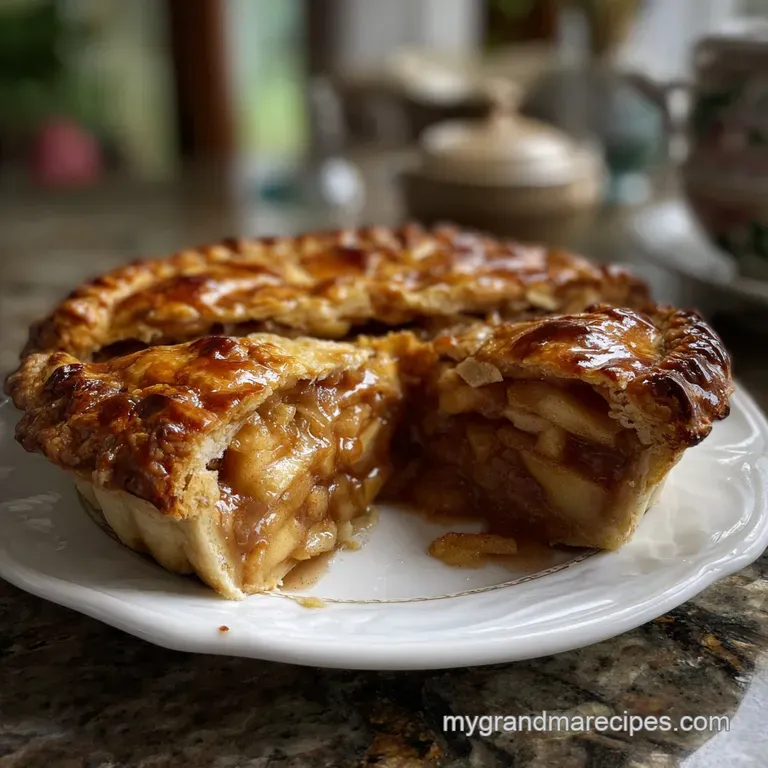
Creating this recipe from scratch requires a methodical approach to temperature and assembly. Follow these steps precisely for a result that rivals any professional bakery.
- Sift the 315g all-purpose flour, 5g fine sea salt, and 12g granulated sugar into a large, chilled bowl.
- Incorporate the 225g frozen cubed butter using a pastry cutter until the mixture resembles coarse meal with pea-sized lumps.
- Drizzle the 120ml ice water over the flour mixture one tablespoon at a time, tossing with a fork until the dough barely holds together when squeezed.
- Divide the dough into two disks, wrap in plastic, and chill for at least 1 hour until firm to the touch.
- Peel and slice the 1.3kg mixed apples into 1/4 inch slices until you have a large mound of uniform fruit.
- Macerate the apples by tossing them with 150g granulated sugar, 50g light brown sugar, 2g cinnamon, 1g nutmeg, and 15ml lemon juice; let sit for 30 minutes until juices pool at the bottom.
- Stir the 25g cornstarch into the fruit mixture until the white powder disappears and the juices look slightly cloudy.
- Roll out one dough disk on a floured surface to 12 inches until it is roughly 1/8 inch thick and translucent at the edges.
- Transfer the dough to a 9 inch pie plate and fill with the fruit mixture, mounding it slightly in the center.
- Top with the second rolled dough disk, crimp the edges tightly until sealed, and cut four 2 inch steam vents.
- Whisk the large egg with 15ml water and brush over the crust until the surface is evenly glistening.
- Sprinkle with 15g demerara sugar and bake at 400°F (200°C) for 55 minutes until the crust is deep mahogany and the filling bubbles thickly through the vents.
Precision Checkpoints
- Internal Temperature: The filling must reach 200°F (93°C) to ensure the cornstarch is fully activated.
- Chilling Time: A minimum of 60 minutes is required to relax the gluten network.
- Dough Thickness: Aim for exactly 3mm (1/8 inch) for the optimal ratio of crust to fruit.
Rescuing Your Crust from Disaster
Even when following an apple pie recipe from scratch, issues can arise due to humidity or kitchen temperature. Understanding the science behind these problems allows you to fix them in real time.
Why Your Crust Shrinks
If your dough pulls away from the edges of the pan, you likely have over developed the gluten. This happens when the dough is worked too much or not allowed to rest. Gluten acts like a rubber band; if you stretch it and bake it immediately, it will snap back.
Proper resting allows these proteins to relax and hold their shape during the heat transition.
Why the Bottom is Soggy
A "soggy bottom" is usually the result of starch gelatinization failing to happen quickly enough. If the fruit releases its juices before the crust has set, the liquid soaks into the raw dough.
Baking on the lowest oven rack or using a preheated baking sheet can provide the immediate thermal energy needed to sear the bottom crust.
| Problem | Root Cause | The Fix | Pro Protocol |
|---|---|---|---|
| Tough Crust | Over handling/Gluten | Add 1 tsp of vodka to water | Alcohol inhibits gluten formation better than water. |
| Gap Under Top Crust | Apple collapse | Macerate fruit for 30 mins | Pre-shrinking the fruit prevents the "dome" from hollowing. |
| Runny Filling | Low internal temp | Bake until bubbles are slow | Bubbles must be thick and sluggish to signal a set. |
The Math of Multiplication: Batch Expansion Protocol
When doubling an apple pie recipe from scratch for a large gathering, you cannot simply double everything. The physics of the bake change as the mass increases.
- The Square Cube Law: A double batch of dough has significantly more volume than surface area. This means the center will stay cold longer. Fix: Ensure your butter is exceptionally cold and work in two separate batches to avoid heat transfer from your hands.
- The Evaporation Paradox: If you are making multiple pies, do not crowd the oven. Two pies side-by-side block air circulation. Instruction: Rotate the pies halfway through the 55 minute bake time to ensure even browning.
- Flavor Saturation: When doubling the filling, scale the 2g cinnamon and 1g nutmeg to 1.5x instead of 2x. Spices can become overwhelming and "dusty" in larger quantities.
- Carry Over Cooking: A larger pie holds more thermal mass. Pull the pie when the juices are bubbling but before the crust is dark brown, as the internal temperature will continue to rise by 5 8°F while resting.
- - If you want a Crispy Base
- Pre-heat a heavy cookie sheet and place the pie directly on it.
- - If you want a High Shine
- Use only the egg yolk and a pinch of salt for the wash.
- - If you want Soft Fruit
- Use only Honeycrisp apples and slice them 1/8 inch thin.
Debunking Kitchen Folklore
There are many myths surrounding the apple pie recipe from scratch. Let's look at what the science actually says.
- Myth: You must use Granny Smith apples for pie.
Truth: While they provide tartness, Granny Smiths lack the complex sugars found in varieties like Honeycrisp or Braeburn. A mix is always superior for depth of flavor.
Myth: Adding more water makes the dough easier to roll.
Truth: Excess water leads to more gluten development and a tough, bread like texture. Use the absolute minimum amount of 120ml ice water needed to hold the flour together.
Myth: You should never use a glass pie dish.
- Truth: Glass is actually excellent for beginners because it allows you to see if the bottom crust has turned golden brown.
Preservation Protocols and Scraps Transformation
Storing your apple pie recipe from scratch properly ensures that the crust stays crisp and the filling remains stable. This is a traditional dessert that actually benefits from a few hours of resting to let the starches set. Just like a Pound Cake Recipe, it is best served at room temperature or slightly warmed.
- Fridge: 4 days in an airtight container or tightly wrapped in foil.
- Freeze: 3 months. For best results, freeze the pie unbaked, then bake directly from frozen, adding 15 20 minutes to the time.
- Reheat:350°F (175°C) oven for 10 15 minutes until the crust sizzles slightly and the center is warm. Avoid the microwave, which turns the crust rubbery.
Zero Waste Philosophy
- - Dough Scraps? Transform
- Roll them out, sprinkle with cinnamon sugar, and bake for 10 minutes. Science: These "pie fries" utilize the remaining fat layers for a quick, crunchy snack.
- - Apple Peels? Transform
- Simmer with a splash of water and a cinnamon stick to make a quick stovetop potpourri or a base for apple jelly. Science: Peels contain the highest concentration of pectin, which acts as a natural thickener.
- - Leftover Egg Wash? Transform
- Whisk into your morning scrambled eggs. Science: The small amount of water added doesn't affect the protein structure but prevents waste.
Building an apple pie recipe from scratch is an act of patience and precision. By respecting the cold temperatures of your fats and the chemistry of your fruit, you create a dessert that is far more than the sum of its parts.
Trust the process, watch for the mahogany finish, and enjoy the shattering flake of a truly old-fashioned masterpiece.
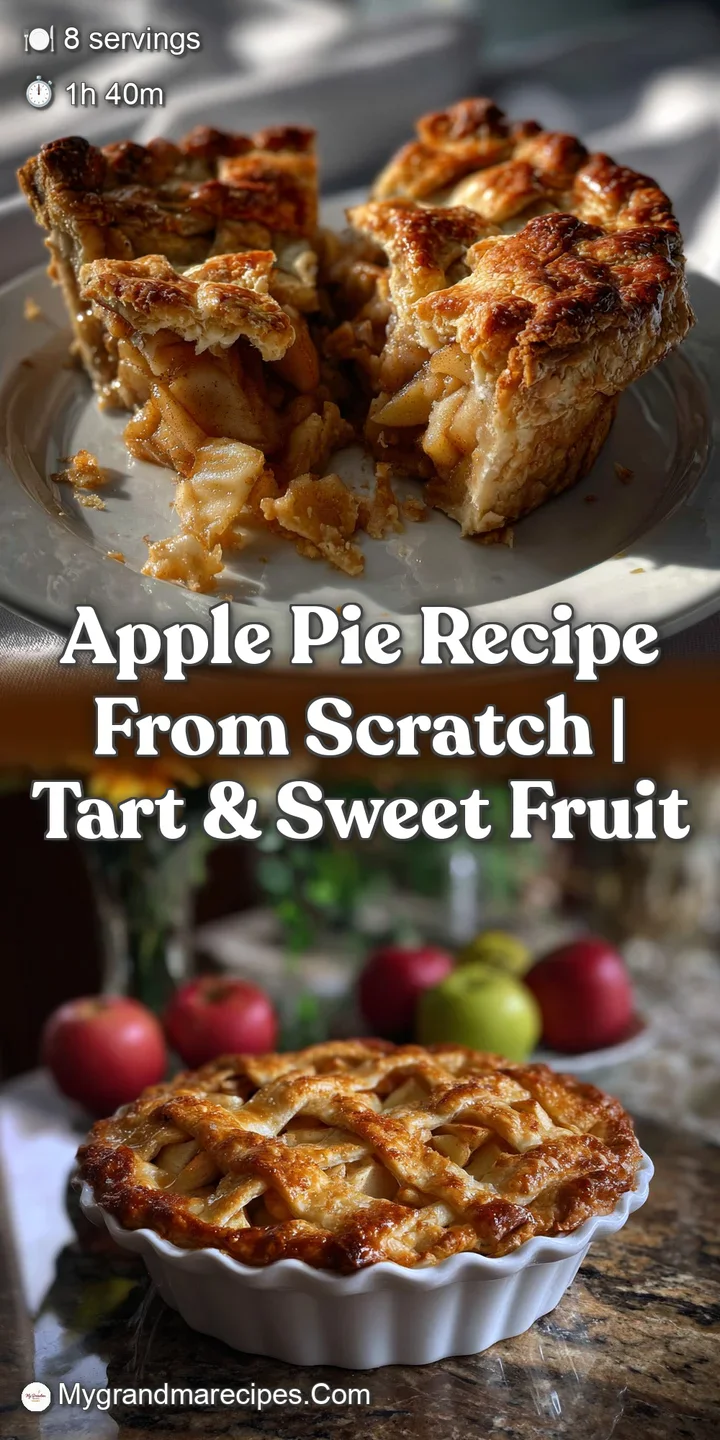
Recipe FAQs
Should I pre-bake the bottom crust to prevent sogginess?
No. Blind baking lowers the internal temperature needed for starch setting. Blind baking seals the crust prematurely, preventing the starch from thickening the juices adequately upon the final bake.
- Bake on the lowest rack
- Use a metal or glass pie dish
- Ensure ample cornstarch is present
Is using frozen butter mandatory for a flaky crust?
Yes. Frozen butter creates superior steam leavening pockets. Solid, frozen fat melts slowly in the oven, turning water content into steam that forces the dough layers apart. This physical separation is what forms the characteristic "shatter."
Does adding salt to the filling matter?
Yes. Salt enhances sweetness and butter flavor complexity. Salt suppresses bitter flavor perception while amplifying the fruit's natural sugars. It is crucial for flavor balance against high sugar content.
Can I substitute the mixed apples with only Granny Smiths?
Myth: Only Granny Smith apples yield a tart pie. Reality: Solely using tart apples results in one-dimensional flavor lacking necessary sweetness depth. A blend ensures structural integrity and complex taste.
What is the ideal temperature for the ice water?
Just above freezing, near 33°F (0.5°C). Water below 40°F prevents gluten formation while keeping the butter solid. Over hydrating or warming the flour leads to a tough, short, non-flaky dough.
Should I use high protein bread flour instead of AP flour?
All-Purpose flour provides the necessary mid-range protein for tenderness. Bread flour develops too much gluten, resulting in a crust that is chewy rather than flaky. AP flour balances structure with desirable short texture.
How long should the macerated apples sit before baking?
30 minutes is optimal for sufficient osmotic moisture draw. Allowing the fruit to sit draws out excess water, which is then bound by the added cornstarch. Letting it sit longer than 45 minutes risks over softening the pectin structure.
Masterclass Apple Pie From Scratch
Ingredients:
Instructions:
Nutrition Facts:
| Calories | 541 kcal |
|---|---|
| Protein | 5.1 g |
| Fat | 23.8 g |
| Carbs | 78.4 g |
| Fiber | 3.2 g |
| Sugar | 48.1 g |
| Sodium | 252 mg |
