Huli Huli Chicken Sauce
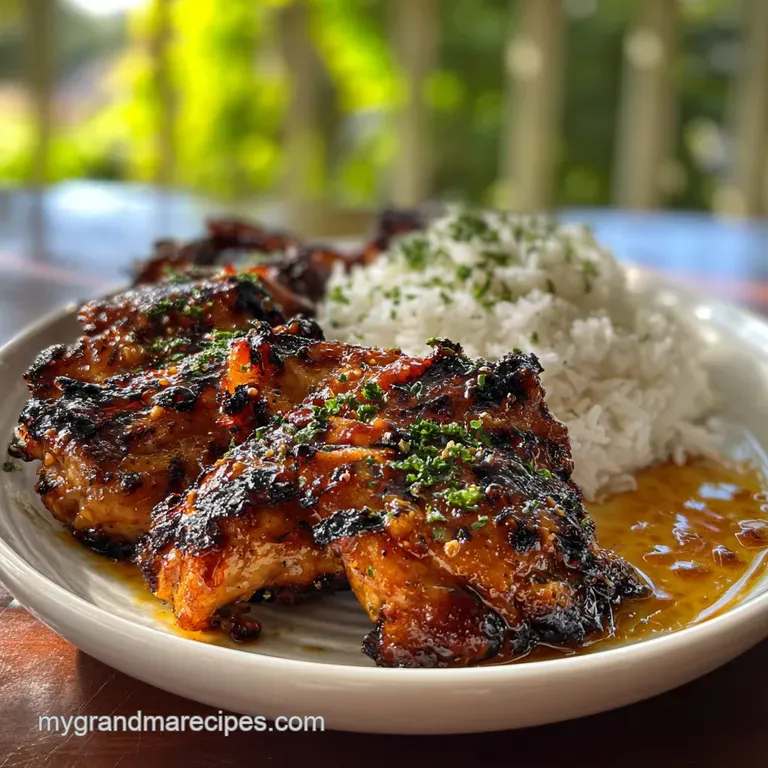
- Time: Active 10 minutes, Passive 15 minutes, Total 25 minutes
- Flavor/Texture Hook: Syrupy, mahogany glaze with a bright ginger kick
- Perfect for: Backyard summer BBQs or quick weeknight meal prep
- Master the Best Huli Huli Chicken Sauce
- The Science of Hawaiian Glaze
- Crucial Recipe Specifications
- Essential Ingredients for Umami
- Minimal Tools for Easy Prep
- Simmering Your Sauce to Success
- Solving Common Sauce Struggles
- Simple Substitutions and Swaps
- Storing and Saving Your Glaze
- Perfect Pairings for the Grill
- Frequently Asked Questions
- Huli Huli Chicken Sauce FAQs
- 📝 Recipe Card
Can you smell that? That heavenly scent of charred sugar and salt drifting over a smoky grill? If you've ever been lucky enough to stand in line at a roadside stand in Hawaii, you know that the aroma of huli huli chicken sauce is enough to make your knees weak.
It’s a bit like a teriyaki, sure, but it has this bright, tropical soul that just feels like sunshine on a plate.
I’ll be honest with you, I spent years trying to get that specific "sticky finger" texture right in my own kitchen. I’ve made sauces that were too runny, others that were so salty they made my eyes water, and a few that just tasted like plain old ketchup.
But through a lot of trial and error (and a few burnt pans), I finally cracked the code.
We’re going to make a sauce that isn't just a marinade; it’s a glaze that actually stays on the chicken. It’s got that deep, old-fashioned comfort I grew up with in Tennessee, even if the flavors are from a few thousand miles away.
You don’t need any fancy gadgets or expensive ingredients just a pot, a whisk, and a little bit of patience.
Master the Best Huli Huli Chicken Sauce
The beauty of this recipe lies in how it behaves under heat. When we talk about a glaze, we’re looking for something that transforms from a liquid into a velvety coating. This happens because we’re balancing the sugars from the pineapple and brown sugar with the salt from the soy sauce.
- Maillard Reaction
- The sugars and proteins in the soy sauce react under heat to create deep, complex flavors and that signature mahogany color.
- Enzymatic Tenderizing
- The fresh ginger and pineapple juice contain enzymes that help break down tough protein fibers before the cooking even starts.
- Viscosity Reduction
- Simmering the sauce evaporates excess water, concentrating the flavor and creating a syrupy texture that coats the back of a spoon.
| Component | Science Role | Pro Secret |
|---|---|---|
| Brown Sugar | Caramels and thickens | Pack it tight for moisture |
| Pineapple Juice | Acid and sweetness | Use unsweetened for control |
| Soy Sauce | Salt and Umami | Naturally brewed has more depth |
| Apple Cider Vinegar | pH Balancer | Cuts through the heavy sugar |
When I first started making this, I used to just pour everything over the chicken cold. It was okay, but it never got that "shatter" on the skin that the pros get. The secret is that short simmer on the stove first. It wakes up the garlic and ginger and gets those sugar molecules ready to stick.
If you are a fan of deep, savory flavors, you might notice this sauce shares a similar umami profile with my Beef Pot Roast Recipe. Both rely on that slow building of flavor where the liquid eventually becomes the star of the show. Trust me, once you see that sauce bubbling and turning glossy, you'll know exactly what I'm talking about.
The Science of Hawaiian Glaze
Mastering the Maillard Reaction
This is where the magic happens. As the chicken hits the grill or the hot oven air, the amino acids in the meat and the sugars in our huli huli chicken sauce start to dance. This creates hundreds of new flavor compounds. If your sauce is too watery, the meat just steams.
By pre simmering our sauce, we jumpstart this process so the chicken browns the moment it touches heat.
Balancing Pineapple Enzyme Activity
Pineapple juice contains an enzyme called bromelain. It’s a natural meat tenderizer, which is fantastic, but there’s a catch. If you leave your chicken in the marinade for more than 24 hours, that enzyme will keep working until the meat turns to mush.
I learned this the hard way during a family reunion don't let it sit too long! Stick to the 4 to 12 hour window for the best "bite."
Achieving Glossy Sauce Emulsification
While this isn't a fat heavy sauce, the ketchup acts as a bridge. The tomato paste and vinegar in the ketchup help hold the water based juice and the solid bits of garlic and ginger in a semi stable suspension.
This ensures that every brushstroke of sauce carries all the flavors evenly, rather than just getting a puddle of juice on the bottom of the pan.
Crucial Recipe Specifications
Getting the timing right is the difference between a sauce that slides off and one that creates a gorgeous crust. I always keep a small kitchen timer handy because those 15 minutes of simmering go by fast when you're busy prepping the rest of dinner.
| Feature | Stovetop Method | Oven Baked Finish |
|---|---|---|
| Concentration | High - great for thick glaze | Medium - better for moist meat |
| Color Depth | Intense caramelization | Even, golden browning |
| Texture | Sticky and tacky | Velvety and soft |
You’ll want to watch for the three numeric checkpoints during the process. First, ensure your ginger and garlic are minced to roughly 2 millimeter bits so they distribute evenly. Second, simmer the sauce for exactly 15 minutes to reach the right thickness.
Finally, if you're using this as a marinade, keep the chicken at a temperature below 4°C (40°F) in the fridge for safety.
Right then, let's talk about the gear. You really don't need much. This is a "minimal tools" kind of recipe, which is exactly how my grandma used to cook. She could make a five course meal with one heavy pot and a wooden spoon, and that's the energy we're bringing here today.
Essential Ingredients for Umami
- 1 cup soy sauce: Provides the salty backbone and deep color. Why this? It’s the primary source of umami and seasoning for the entire dish.
- Substitute: Tamari for a gluten-free option with a similar punch.
- 1 cup brown sugar, packed: The fuel for caramelization and sweetness. Why this? Molasses in brown sugar adds a rich, toffee like undertone.
- Substitute: Honey, though it will be stickier and burn faster.
- 1 cup unsweetened pineapple juice: Adds tropical acidity and sweetness. Why this? The acidity balances the salt and helps tenderize the protein.
- Substitute: Orange juice in a pinch, though the flavor will shift.
- 0.25 cup ketchup: Adds body, tang, and a hint of tomato. Why this? Acts as a thickener and provides a slight vinegary zip.
- Substitute: Tomato paste mixed with a teaspoon of sugar and vinegar.
- 2 tbsp fresh ginger, grated: Provides a spicy, aromatic heat. Why this? Cuts through the sweetness and refreshes the palate.
- Substitute: 1 teaspoon of ground ginger if fresh isn't available.
- 4 cloves garlic, minced: The essential savory aromatic. Why this? Adds depth and fragrance that rounds out the sauce.
- Substitute: 1 teaspoon of garlic powder.
- 2 tbsp apple cider vinegar: Brightens the entire profile. Why this? Breaks up the heavy sugar and salt for a clean finish.
- Substitute: Rice vinegar for a milder, slightly sweeter acidity.
Chef's Tip: Freeze your ginger root before grating. It makes those stubborn fibers much easier to shred, and you won't end up with a stringy mess in your sauce!
Minimal Tools for Easy Prep
You don't need a high tech kitchen for this. In fact, keeping it simple usually leads to better results because you're more focused on the sauce itself. Grab a medium sized saucepan something with a heavy bottom is best so the sugar doesn't scorch.
A whisk is much better than a spoon here because you really want to incorporate that ketchup and dissolve the sugar completely.
I usually use a microplane for the ginger and garlic because I like them to almost disappear into the liquid. If you don't have one, just mince them as finely as you possibly can. You'll also need a glass jar or a bowl if you plan on marinating the chicken right away.
Just avoid reactive metal bowls (like aluminum) because the vinegar and pineapple juice can sometimes pick up a metallic taste from them.
Simmering Your Sauce to Success
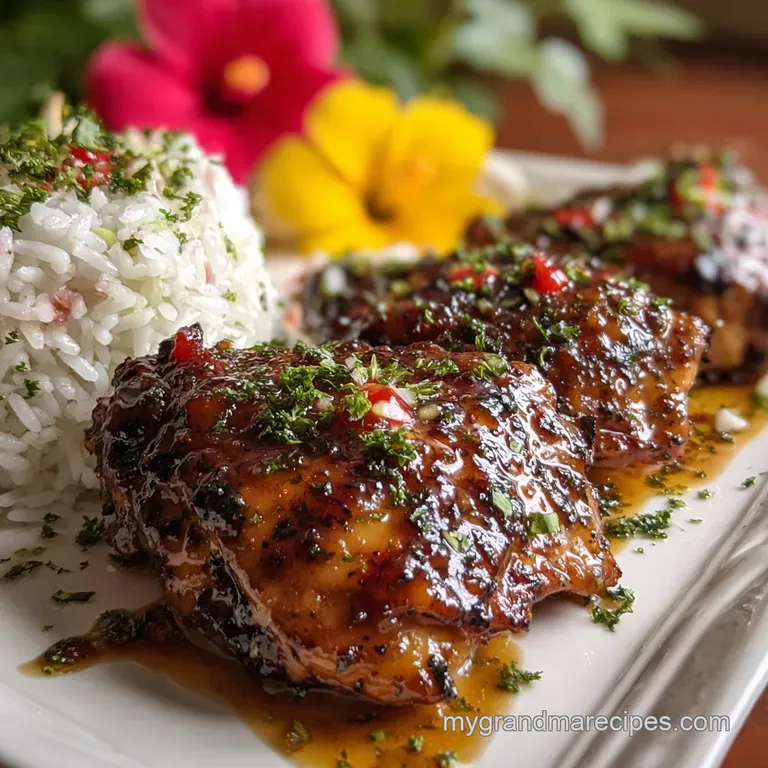
- Whisk the liquids. Pour the soy sauce, pineapple juice, and apple cider vinegar into your saucepan. Note: Starting with cold liquids helps the sugar dissolve more evenly as it heats.
- Add the sweeteners. Stir in the packed brown sugar and ketchup until no large clumps remain.
- Prep the aromatics. Grate your fresh ginger and mince the garlic directly into the pot. Note: Using fresh aromatics here is non negotiable for that authentic island punch.
- Heat the mixture. Set the stove to medium high and bring the liquid to a gentle boil.
- Simmer and reduce. Lower the heat to medium low and let it bubble for 15 minutes until it coats the back of a spoon.
- Cool the base. Remove the pan from the heat and let it sit for at least 20 minutes. Note: Never pour hot marinade over raw chicken; it will partially cook the outside and ruin the texture.
- Partition the sauce. Pour half the sauce into a separate container to use for basting later.
- Marinate the meat. Place your chicken in a dish and cover with the remaining half of the cooled sauce.
- Chill and soak. Refrigerate for at least 4 hours until the meat looks slightly darker.
- Final basting. While grilling or baking, brush on the reserved clean sauce during the last 10 minutes of cooking until it looks glossy and tacky.
If you're looking for something to serve alongside this, it goes beautifully with a simple Chicken and Rice recipe. The rice soaks up all that extra glaze, and it's pure comfort in a bowl.
Solving Common Sauce Struggles
Why is my sauce burning?
This is the most common heartache with this recipe. Because of the high sugar content from the pineapple and brown sugar, it has a low smoke point. If you blast it with high heat for too long, it goes from caramelized to charred in seconds.
How to fix thin sauce?
Sometimes your pineapple juice might be extra watery, or your "simmer" was a bit too low. If the 15 minutes are up and it still looks like juice, don't panic. You can simmer it for another 5 to 10 minutes, or use a tiny cornstarch slurry (1 teaspoon cornstarch to 1 teaspoon water) to give it that final thickening nudge.
| Problem | Root Cause | Solution |
|---|---|---|
| Sauce is too salty | Soy sauce reduction went too far | Add a splash of water or more juice |
| Sauce won't stick | Not reduced enough or meat is too wet | Pat meat dry and simmer sauce longer |
| Flavor is flat | Ginger or garlic was old | Add a squeeze of fresh lime at the end |
Why does my sauce taste bitter?
If the garlic is sautéed or burnt before adding the liquids, it can turn the whole batch bitter. Always add your aromatics to the liquid base rather than "blooming" them in oil first for this specific recipe. Also, make sure you aren't scraping the bottom of the pan if you accidentally scorched a patch!
Simple Substitutions and Swaps
Sometimes you’re halfway through the recipe and realize you forgot to pick up a specific ingredient. It happens to the best of us! I've had to make many "pantry raids" in my time, and luckily, this huli chicken sauce is pretty forgiving.
| Original Ingredient | Substitute | Why It Works |
|---|---|---|
| Brown Sugar (1 cup) | Granulated sugar + 1 tbsp Molasses | Mimics the flavor and moisture profile |
| Apple Cider Vinegar | Rice Vinegar | Similar acidity level but slightly more mellow |
| Ketchup (0.25 cup) | BBQ Sauce | Adds a smoky depth but changes the profile |
- If you want more heat
- Add 1 tablespoon of Sriracha or a pinch of red pepper flakes.
- If you want it smokier
- Add a half teaspoon of liquid smoke or use smoked paprika.
- If you want it less sweet
- Reduce the brown sugar to 3/4 cup and increase the vinegar by a tablespoon.
Storing and Saving Your Glaze
This sauce is a meal prepper's dream. You can make a big batch on Sunday and use it throughout the week. In the fridge, it will stay fresh and delicious in an airtight glass jar for about 7 to 10 days. Just give it a good shake before you use it, as the solids might settle at the bottom.
For longer storage, this sauce freezes beautifully. I like to freeze it in ice cube trays. Once they're solid, pop them into a freezer bag. Then, whenever you're making a quick stir fry or grilling a single chicken breast, you can just grab a couple of "flavor bombs" and melt them in the pan.
They'll last about 3 months in the freezer.
Zero Waste Tip: Don't throw away those ginger peels! I keep mine in a bag in the freezer. When I'm making a Chicken Noodle Soup recipe, I toss the peels into the stock pot. They add a wonderful, subtle warmth to the broth that you'd otherwise miss out on.
Perfect Pairings for the Grill
You’ve got this incredible, sticky chicken now what do you put next to it? In Hawaii, the classic choice is a big scoop of macaroni salad and some white rice. The creamy mayo in the mac salad is the perfect foil for the sharp, salty sweet glaze of the huli huli.
If you want to keep things a bit lighter, grilled pineapple rings are a no brainer. Since you already have the juice in the sauce, the flavors tie together perfectly. Just throw the rings on the grill for 2 minutes per side until you see those beautiful char marks.
For something a bit crunchier, a quick slaw with cabbage, cilantro, and a lime vinaigrette works wonders. The crunch and the acid help reset your taste buds between those rich, syrupy bites of chicken. Honestly, it’s hard to go wrong here as long as you have something to soak up that extra sauce!
Frequently Asked Questions
Can I use canned pineapple rings instead of juice?
You can use the liquid from the can of pineapple rings! It’s actually a great way to use the whole can. Just make sure it’s the "in juice" kind and not the "in heavy syrup" kind, or your sauce will be way too thick and cloyingly sweet.
Should I use light or dark brown sugar?
I prefer dark brown sugar for this because it has more molasses, which gives you a deeper color and a more complex flavor. However, light brown sugar works perfectly fine if that’s what you have in the pantry. You might just notice the sauce is a shade lighter.
Is this sauce safe for kids?
Absolutely! While it has a lot of flavor, it isn't "spicy" in the heat sense. The ginger provides a warmth, but it’s very family friendly. My nieces and nephews devour this chicken every time I make it. It’s a great way to introduce them to different flavors without the "scary" heat of chili peppers.
Can I use this on other meats?
Trust me, this sauce is a star on pork ribs or even salmon. The sugars caramelize beautifully on pork chops, too. Just follow the same basting rules wait until the last few minutes of cooking so the sugar doesn't burn before the meat is done.
Does the ginger have to be fresh?
If you're in a pinch, you can use ground ginger, but you'll lose that "zing" that makes the sauce special. Fresh ginger has a bright, citrusy heat that dried ginger just can't replicate. If you must use dried, use about 1 teaspoon and whisk it in well.
Now, go get that grill warmed up! You’re going to love the way your kitchen smells when this starts simmering. Just remember: keep an eye on those sugars, and don't be afraid to get your hands a little sticky. Happy cooking!
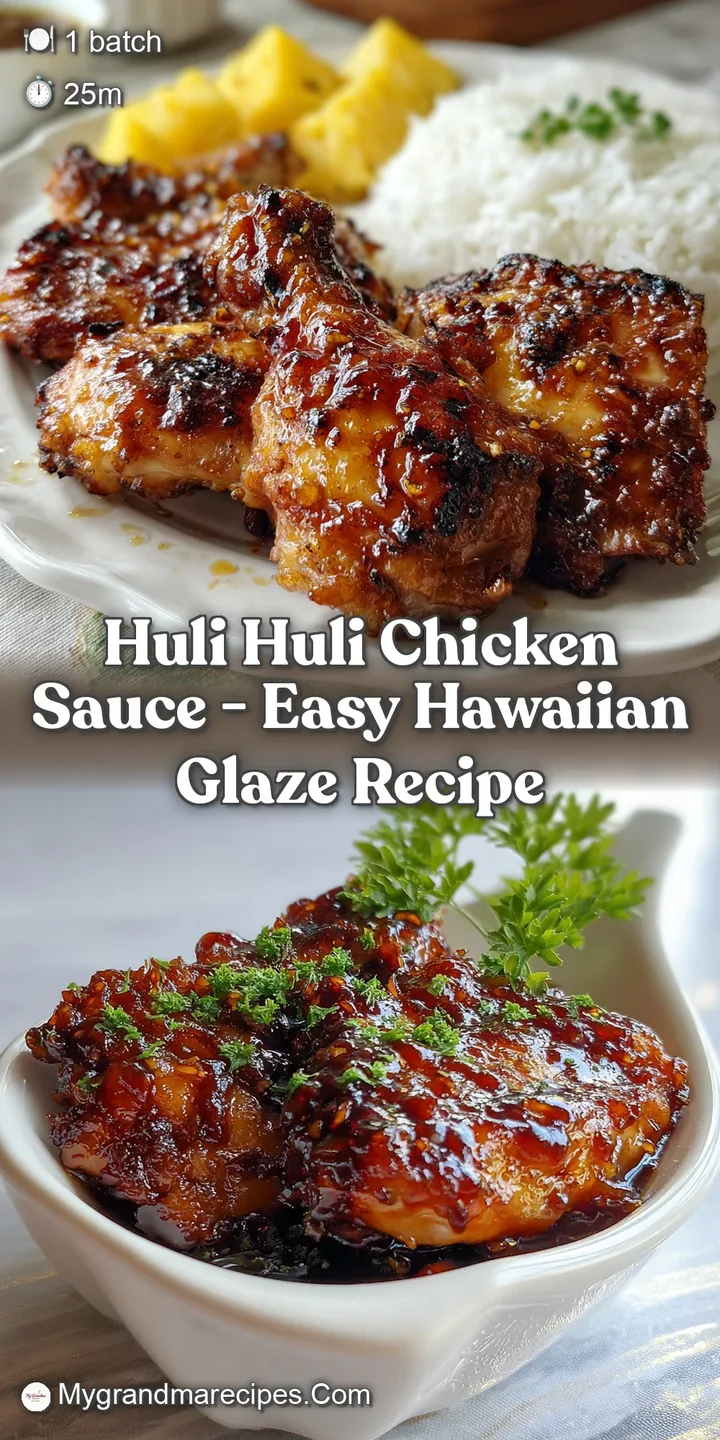
Huli Huli Chicken Sauce FAQs
What sauce goes with Huli Huli chicken?
Huli Huli sauce is the sauce for Huli Huli chicken. It's a signature sweet, savory, and slightly tangy glaze, often featuring pineapple, soy sauce, ginger, and garlic, creating a sticky mahogany coating.
What is huli huli sauce?
Huli Huli sauce is a Hawaiian inspired glaze. It's known for its sticky, sweet, and savory flavor profile, traditionally used for grilling chicken, with key ingredients like pineapple juice, soy sauce, brown sugar, and aromatics like ginger and garlic.
How to use Hawaii's famous Huli Huli sauce?
Brush generously onto chicken during the last 10-15 minutes of grilling or baking. Simmer the sauce first to thicken and concentrate flavors, then reserve half for basting while cooking.
What makes huli huli sauce unique?
Its unique tropical sweetness and sticky, caramelized glaze set it apart. The combination of pineapple juice, brown sugar, and soy sauce creates a distinct sweet savory balance with a hint of ginger and garlic that's irresistible.
Can I make Huli Huli sauce ahead of time?
Yes, you can make it ahead of time. It stores well in an airtight container in the refrigerator for up to a week, allowing the flavors to meld beautifully, similar to how a robust Beef Vegetable Soup Recipe: Deep Broth deepens with time.
Is Huli Huli sauce very spicy?
No, it's typically not spicy in terms of heat. The "warmth" comes from fresh ginger, which is aromatic and slightly pungent, not from chili peppers, making it family friendly.
What can I do if my Huli Huli sauce is too thin?
Simmer it longer over low heat until it coats the back of a spoon. If it's still too thin after 15-20 minutes, a tiny cornstarch slurry (1 tsp cornstarch with 1 tsp water) can help thicken it without altering the flavor.
Huli Huli Chicken Sauce
Ingredients:
Instructions:
Nutrition Facts:
| Calories | 76 kcal |
|---|---|
| Protein | 1.6 g |
| Fat | 0.1 g |
| Carbs | 17.8 g |
| Fiber | 0.1 g |
| Sugar | 16.2 g |
| Sodium | 985 mg |
