Homemade Gravy Recipe with Worcestershire

- Effort/Time: 7 minutes total
- Flavor Hook: Rich, mahogany-colored depth with savory Worcestershire notes.
- Perfect for: Last-minute Sunday roasts or quick-fix comfort dinners.
- Master the Art of a Velvety Homemade Gravy Recipe for Any Occasion
- The Chemistry of Starch Gelatinization and Emulsion Stability
- Mastering the Seven Minute Timeline for Instant Comfort
- The Essential Elements of a Rich Flavor Foundation
- Minimalist Tools for a Perfectly Smooth Pour
- Executing the Five Minute Whisking Protocol
- Solving Common Texture and Flavor Imbalances
- Adapting the Base for Custom Flavor Profiles
- ⚗️ The Scaling Lab: The Physics of Quantity
- Debunking Kitchen Folklore
- Preserving Quality and Honoring the Whole Ingredient
- Pairing Your Result with Southern Hospitality Classics
- Direct Solutions for Common Pouring Perplexities
- Recipe FAQs
- 📝 Recipe Card
Master the Art of a Velvety Homemade Gravy Recipe for Any Occasion
The familiar sizzle of butter hitting a warm cast iron skillet is the heartbeat of my grandma’s kitchen in Tennessee. Growing up, a meal wasn't considered finished until a steaming boat of mahogany colored liquid sat front and center on the table.
This homemade gravy recipe isn't about fancy techniques; it is about the quiet confidence of a wooden spoon and a steady whisk.
Whether it was a Tuesday night with simple mashed potatoes or a holiday spread that took all day to prep, the sight of those bubbling edges in the pan meant comfort was served. We never used packets or store-bought jars because the soul of the meal lived in those pan drippings.
This method focuses on the reliable steps I learned standing on a stool next to the stove, ensuring you get that glossy, thick consistency every single time.
In our house, the smell of toasted flour and black pepper was a sensory signal that everyone should find a seat. It’s a simple ritual that transforms basic ingredients into a rich, savory masterpiece.
Let's walk through the process of making this homemade gravy recipe just like we do back home, keeping things straightforward and honest for the busy cook.
The Chemistry of Starch Gelatinization and Emulsion Stability
Understanding the physics of your skillet ensures a bulletproof result every time you start a homemade gravy recipe.
- Starch Gelatinization: When flour hits 175°F (80°C) in liquid, starch granules swell and burst, releasing amylose molecules that tangle together to thicken the sauce.
- The Roux Barrier: Coating flour in 4 tbsp unsalted butter creates a hydrophobic barrier around starch particles, preventing them from clumping when they meet the stock.
- Suspension Stability: Constant whisking during the 5 minute simmer keeps the fat and water molecules from separating, resulting in a glossy, velvety mouthfeel.
Mastering the Seven Minute Timeline for Instant Comfort
We don't believe in spending hours at the stove when five minutes of active cooking can yield such rich results. This homemade gravy recipe respects your time by focusing on high impact heat management and efficient whisking.
| Phase | Duration | Visual Cue |
|---|---|---|
| Prep/Mise en Place | 2 minutes | Ingredients measured and stock at room temperature |
| Roux Development | 2 minutes | Butter foam subsides and flour smells like toasted nuts |
| Liquid Integration | 3 minutes | Bubbling edges with a thick, spoon coating trail |
Chef's Tip: To deepen the color without burning the fat, add a half teaspoon of instant espresso powder. It mimics the dark bits of roasted meat drippings and adds a subtle, earthy complexity to the chocolate colored finish.
The Essential Elements of a Rich Flavor Foundation
The soul of a great homemade gravy recipe lies in the quality of your fats and the depth of your liquids. I always reach for a heavy bottomed skillet to ensure even heat distribution.
- 4 tbsp unsalted butter or meat drippings: Why this? Fat provides the silky mouthfeel and carries the fat-soluble flavor compounds from the pepper.
- Substitution: Bacon grease. Note: Adds a smoky, salty profile that pairs perfectly with pork.
- 1/4 cup all-purpose flour: Why this? The 10% protein content provides enough structure to thicken without becoming gummy.
- Substitution: Cornstarch (use half the amount). Note: Result will be more translucent and "glossy" than traditional flour.
- 2 cups high-quality beef or turkey stock: Why this? High collagen content in quality stock creates a natural, lip-smacking viscosity.
- Substitution: Vegetable broth. Note: Lighter body; may require an extra simmer minute for depth.
- 1 tsp Worcestershire sauce: Adds the fermented "umami" kick that balances the richness of the butter.
- Substitution: Soy sauce. Note: Provides salt and color but lacks the vinegar tang of Worcestershire.
- 1/2 tsp freshly cracked black pepper: The coarse grind ensures little bursts of heat in every bite.
- Substitution: White pepper. Note: Hotter, more floral bite without the black specks.
- 1/4 tsp onion powder: Provides a savory, aromatic backbone without the texture of raw onions.
- Substitution: Garlic powder. Note: Shifts the flavor profile to a more pungent, Italian adjacent style.
Minimalist Tools for a Perfectly Smooth Pour
Grandma never used a blender for her homemade gravy recipe, and neither should you. A few basic tools are all it takes to achieve that professional, velvety finish.
- Lodge Cast Iron Skillet: The heavy thermal mass prevents temperature spikes that can burn the roux.
- Flat Silicone Whisk: Essential for reaching the "corners" of the pan where flour likes to hide and scorch.
- Fine Mesh Strainer: A "just-in-case" tool to ensure a perfectly smooth pour if any flour bits escaped the whisk.
Executing the Five Minute Whisking Protocol
Follow these atomic steps to ensure your homemade gravy recipe comes out flawless.
- Melt 4 tbsp unsalted butter in a skillet over medium heat for 1 minute until the foam subsides and the sizzling stops. Note: This ensures all water has evaporated from the butter.
- Whisk in 1/4 cup all-purpose flour continuously for 1 minute until the mixture smells nutty and looks like wet sand. Note: This cooks out the raw starch flavor.
- Pour 1/2 cup of the stock into the pan while whisking vigorously until a thick, heavy paste forms.
- Slow stream the remaining stock into the skillet until the mixture is uniform and no lumps remain.
- Stir in 1 tsp Worcestershire sauce, 1/2 tsp black pepper, and 1/4 tsp onion powder until the spices are evenly distributed.
- Simmer the mixture for 2 minutes until large bubbles break the surface and the liquid coats the back of a spoon.
- Drag your spoon through the center; it is ready when the trail stays open for 2 full seconds.
- Taste and adjust seasoning, then remove from heat until the bubbling subsides into a glossy sheen.
Solving Common Texture and Flavor Imbalances
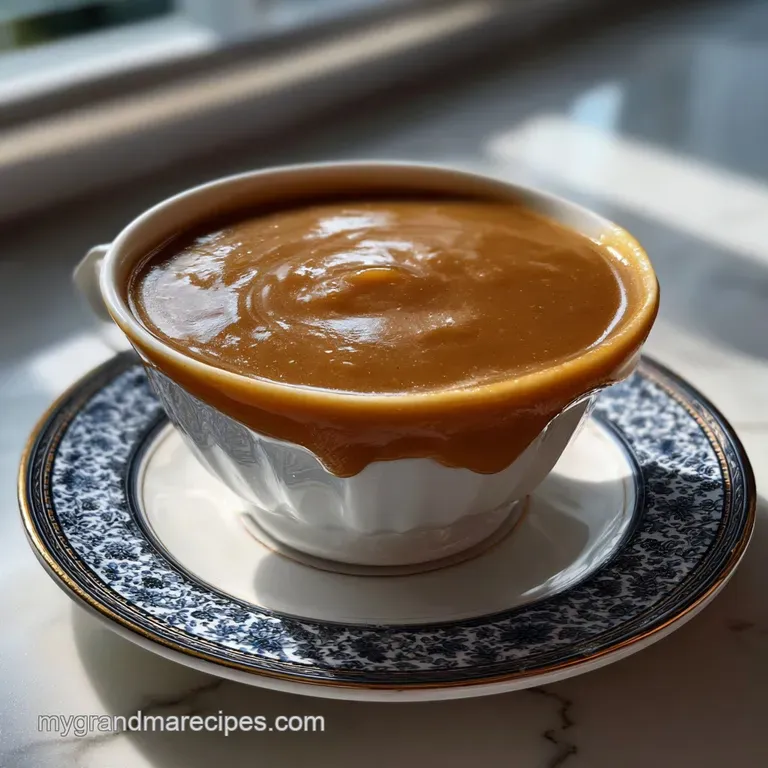
Sometimes things go wrong in the heat of the moment. Understanding the physics of the "break" helps you rescue your homemade gravy recipe before it hits the table.
Why Your Gravy Breaks or Separates
When the fat-to-flour ratio is imbalanced or the heat is too high, the emulsion fails. This is often caused by protein denaturation in the stock if it's boiled too violently.
| Problem | Root Cause | The Fix | Pro Protocol |
|---|---|---|---|
| Lumpy Texture | Starch hit liquid too fast | Whisk in 2 tbsp hot water | Use a flat whisk to smash lumps against the pan side |
| Greasy Surface | Too much fat/not enough flour | Add 1 tsp flour slurry | Blot the surface with a folded paper towel |
| Raw Flour Taste | Under cooked roux | Simmer 2 mins longer | Next time, cook roux until it smells like toasted bread |
Adapting the Base for Custom Flavor Profiles
Once you master the foundation of this homemade gravy recipe, you can adjust the aromatics to match your main dish. If you are serving a heavy meal, you might want a lighter pairing, much like how a crisp Coleslaw Recipe That cuts through the richness of fried chicken.
For a Southern Style Twist
Swap the stock for whole milk and double the black pepper. This creates a "Sawmill" style white gravy perfect for biscuits. The dairy proteins create a more opaque, creamy structure.
To Make it gluten-free
Replace the 1/4 cup all-purpose flour with a high-quality 1 to-1 gluten-free flour blend. Note that these blends often contain xanthan gum, which can make the texture slightly more "elastic" if over whisked.
⚗️ The Scaling Lab: The Physics of Quantity
When you need to feed a crowd, doubling this homemade gravy recipe requires more than just multiplying by two.
- The Evaporation Paradox: If you double the stock but use the same size skillet, the surface area remains constant. The liquid won't evaporate as fast relative to its volume. Reduce total liquid by 10% to ensure it thickens in the same amount of time.
- Flavor Saturation: Scale spices (pepper and onion powder) to 1.5x, not 2x. You can always add more at the end, but salt and spice compounds accumulate non-linearly.
- Thermal Mass: Doubling the butter/drippings takes longer to reach the "nutty" stage. Be patient; don't crank the heat or you'll burn the milk solids before the flour is toasted.
Debunking Kitchen Folklore
- Myth: You must use hot stock to prevent lumps.
Truth: Cold or room temperature stock is actually better. It allows the starch in the roux to hydrate more slowly, giving you more time to whisk out any potential clumps.
Myth: Gravy only works with meat drippings.
- Truth: high-quality unsalted butter provides a cleaner, more consistent fat profile that highlights the pepper and Worcestershire sauce.
Preserving Quality and Honoring the Whole Ingredient
This homemade gravy recipe is built on a zero waste philosophy. Never let flavor go down the drain.
- Fridge
- 4 days in an airtight container. The surface may form a skin; simply whisk it back in during reheating.
- Freeze
- 3 months. Store in a freezer bag with all air squeezed out. Note: Cream based variations may separate slightly upon thawing.
- Reheat
- Low heat on the stovetop. Add 1 tbsp of stock or water to loosen the proteins and restore the glossy finish.
Part B - Zero Waste PhilosophyDon't discard cheese rinds.Transform: Toss a Parmesan rind into the simmering stock. Science: The rind releases glutamates (natural umami) which deepen the savory profile of the final pour.
Herb Stems?Transform: Tie parsley or thyme stems with twine and simmer in the gravy. Science: Stems contain more essential oils than leaves, providing an earthy aromatic boost without adding green flecks to your mahogany sauce.
Pairing Your Result with Southern Hospitality Classics
A proper homemade gravy recipe deserves a stage. It is the bridge that connects the different elements of a plate.
For the Ultimate Comfort Pairing
There is no better companion for a rich brown gravy than a bowl of Potato Soup Recipe or a mountain of fluffy mashed potatoes. The starches in the potatoes bind with the sauce for a seamless eating experience.
A Sweet Ending
After a heavy, savory meal, I always crave something simple. My grandma would follow a gravy heavy dinner with a slice of her Pound Cake Recipe. The velvety crumb of the cake provides a clean, sweet contrast to the savory intensity of the Worcestershire spiced sauce.
Direct Solutions for Common Pouring Perplexities
Why is my gravy thin even after simmering? You likely didn't cook the roux long enough or the ratio of liquid was slightly high. Simmer for an additional 3 minutes to allow for more evaporation.
If it still won't set, whisk 1 tsp of flour with 1 tsp of cold water (a slurry) and stir it into the bubbling liquid.
How do I fix a "raw flour" aftertaste? This happens when the roux stage is rushed. To fix it, continue simmering the gravy on low heat for 5 7 minutes. The heat will eventually break down the raw starch molecules, though the volume will decrease as it reduces.
What should I do if the gravy is too salty? Avoid adding more water, which dilutes the texture. Instead, add a splash of heavy cream or a pinch of brown sugar. The fat in the cream coats the tongue, masking the salt perception, while the sugar provides a flavor counterbalance.
If you want a darker color, use beef drippings.If you want a smoother finish, use a fine mesh strainer.If you want a richer mouthfeel, whisk in a tablespoon of cold butter at the very end.
This homemade gravy recipe is a testament to the power of simple ingredients. By respecting the roux and maintaining a steady whisk, you bring the heart of a Tennessee kitchen to your own table. Trust your instincts, watch for those bubbling edges, and enjoy the comfort that only a perfect pour can provide.

Recipe FAQs
Can I make this gravy ahead of time?
Yes, refrigerate up to four days. Stored gravy solidifies; whisk in stock or water when reheating on low heat to restore texture.
What is the fastest way to thicken runny gravy?
Whisk in a flour slurry immediately. Starch granules need fat coating to prevent clumping when hitting hot liquid, which a roux provides.
Is it safe to use room temperature stock?
Yes, room temperature stock works best. Adding lukewarm or room temperature liquid to the roux allows starch particles to hydrate evenly without immediate shock.
- Whisk flour into fat first (roux)
- Add liquid slowly in stages
- Heat gently until bubbling point is reached
Should I use salted or unsalted butter?
Unsalted butter for precision control. Salted brands vary widely in sodium content, making standardized seasoning impossible when factoring in drippings.
Myth: Gravy must always contain meat drippings.
Myth: Gravy must always contain meat drippings. Reality: Butter forms a superior, cleaner roux, allowing the Worcestershire sauce to define the savory depth.
What is the minimum internal temperature for starch gelatinization?
Starch sets around 175°F (80°C). This temperature causes flour granules to swell and burst, releasing amylose chains that tangle into a thickened sauce.
Butter or Bacon Grease: Which yields a richer flavor?
Bacon grease creates a smoky, savory profile. Butter offers a neutral, silky mouthfeel, making it better for balancing strong seasonings like pepper.
7 Minute Gravy Recipe
Ingredients:
Instructions:
Nutrition Facts:
| Calories | 68 kcal |
|---|---|
| Protein | 0.9 g |
| Fat | 5.8 g |
| Carbs | 3.3 g |
| Fiber | 0.1 g |
| Sugar | 0.4 g |
| Sodium | 210 mg |
