Ultimate Coleslaw Recipe for Maximum Crunch
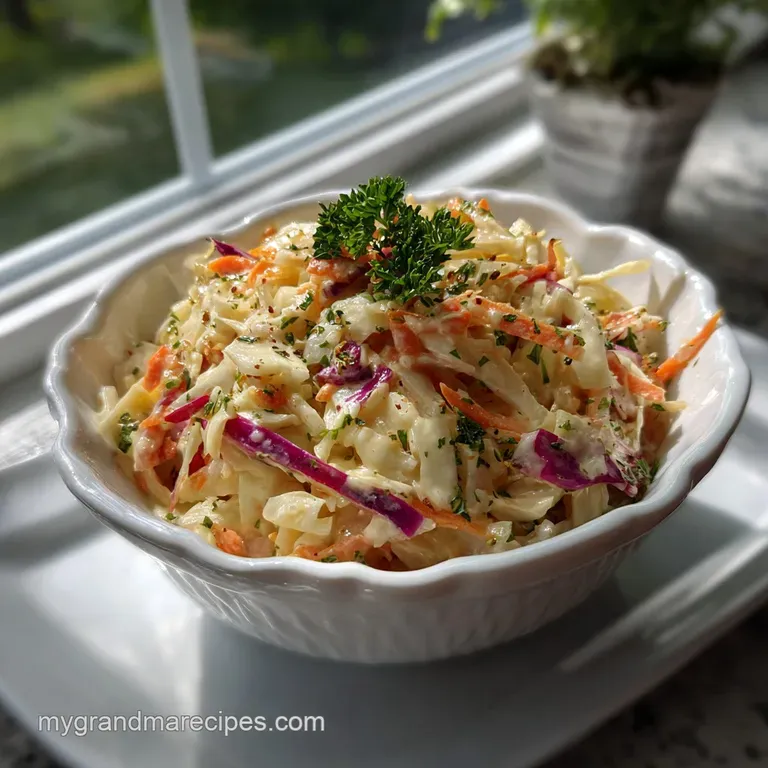
- Effort/Time: 5 minutes (Zero-cook assembly)
- Flavor Hook: Tangy apple cider zing with a floral honey finish
- Perfect for: Budget-friendly potlucks and heavy barbecue pairings
- Mastering the Ultimate Coleslaw Recipe Through Texture and Balance
- The Science of Why it Works: Pectin and Osmosis
- Gathering Your Essentials: The Chemistry of the Bowl
- Essential Equipment Found in Every Tennessee Kitchen
- From Prep to Plate: The Precision Protocol
- Pro Tips for the Perfect Snap
- Make It Your Own: Budget-Smart Variations
- ⚗️ The Scaling Lab: Doubling the Batch
- Preservation Secrets for Maintaining That Signature Snap
- Separating Cabbage Myths from Grandma’s Kitchen Truths
- Recipe FAQs
- 📝 Recipe Card
Mastering the Ultimate Coleslaw Recipe Through Texture and Balance
Why is it that at every Tennessee church social, there is one bowl of slaw that disappears in minutes while the others sit weeping in their own juices? The secret isn't found in a fancy bottle, but in the instinctual understanding of how acid interacts with raw cabbage.
Growing up in my grandma’s kitchen, I watched her treat a simple head of cabbage with the same reverence most folks give a Sunday roast. She knew that a "good" slaw isn't just a side dish; it is the bright, acidic foil that makes heavy, mahogany colored meats palatable.
This specific preparation elevates the traditional coleslaw recipe.
The mystery of a perfect crunch often eludes even seasoned cooks because they treat the dressing as an afterthought. But when you get the ratios of apple cider vinegar to light mayonnaise just right, something magical happens.
The vegetables don't just sit in a sauce; they become vibrant and translucent, absorbing the floral notes of the honey and the sharp, nose tingling bite of Dijon mustard. It is a humble alchemy that turns a few cents worth of vegetables into a shattering, refreshing masterpiece a truly memorable coleslaw recipe.
Let's crack on with a method that honors those old-fashioned roots while staying smart about our budget. We aren't looking for a soggy, flavorless heap of greenery. We want a side that stands up tall on a plate next to a pile of ribs or a Fried Chicken Recipe that’s been fried to a deep, golden mahogany. Trust me, once you understand the science of the "snap," you'll never look at a pre-made tub of slaw the same way again, making this an essential coleslaw recipe to master.
The Science of Why it Works: Pectin and Osmosis
The success of this dish relies on osmotic pressure, where the sea salt draws out just enough cellular moisture to soften the cabbage fibers without destroying their structural pectin.
This creates a "flexible crunch" rather than a hard, woody texture, while the emulsification of light mayonnaise and Dijon mustard ensures the dressing clings to the slick surface of the vegetables instead of pooling at the bottom of the bowl.
This scientific approach is what separates this coleslaw recipe from standard ones.
1. Osmosis and Structural Integrity
When salt hits the tri-color cabbage mix, it begins a process of drawing water out of the plant cells. If you add too much salt too early, the cabbage collapses into a limp, translucent state.
By using exactly 1/4 tsp of sea salt for 14 oz of cabbage, we achieve a state of partial turgor loss this makes the cabbage tender enough to chew comfortably while retaining the "shatter" that defines a fresh slaw. This balance is crucial for any good coleslaw recipe.
2. Emulsification for a Velvety Mouthfeel
Combining light mayonnaise and vinegar is a challenge of physics; oil and water based acids naturally want to separate. The addition of 1 tsp Dijon mustard acts as a natural stabilizer.
The lecithin in the mustard seeds binds the vinegar and mayo together, creating a velvety coating that doesn't "break" or become watery as the salad sits. This stabilization technique is a hallmark of this specific coleslaw recipe.
3. Acid Catalyzed Flavor Development
Apple cider vinegar does more than add tang; it acts as a solvent for the volatile oils in the celery seed and freshly cracked black pepper. The acetic acid breaks down the outer hull of the seeds, releasing a savory, earthy aroma that permeates the entire bowl.
This is why the slaw tastes significantly more complex after a 15 minute rest, enhancing the overall flavor of the coleslaw recipe.
Gathering Your Essentials: The Chemistry of the Bowl
| Ingredient | Chemical/Physical Role (Science) | The Pro Secret (Why This Matters) |
|---|---|---|
| Light Mayonnaise | Fat-in-water emulsion | Provides a rich mouthfeel with 60% less lipid density than full fat versions |
| Apple Cider Vinegar | Acetic acid protein denaturation | Softens tough cellulose fibers for a better "bite" |
| Raw Honey | Hygroscopic sweetener | Attracts moisture to keep the dressing glossy and prevents "drying out" |
| Celery Seed | Aromatic volatile oil carrier | Adds "old-fashioned" depth that mimics the flavor of fresh, concentrated stalks |
1. For the Slaw Base
The foundation is the 14 oz tri-color cabbage mix. Why this? The combination of green and red cabbage provides different anthocyanin levels, while the carrots add structural rigidity and natural sugars. Always look for a mix that feels heavy for its size and shows no signs of browning at the edges of the shreds.
This base is the canvas for our flavorful coleslaw recipe.
2. For the Healthier Dressing
- 1/4 cup light mayonnaise: Why this? It provides the creamy base without the heavy caloric load of traditional Southern versions.
- 2 tbsp apple cider vinegar: Why this? The malic acid in ACV is gentler than white vinegar, offering a fruity undertone.
- 1 tbsp raw honey: This acts as our primary balance against the acid, key to this coleslaw recipe.
- 1/4 cup fresh cilantro: Adds a bright, citrusy top note.
- 2 green onions: Provides a mild, sulfurous bite that isn't as overpowering as raw yellow onion.
- 1 tsp Dijon mustard: Essential for keeping the dressing from separating, ensuring a stable coleslaw recipe.
- 1/2 tsp celery seed: The "secret" ingredient that gives it that nostalgic, grandma’s kitchen aroma.
- 1/4 tsp sea salt & 1/4 tsp black pepper: For foundational seasoning in this fantastic coleslaw recipe.
| Original Ingredient | Substitute | Why It Works |
|---|---|---|
| Light Mayonnaise | Greek Yogurt (Plain) | Adds a probiotic tang; slightly more acidic so reduce vinegar by 1/2 tsp. |
| Raw Honey | Maple Syrup | Thinner consistency but adds a deep, woody sweetness. |
| Apple Cider Vinegar | Rice Vinegar | Much milder and sweeter; omit 1/2 tsp of the honey if swapping. |
| Cilantro | Flat leaf Parsley | Provides a clean, grassy finish without the "soapy" profile some experience with cilantro. |
Essential Equipment Found in Every Tennessee Kitchen
To get that perfect consistency, you don't need a high tech laboratory. You need tools that allow for maximum aeration and even distribution. Mastering this coleslaw recipe requires the right tools for the toss.
- Large Stainless Steel Mixing Bowl: Metal conducts cold better than plastic, helping keep the cabbage "snappy" while you toss.
- Whisk (Balloon style): Essential for the dressing. You want to beat the honey and mustard into the mayo until it looks like a smooth, pale gold lacquer, which is vital for this coleslaw recipe.
- Chef’s Knife (8 inch): Even with a pre-shredded mix, you'll need this for the "roughly chopped" cilantro and "thinly sliced" green onions.
- Mandoline (Optional): If you are starting from a whole head of cabbage instead of a mix, a mandoline set to 1/16th of an inch ensures the "shred" is uniform, leading to a superior coleslaw recipe.
- Mason Jar: My favorite trick shake the dressing in a 12 oz jar to ensure a perfect emulsion before pouring it over the greens.
From Prep to Plate: The Precision Protocol
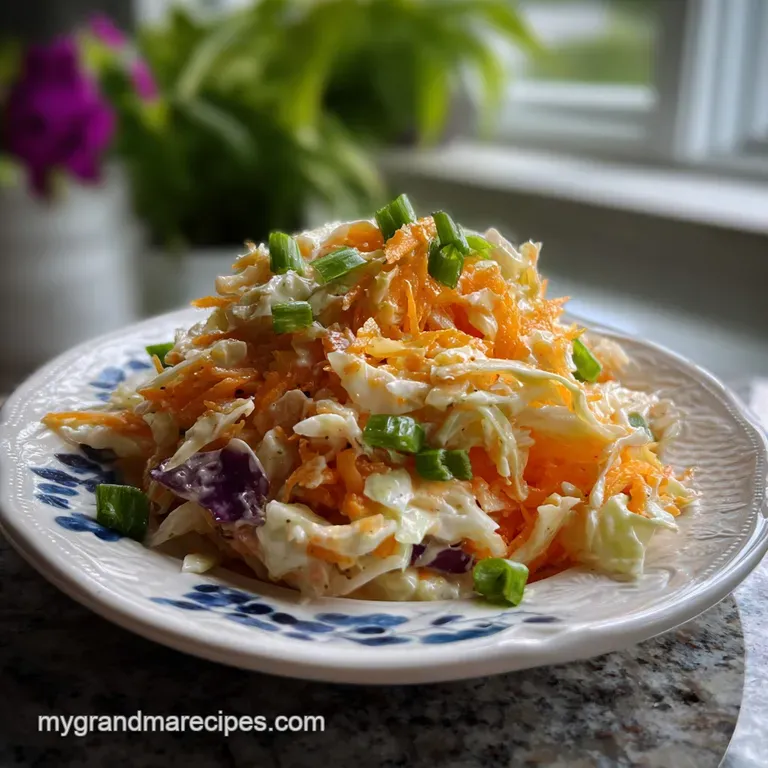
Follow these steps exactly to avoid the dreaded "soggy bottom" bowl that ruins many a home cook’s attempt at a great coleslaw recipe.
- Chill your bowl. Place your stainless steel bowl in the fridge for 10 minutes before starting.
- Whisk the emulsion. Combine 1/4 cup light mayonnaise, 2 tbsp ACV, 1 tbsp honey, and 1 tsp Dijon mustard in a small jar.
- Agitate vigorously. Shake or whisk until the dressing is completely homogenous and no streaks of honey remain.
- Prepare the aromatics. Thinly slice 2 green onions and roughly chop 1/4 cup cilantro into 1/2 inch pieces.
- Dry the cabbage. Even pre-bagged mix can have residual moisture; pat it with a paper towel to ensure the dressing "sticks."
- Add the seeds. Incorporate 1/2 tsp celery seed, 1/4 tsp sea salt, and 1/4 tsp black pepper into the liquid dressing.
- The Primary Toss. Place the 14 oz cabbage mix in the cold bowl and drizzle 3/4 of the dressing over the top. This dressing ratio is perfected for this coleslaw recipe.
- Fold, don't mash. Use two large spoons to lift and turn the cabbage until every strand is shimmering but not swimming.
- Add the greens. Fold in the cilantro and green onions at the very end to prevent them from bruising.
- The Chill Rest. Refrigerate for at least 15 minutes until the cabbage slightly softens and the aroma becomes pungently sweet and tangy. Enjoying this coleslaw recipe is worth the wait.
Chef’s Note: If you're planning on serving this at a picnic, keep the dressing in a separate jar and toss it just 10 minutes before people start filling their plates. This keeps the "shatter" at its peak for the best possible presentation of your coleslaw recipe.
Pro Tips for the Perfect Snap
1. Avoiding the "Soggy Bottom"
A common problem is the pool of liquid that forms after an hour. This happens because the salt is pulling water out of the cabbage faster than the mayo can coat it. - The Fix: If you need the slaw to last 4+ hours, salt the cabbage in a colander first, let it sit for 20 minutes, rinse, and pat dry before adding the dressing.
This "pre-shrinks" the cells so they don't leak later, guaranteeing a better coleslaw recipe experience.
2. The Temperature Factor: Stovetop vs. Chilled
While this is a chilled coleslaw recipe, understanding the difference between cold and warm preparation helps you master the texture.
| Method | Texture Result | Flavor Profile |
|---|---|---|
| Chilled (This Recipe) | Shattering, crisp, rigid | Bright, acidic, refreshing |
| Stovetop (Wilted) | Silky, limp, tender | Savory, mellow, sweet |
| Oven (Roasted) | Charred edges, chewy | Nutty, caramelized, earthy |
3. Precision Checkpoints
- Weight: 14 oz of cabbage is the "Goldilocks" amount for 1/4 cup of mayo. Any more cabbage and it’s dry; any less and it’s a soup. The weight ratio is the secret to this coleslaw recipe.
- Visual: The cabbage should look glossy and translucent, not opaque and white.
- Sound: When you toss the slaw, it should make a sharp, wet "slap" sound against the bowl, indicating the dressing is thick enough to coat.
Make It Your Own: Budget Smart Variations
One of the reasons this is such a staple in my household is how easily it adapts to what’s in the pantry. You don't need a gourmet grocery store to make this taste like a million bucks. This coleslaw recipe is designed for flexibility.
1. The Spicy Kick
Add 1 tsp of sriracha or 1/2 tsp of red pepper flakes to the dressing. The capsicum in the peppers reacts with the acetic acid in the vinegar to create a lingering heat that cuts through the fat of a Banana Bread Recipe served at a brunch spread. A spicy coleslaw recipe is always a crowd pleaser.
2. The Orchard Twist
If you have a spare apple, grate it directly into the 14 oz mix. The pectin in the apple helps thicken the dressing naturally, and the malic acid complements the apple cider vinegar perfectly, adding complexity to your coleslaw recipe.
3. The Blue Cheese Boldness
For a more indulgent side, crumble 2 tbsp of blue cheese into the mix. The mold in the cheese provides an umami "funk" that makes the slaw feel like a meal in itself.
⚗️ The Scaling Lab: Doubling the Batch
When you need to feed a crowd (12 servings instead of 6), physics dictates that you cannot simply hit the "x2" button on every ingredient. Scaling the perfect coleslaw recipe requires precision.
- Flavor Saturation: Scale the celery seed and black pepper to 1.5x only. Doubling these aromatics can make the slaw taste "dusty" or overwhelmingly medicinal in a large batch of this coleslaw recipe.
- The Liquid Paradox: When doubling the cabbage to 28 oz, reduce the added vinegar by 1 tablespoon. Larger volumes of cabbage generate more of their own "weep" liquid, and you don't want the slaw to turn into a cold soup. Adjusting liquids is vital for large scale coleslaw recipe preparation.
- Thermal Mass: A double batch of cold cabbage will stay cold longer at a room temperature picnic. However, it takes longer for the salt to penetrate the center of the mass. Toss every 10 minutes during the first half hour of chilling to ensure even seasoning across the entire batch of coleslaw recipe.
Preservation Secrets for Maintaining That Signature Snap
Coleslaw is a living dish; it changes every minute it sits in the fridge. Keeping this coleslaw recipe crisp is the ultimate goal.
- Storage: Store in an airtight glass container (plastic can absorb the onion scent). It stays "prime" for 24 hours. By 48 hours, it is still safe but will be significantly softer.
- Freezing: NEVER freeze. The ice crystals will rupture the cabbage cell walls. Upon thawing, you will be left with a grey, mushy mess that lacks any culinary value.
- Reheating: This is strictly a cold dish. If it has sat out at room temperature for more than 2 hours, discard it for safety.
💡 ZERO WASTE PHILOSOPHY: Don't discard the cabbage cores or broccoli stems if you're making your own mix. Transform: Grate them finely into the slaw.
Science: These parts contain the highest concentration of sulforaphane and provide a distinct, woodier crunch that contrasts beautifully with the leaves. This tip truly enhances any homemade coleslaw recipe.
Separating Cabbage Myths from Grandma’s Kitchen Truths
Myth: You must use sugar for a "real" Southern slaw.
Truth: Raw honey is a superior choice. Honey is a natural invert sugar that provides a smoother mouthfeel and helps the emulsion stay stable longer than granulated sugar, which can remain gritty in cold dressings. This is a key ingredient difference in my superior coleslaw recipe.
Myth: Red cabbage makes the slaw taste "bitter."
Truth: The bitterness in red cabbage comes from its higher phytonutrient content. When balanced with the 1 tbsp of honey and the 1/4 cup light mayo in this recipe, that bitterness transforms into a sophisticated peppery note, completing the flavor profile of this coleslaw recipe.
Myth: Slaw is better the next day.
Truth: Only if you like it soft. For the ultimate "shatter" and "snap," the window of 15 minutes to 2 hours after mixing is the undisputed sweet spot for enjoying this coleslaw recipe.
Quick Fix Table
| Problem | Root Cause | Solution |
|---|---|---|
| Watery Bottom | Osmotic over draw | Drain the liquid and whisk in 1 tsp more mayo to re-emulsify. |
| Too Tart/Sour | Acid Sugar imbalance | Add a tiny pinch of salt (not sugar) to suppress the perception of acidity. |
| Bland/Flat | Volatiles evaporated | Add a fresh squeeze of lemon or a pinch more celery seed right before serving. |
Decision Shortcut
- If you want maximum crunch, serve within 20 minutes.
- If you want deepest flavor, let sit for 1 hour.
- If you want creamiest texture, whisk the dressing until it doubles in volume before tossing.
Whether you're piling this on top of a pulled pork sandwich or serving it alongside a plate of crispy fish, this coleslaw recipe brings a bit of Tennessee sunshine to the table. It’s affordable, it’s fast, and it’s got that old-fashioned heart that makes a house feel like a home. Let's get to tossing!

Recipe FAQs
How long should the coleslaw chill before serving?
Let sit 15 minutes for flavor fusion. Allowing a brief rest enables the acidic vinegar to permeate the cabbage cells slightly, enhancing flavor absorption without causing limpness.
Can I substitute white vinegar for apple cider vinegar?
No, ACV provides fruity undertones. White vinegar's harsh acetic acid lacks the malic acid that gives ACV its required fruity complexity, resulting in a sharper, less balanced taste.
Why is my coleslaw watery after an hour?
Too much salt drew out excess cellular moisture. Salt creates osmotic pressure, causing water to rush from the cabbage cells; if the salt ratio is too high, the structure collapses.
- Pre-salt and rinse cabbage if making a large batch
- Ensure dressing is fully emulsified before adding
- Avoid over mixing during the initial toss
Is this recipe better than a sweet, sugar heavy slaw?
This recipe prioritizes tang and crunch over sweetness. The honey balances the high acid content, creating a vibrant foil for rich foods, unlike traditional slaws where sugar masks texture.
Is Dijon mustard truly necessary for the dressing?
Yes, Dijon acts as a critical emulsifier. Lecithin in the mustard binds the oil (mayonnaise) and water (vinegar), preventing the dressing from separating into oily streaks.
Myth: Slaw tastes better the next day.
Myth: Slaw tastes better the next day. Reality: For maximum crispness ("snap"), the ideal window is 15 minutes to 2 hours; longer rest times degrade structural pectin.
Myth: You should skip chilling the cabbage for the fastest result.
Myth: You should skip chilling the cabbage for the fastest result. Reality: A cold stainless steel bowl maintains the necessary turgor pressure in the cabbage cells, ensuring maximum rigidity post toss.
Ultimate Coleslaw Recipe
Ingredients:
Instructions:
Nutrition Facts:
| Calories | 54 kcal |
|---|---|
| Protein | 0.9 g |
| Fat | 2.1 g |
| Carbs | 7.8 g |
| Fiber | 1.4 g |
| Sugar | 4.9 g |
| Sodium | 168 mg |
