Skillet Kielbasa and Sauerkraut with Apples
- Time: Active 10 mins, Passive 20 mins, Total 30 mins
- Flavor/Texture Hook: Smoky, tangy, and snap crisp
- Perfect for: Busy weeknights and chilly autumn evenings
- Old Fashioned Skillet Kielbasa and Sauerkraut
- The Chemistry of Flavor Balance
- Selecting Your Recipe Elements
- Essential High Heat Cooking Tools
- Gathering the Necessary Ingredients
- Mastering the Skillet Technique
- Fixing Common Skillet Problems
- Creative Variation Ideas
- My Grandfather’s Cooking Wisdom
- Storing Leftovers for Later
- Best Sides for Kielbasa
- Critical in Sodium
- Recipe FAQs
- 📝 Recipe Card
Old Fashioned Skillet Kielbasa and Sauerkraut
The second that sliced kielbasa hits a hot buttered pan, the air in my kitchen changes. There is a specific, smoky sizzle that reminds me of my grandmother's house in Tennessee on those Sunday afternoons when the air felt crisp and the woodstove was humming.
It is a sound that promises comfort without needing hours of fussing over a pot.
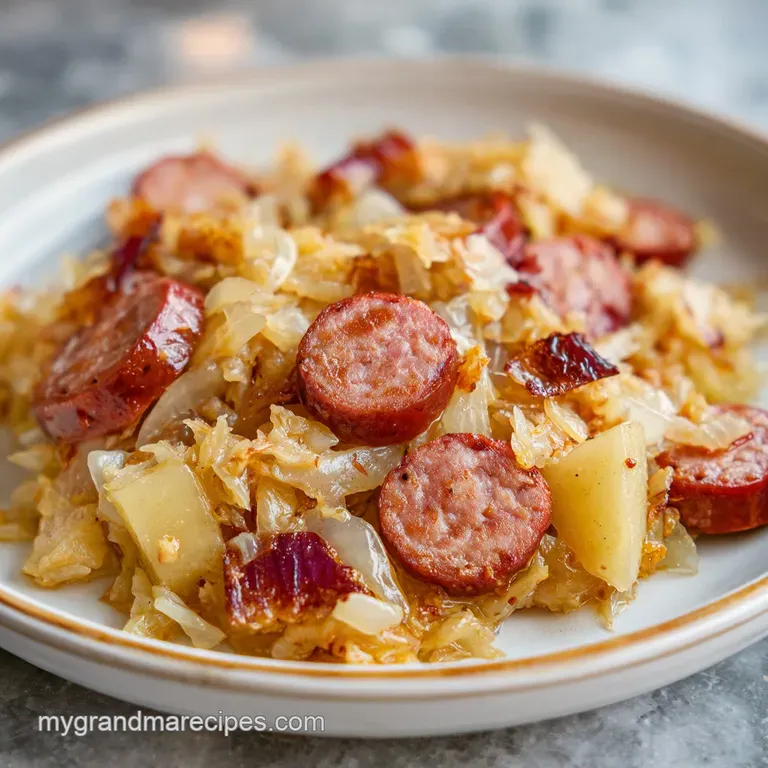
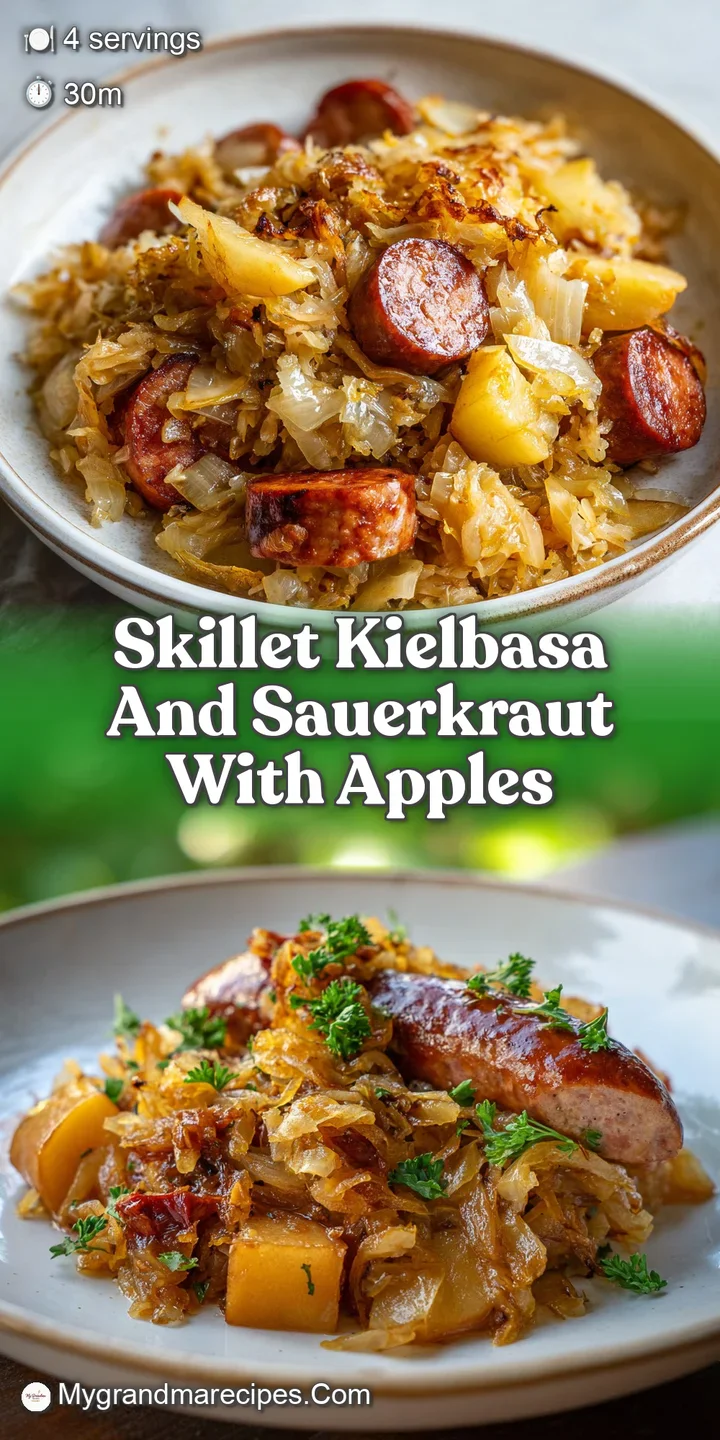
This skillet kielbasa and sauerkraut recipe, featuring apples and caramelized onions, is a flavorful one pan meal the whole family will love. We aren't just tossing things in a pan and hoping for the best; we are layering flavors like a well built stone wall.
You get the snap of the meat, the soft give of the onions, and that sharp, vinegary punch from the kraut that keeps everything in balance.
You can expect a meal that tastes like it spent all day simmering, but in reality, you’ll be sitting down to eat in about half an hour. It’s one of those reliable staples I turn to when the fridge looks bare but I still want something that feels intentional and hearty.
Trust me, once the apple cider hits the pan and lifts all those browned bits off the bottom, you'll know exactly why this dish remains a classic.
The Chemistry of Flavor Balance
Maillard Reaction: Searing the kielbasa rounds creates a complex crust of amino acids and sugars, providing the savory foundation.
Acid Neutralization: The fructose in the apples and apple cider acts as a chemical foil to the lactic acid in the sauerkraut, softening the sharp bite.
Starch Gelatinization: Reducing the apple cider with brown sugar creates a light glaze that clings to the fibers of the cabbage rather than pooling.
Aromatic Infusion: Caraway seeds contain carvone, an essential oil that releases when heated in fat, providing a cooling, earthy contrast to the heavy meat.
| Meat Thickness | Internal Temp | Rest Time | Visual Cue |
|---|---|---|---|
| 1/2 inch rounds | 165°F (74°C) | 2 mins | Edges curled and darkened |
| 1 inch chunks | 165°F (74°C) | 3 mins | Deep mahogany exterior |
| Whole link | 165°F (74°C) | 5 mins | Skin tight and glossy |
Choosing the right pan makes all the difference when you're looking for that specific sear. While stainless steel works, I always reach for my heavy cast iron because it holds heat like a champion. If you're planning a full spread, this dish sits beautifully next to a warm basket of bread made from a Homemade Biscuits Recipe to soak up every drop of that tangy cider sauce.
Selecting Your Recipe Elements
| Ingredient | Science Role | Pro Secret |
|---|---|---|
| Smoked Kielbasa | Fat and Protein Base | Brown the flat sides first for maximum surface area flavor |
| Sauerkraut | Acidic Brightness | Rinse in cold water to control the salt concentration |
| Firm Apples | Texture and Sugar | Leave the skins on to prevent the wedges from disintegrating |
The interplay between the fermented cabbage and the fresh fruit is what keeps your palate from getting overwhelmed by the salt. If you find yourself enjoying these kinds of rustic, meat forward dishes, you might also find a lot of similarities in the searing techniques used for a Beef Hanger Steak recipe. Both rely on high heat to transform simple proteins into something truly special.
Essential High Heat Cooking Tools
You don't need a pantry full of gadgets to get this right, which is the beauty of old-fashioned cooking. A 12 inch heavy bottomed skillet is your primary tool here, as it allows enough space for the cabbage and meat to contact the heat without steaming.
If you crowd a small pan, you'll lose that crisp texture and end up with a soggy pile of gray meat and nobody wants that.
A sturdy wooden spatula is also non negotiable for scraping the bottom of the pan. When you pour in the cider, you'll see the "fond" (those little brown bits) lift off the surface; that’s where the real magic lives.
Finally,, a sharp chef's knife makes quick work of the onion and apples, ensuring the pieces are uniform so they cook at the same rate.
Gathering the Necessary Ingredients
- 1 lb smoked kielbasa: Sliced into 1/2 inch rounds. Why this? Provides the smoky fat that flavors the entire pan.
- Substitute: Andouille sausage for a spicier, Cajun style kick.
- 2 tbsp unsalted butter: Used for browning. Why this? Adds a velvety richness that oil lacks.
- Substitute: Ghee or lard for a higher smoke point.
- 1 large yellow onion: Thinly sliced. Why this? Melts down into a sweet, jammy base.
- Substitute: Shallots for a more delicate, garlicky sweetness.
- 2 cloves garlic: Minced. Why this? Provides an aromatic punch in the final minutes.
- Substitute: 1 tsp garlic powder if fresh isn't available.
- 1 lb sauerkraut: Drained and rinsed. Why this? The backbone of the dish's fermented tang.
- Substitute: Shredded fresh cabbage with 2 tbsp apple cider vinegar.
- 2 medium firm apples: Cored and sliced into wedges. Why this? Adds a crisp, sweet textural contrast.
- Substitute: Bosc pears for a softer, floral flavor profile.
- 1/2 cup apple cider: For deglazing. Why this? Bridges the gap between the savory meat and sweet fruit.
- Substitute: Unfiltered apple juice or a dry hard cider.
- 1 tbsp stone ground mustard: For depth. Why this? Adds texture and a vinegary heat.
- Substitute: Dijon mustard for a smoother, sharper finish.
- 1 tbsp brown sugar: For caramelization. Why this? Counteracts the sharp acidity of the kraut.
- Substitute: Honey or maple syrup.
- 1/2 tsp caraway seeds: Traditional spice. Why this? Aids digestion and adds a licorice like earthiness.
- Substitute: Fennel seeds for a similar but sweeter aroma.
- Fresh thyme: For garnish. Why this? Adds a woody, citrusy top note.
- Substitute: Fresh parsley for a bright, clean finish.
Mastering the Skillet Technique

1. The Sear and Render Phase
Heat your skillet over medium high heat and add the sliced kielbasa rounds in a single layer. Cook for about 4 minutes until the edges are crisp and mahogany brown, then flip to color the other side. Remove the meat from the pan and set it aside, leaving the rendered fat behind.
2. The Caramelization Phase
Lower the heat to medium and melt the 2 tbsp butter into the sausage fat. Toss in the sliced yellow onion and cook for 8 minutes until translucent and starting to turn golden. Add the minced garlic during the last minute of this process to prevent burning.
3. The Deglaze and Simmer Phase
Pour in the 1/2 cup apple cider and use your spatula to scrape the bottom of the pan. Stir in the 1 tbsp stone ground mustard, 1 tbsp brown sugar, and 1/2 tsp caraway seeds until the liquid begins to bubble and thicken.
4. The Final Softening
Fold in the drained sauerkraut and the apple wedges. Return the browned kielbasa to the pan, nestling it into the cabbage mixture. Cover the skillet and simmer for 10 minutes until the apples are tender but not mushy.
5. The Finishing Touch
Remove the lid and increase the heat slightly for 2 minutes to cook off any excess moisture. Garnish with fresh thyme and serve immediately while the steam is still rising.
Chef's Note: If your sauerkraut is particularly salty, give it a double rinse in a colander before adding it to the pan. This allows the sweetness of the apple cider to shine through without being masked by brine.
Fixing Common Skillet Problems
Why Your Apples Turned Mushy
Texture is everything in this dish. If your apples have dissolved into a sauce, it’s usually because of the variety or the cook time. You want "baking" apples like Honeycrisp or Granny Smith that have a strong cellular structure. If you used a McIntosh or Gala, they tend to collapse under heat.
The Problem of Excess Liquid
Sometimes the sauerkraut releases more water than expected, leaving the dish looking like a soup. This often happens if the kraut wasn't squeezed dry enough before entering the pan. It can also happen if the lid was kept on for too long, trapping steam that should have evaporated.
| Problem | Root Cause | Solution |
|---|---|---|
| Too salty | Kraut brine wasn't rinsed | Add an extra splash of cider and a pinch more sugar |
| Burnt garlic | Added too early in the sear | Stir in garlic only after onions are fully softened |
| Gray sausage | Pan was overcrowded | Brown meat in two batches to ensure a hard sear |
Common Mistakes Checklist
- ✓ Pat the kielbasa dry with a paper towel before searing to prevent steaming.
- ✓ Don't skip the rinsing of the sauerkraut; it controls the final sodium level.
- ✓ Use a firm apple like Honeycrisp to ensure a pleasant "snap" in every bite.
- ✓ Preheat the skillet for at least 3 minutes before adding the butter and meat.
- ✓ Scrape every bit of the brown fond off the pan - that is the flavor engine.
Creative Variation Ideas
If you want a different flavor profile, try the Spicy Revision. Swap the stone ground mustard for a hot horseradish mustard and use spicy Andouille instead of kielbasa. This version works wonders during the humid summer months when you want something with a bit more "bite."
For a Low Carb/Keto Adjustment, simply omit the brown sugar and the apple cider. Instead, use a splash of chicken bone broth and a tablespoon of apple cider vinegar. You’ll still get that tangy, savory experience without the added fruit sugars.
| Method | Time | Texture | Best For |
|---|---|---|---|
| Stovetop Skillet | 30 mins | Crispy meat, tender apples | Quick weeknight meals |
| oven-roasted | 45 mins | Caramelized edges, soft kraut | Hands off weekend cooking |
My Grandfather’s Cooking Wisdom
Many people believe that you should never rinse sauerkraut because you're "washing away the flavor." In reality, the flavor is inside the cabbage itself. Rinsing simply removes the excess salt and metallic tang that comes from canning, allowing the Skillet Kielbasa and Sauerkraut with Apples and Caramelized Onions to taste fresh and homemade.
Another myth is that you must cook this dish for hours to get the flavors to meld. Because we are using a skillet and high heat, we are relying on concentration rather than time. By reducing the cider and browning the meat deeply, we achieve in thirty minutes what a slow cooker takes eight hours to do.
Storing Leftovers for Later
This recipe actually tastes better the next day. Keep it in an airtight container in the fridge for up to 4 days. The cabbage will continue to absorb the cider and spices, making the flavors even more cohesive.
To reheat, I recommend putting it back in a skillet with a tiny splash of water or cider to loosen things up microwaving can make the sausage skin a bit rubbery.
Freezing and Zero Waste: You can freeze this for up to 3 months. When you're ready to eat, let it thaw in the fridge overnight. To avoid waste, use any leftover apple cider to make a quick pan sauce for a Creamy Ground Beef recipe or even use the apple peels to simmer into a stovetop potpourri with cinnamon sticks.
Best Sides for Kielbasa
This dish is a powerhouse on its own, but it loves a good partner. A pile of buttery mashed potatoes is the traditional choice, acting as a soft bed for the tangy kraut. If you want something a bit more refined, serve it alongside a Shepherd s Pie Recipe for a full "mountain man" style feast.
If you’re looking for a lighter pairing, a simple green salad with a sharp vinaigrette helps cut through the richness of the sausage fat. Whatever you choose, make sure you have something on the table to catch the juices. A thick slice of rye bread or even a spoonful of Homemade Gravy Recipe drizzled over the top can take this from a simple skillet meal to a true family legacy dish.
Critical in Sodium
1695 mg mg of sodium per serving (74% % of daily value)
The American Heart Association recommends limiting sodium intake to about 2,300mg per day for overall cardiovascular health.
Sodium Reduction Tips for Kielbasa, Sauerkraut, and Apple Dish
-
Choose Low-Sodium Kielbasa-25%
The smoked kielbasa is the most significant source of sodium in this recipe. Opt for a low-sodium or reduced sodium kielbasa variety. This simple swap can greatly reduce the overall sodium content.
-
Rinse Sauerkraut Thoroughly-20%
Sauerkraut is naturally high in sodium due to the fermentation process. After draining, rinse it thoroughly under cold water for several minutes to remove excess salt. Consider doing this several times to reduce sodium further.
-
Skip the Mustard-10%
Stone ground mustard does contribute sodium. Omit it entirely or substitute with a sodium free spice blend instead, adjusting other spices to compensate for the flavor.
-
Adjust Apple Quantity-5%
Increase the amount of apples used. Adding more apples naturally helps balance the sodium content of the dish without adding extra salt. The sweetness can also allow to reduce or eliminate the brown sugar.
-
Enhance Flavor with Herbs
Use fresh or dried herbs like thyme, rosemary, or marjoram to boost the dish's flavor. Experiment with different combinations to find what you enjoy most. This helps reduce the need for salty seasonings.
Recipe FAQs
Can I use pre-cooked (jarred) sauerkraut without rinsing it first?
No, you absolutely should rinse it. Rinsing removes the excessive canned brine, preventing the final dish from tasting overwhelmingly salty or metallic.
How do I ensure the kielbasa gets a crispy sear instead of steaming?
Preheat the cast iron skillet thoroughly over medium high heat. Ensure the sausage rounds are patted dry with paper towels before adding them in a single layer, which encourages browning rather than steaming.
How do I prevent the apples from turning into complete mush during the simmer?
Use firm, crisp apple varieties like Honeycrisp or Granny Smith. Cut them into wedges rather than small dice, and only cover the skillet for the minimum time required to tenderize the cabbage.
Why is apple cider specified instead of plain water for deglazing the pan?
Apple cider provides necessary sugar and fruity acid to balance the sauerkraut's tang. This sugar concentrates quickly during the reduction, creating the perfect flavorful glaze for the other ingredients. If you enjoyed mastering this flavor balancing technique, see how we apply similar acid principles in our Brown Butter S'mores recipe.
Can I use sweet Italian sausage instead of smoked kielbasa in this dish?
No, it is strongly recommended to use smoked sausage. Kielbasa contributes a vital smoky depth that defines this recipe; sweet sausage will result in a dish that tastes more like sweet pork and cabbage stew.
How long can I safely store leftovers of this skillet meal?
Yes, leftovers keep well for up to four days in the refrigerator. The flavors actually deepen overnight as the kraut continues to absorb the cider and spices; reheat gently on the stovetop to restore texture.
What should I serve alongside this hearty one-pan meal?
Serve it with something starchy to soak up the pan juices. Thick slices of crusty rye bread or a bowl of creamy mashed potatoes are excellent choices for a truly satisfying plate.
Skillet Kielbasa Sauerkraut

Ingredients:
Instructions:
Nutrition Facts:
| Calories | 514 kcal |
|---|---|
| Protein | 14.8 g |
| Fat | 38.2 g |
| Carbs | 31.8 g |
| Fiber | 6.2 g |
| Sugar | 18.9 g |
| Sodium | 1695 mg |
