Prime Rib Recipe: Slow-Roasted & Tender
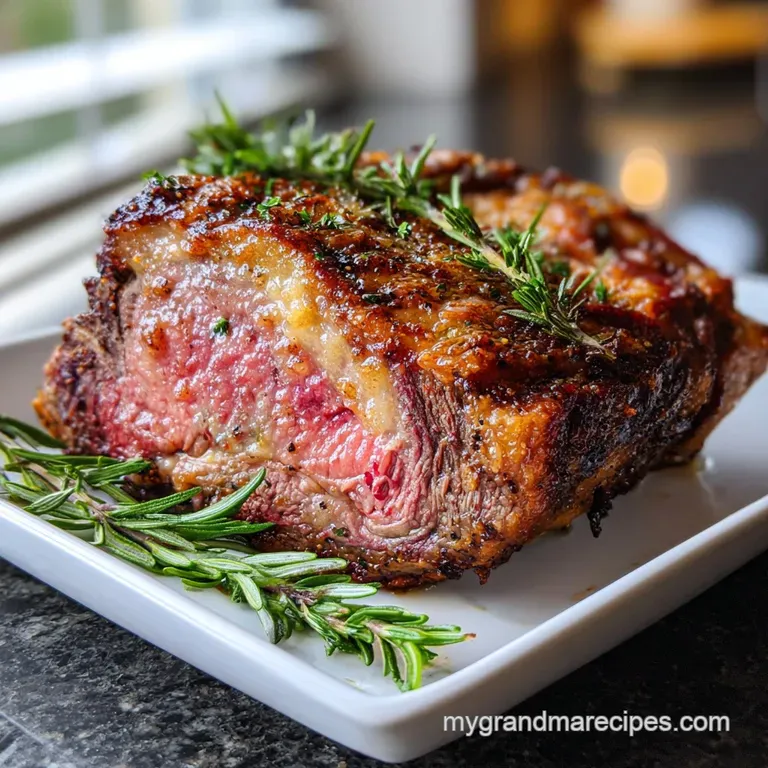
- Time: Active 20 minutes, Passive 3 hours 30 mins, Total 3 hours 50 minutes
- Flavor/Texture Hook: Velvety pink center with a salty, garlic herb crust
- Perfect for: Christmas dinner, family reunions, or a Sunday feast
- Gentle Heat and Meat Science
- Timing and Weight Accuracy Guide
- The Best Bone In Ingredients
- Necessary Kitchen Gear and Tools
- Step by Step Roasting Process
- Fixing Common Cooking Errors
- Simple Flavor and Diet Swaps
- Storing and Warming Your Roast
- Side Dishes for Beef Dinners
- Very High in Sodium
- Recipe FAQs
- 📝 Recipe Card
The first time I tackled a 3.4 kg (7.5 lb) roast in my Tennessee kitchen, I was terrified of ruining such an expensive cut. I remember the sizzle as the butter hit the hot meat and the way the aroma of fresh rosemary filled the hallway, reaching Grandma before she even made it to the stove.
She just looked at me, smiled, and said, "Don't poke it too much, honey; let the heat do the work."
That day, I learned that this dish isn't about fancy gadgets; it's about patience. You want to hear that soft crackling sound as the fat begins to render, turning into liquid gold in the bottom of your pan.
Whether it’s a quiet holiday or a loud family gathering, this is the meal that makes everyone go quiet once the first slice is served. It is pure, old-fashioned comfort.
Gentle Heat and Meat Science
The Physics of Thermal Carryover: When you pull a large roast from the oven, the residual heat on the exterior continues to migrate inward, raising the internal temperature by another 5 to 10 degrees. This ensures the fibers don't tighten up too fast, keeping the texture velvety rather than chewy.
Enzymatic Breakdown: Cooking at a lower temperature for a longer period allows naturally occurring enzymes in the beef to break down tough connective tissues. This process mimics the aging process, resulting in a more tender bite than a fast, over high heat sear alone could ever achieve.
Classic vs. over High heat Methods
| Method | Cook Time | Texture | Edge to Edge Pink |
|---|---|---|---|
| Classic Slow Roast | 3 hours 30 mins | Velvety and buttery | 95% uniform pink |
| 500 Degree Rule | 1 hour 15 mins | Firmer with more crust | Large grey "well done" ring |
| Reverse Sear | 4 hours + | Extremely tender | 99% uniform pink |
Choosing the classic slow roast gives you the best balance of a crusty exterior and a juicy middle without the stress of a smoky kitchen. It’s the way we’ve done it for generations because it simply works every time.
Timing and Weight Accuracy Guide
To get this right, we have to talk numbers. For a 3.4 kg (7.5 lb) roast, you are looking at roughly 30 minutes per 500 grams if you want a medium rare finish. I always tell my friends to treat the clock as a suggestion and the thermometer as the law.
If your oven runs hot, you might finish 20 minutes early; if you keep opening the door to peek, it could take another 45 minutes.
Precise Cooking Checkpoints
- Weight Check: Ensure your roast is exactly 3.4 kg (7.5 lb). If it's smaller, like a small prime rib roast, reduce the butter rub by half.
- Temperature Check: Pull the meat when the center hits 48°C (118°F) for a final medium rare rest at 54°C (130°F).
- Resting Check: You must let the meat sit for at least 30 minutes. If you cut it sooner, the juices will flood the board instead of staying in the meat.
| Servings | Meat Weight | Pan Size | Cook Time (Est.) |
|---|---|---|---|
| 4 People | 1.8 kg | 9x13 inch | 1 hours 45 mins |
| 8 People | 3.4 kg | Large Roasting Pan | 3 hours 30 mins |
| 12 People | 5.5 kg | Full Sheet Pan | 5 hours 15 mins |
When I'm planning for a big crowd, I always aim for the 3.4 kg size because it fits comfortably in a standard roasting pan while leaving enough room for the air to circulate. If the pan is too small, the meat steams instead of roasts, and you lose that beautiful shatter on the crust.
The Best Bone In Ingredients
Selecting your meat is the most important step of this prime rib recipe. Look for a "Choice" or "Prime" grade with plenty of white flecks (marbling) throughout the muscle. Those little fat deposits are what melt into the meat, creating that buttery mouthfeel we all crave.
Essential Component Deep Dive
| Ingredient | Science Role | Pro Secret |
|---|---|---|
| Coarse Kosher Salt | Denatures proteins | Apply 24 hours early to season the meat all the way to the bone. |
| Unsalted Butter | Fat soluble flavor carrier | Use room temperature butter so it grips the cold meat like a second skin. |
| Beef Bone Broth | Deglazing agent | Adds gelatin for a thicker, more velvety red wine jus. |
| Dry Red Wine | Acidic balance | Cuts through the heavy fat of the rib eye, brightening the overall flavor. |
Shopping List
- 3.4 kg (7.5 lb) bone in prime rib roast: Ask the butcher to "cut and tie" it. Why this? Keeps the bones for flavor but makes carving much easier later.
- 30 g (2 tbsp) Coarse Kosher salt: We need the big flakes for a crust.
- 15 g (1 tbsp) Coarse black pepper: Freshly cracked is non negotiable here.
- 115 g (0.5 cup) Unsalted butter: Softened to a spreadable paste.
- 4 cloves Garlic: Minced until it's almost a paste.
- 1 tbsp Fresh rosemary: Chopped very fine.
- 1 tbsp Fresh thyme: Strip the leaves from the woody stems.
- 1 tsp Smoked paprika: Adds a hint of "outdoor grill" flavor even in a winter oven.
- 475 ml (2 cups) Beef bone broth: Look for the low sodium version.
- 120 ml (0.5 cup) Dry red wine: Use a Cabernet or Merlot.
- 1 Shallot: Finely minced for the sauce.
Necessary Kitchen Gear and Tools
You don't need a pantry full of gadgets, but a heavy bottomed roasting pan is a must. If you use a thin foil tray from the grocery store, the drippings will burn before you can turn them into sauce. A sturdy wire rack is also vital because it lifts the meat up, allowing the hot air to hit the bottom of the roast.
This prevents the bottom from getting soggy and grey.
A digital meat thermometer is your best friend here. I've been cooking for decades and I still don't trust the "finger poke" method for a roast this big. It's just not worth the risk. You’ll also want a sharp carving knife something long and thin to glide through the meat without tearing it.
step-by-step Roasting Process
1. The Dry Brine (24 Hours Ahead)
Pat the 3.4 kg roast completely dry with paper towels. Rub the 30 g of kosher salt over every inch of the meat and fat. Place it uncovered on a rack in the fridge overnight. Note: This allows the salt to penetrate deep and dries out the surface for a better crust.
2. The Flavor Infusion
In a small bowl, mix the 115 g of softened butter, minced garlic, rosemary, thyme, black pepper, and smoked paprika. Stir until it forms a thick, fragrant paste. Slather this compound butter over the top and sides of the roast, focusing on the fat cap.
3. The Low and Slow Roast
Preheat your oven to 160°C (325°F). Place the roast on the rack in the roasting pan, bone side down. Slide it into the oven and roast for about 3 hours 30 mins until the internal temperature reaches 48°C (118°F).
4. The Rest & Flash Sear
Remove the roast from the oven and transfer it to a cutting board. Tent it loosely with foil. Increase the oven temperature to 230°C (450°F).
After the meat has rested for 30 minutes, put it back in the hot oven for 8 to 10 minutes until the exterior is dark, brown, and sizzling.
5. Making the Red Wine Jus
While the meat rests, place the roasting pan on the stove over medium heat. Add the minced shallot and sauté in the drippings for 2 minutes. Pour in the 120 ml of red wine, scraping up the browned bits (the fond).
6. Simmering the Sauce
Add the 475 ml of beef bone broth to the pan. Bring it to a boil, then reduce the heat and simmer for 10 minutes until the liquid has reduced by half. Strain through a fine mesh sieve into a warm gravy boat.
7. The Final Carve
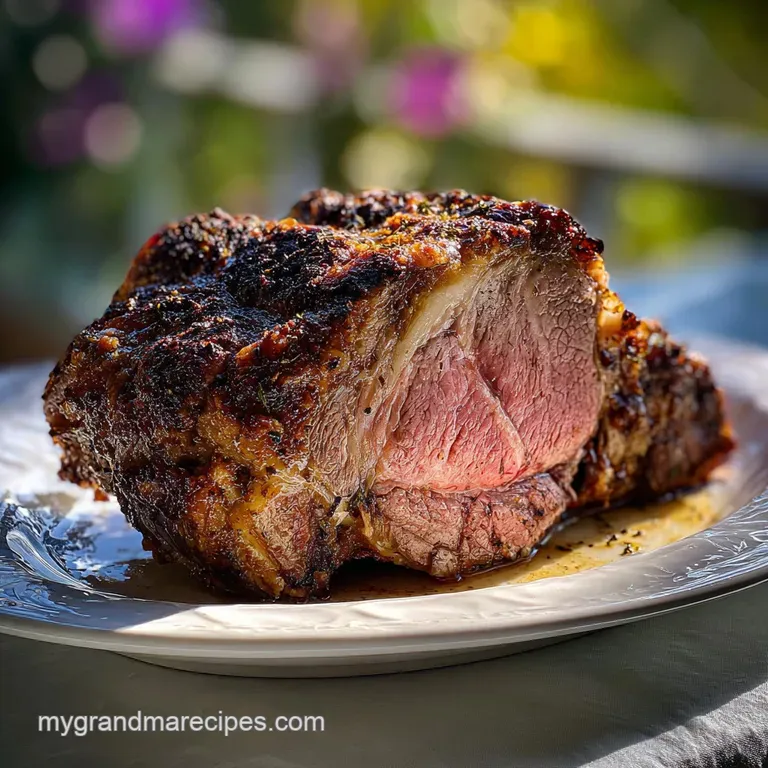
Snip the butcher's twine and remove the bones (save these for a Beef Vegetable Soup Recipe later!). Slice the meat against the grain into 1 inch thick slabs. The center should be a perfect, uniform pink.
Fixing Common Cooking Errors
One of the biggest scares is seeing the internal temperature stall. Don't panic! This is just the moisture evaporating from the surface of the meat. Just keep the oven door closed and let it ride.
If you find the ends are getting too dark while the middle is still raw, you can cover just the ends with a little bit of foil to deflect the heat.
Troubleshooting Your Roast
| Problem | Root Cause | Solution |
|---|---|---|
| Grey Meat Edges | Oven temperature too high | Lower the heat to 150°C (300°F) next time and increase cook time. |
| Soggy Bottom | No roasting rack used | Use a wire rack or a bed of thick cut onions to lift the meat. |
| Bitter Sauce | Scorched garlic or wine | Don't let the shallots turn black; deglaze with broth immediately if they darken. |
Common Mistakes Checklist
- ✓ Never cook a roast straight from the fridge; let it sit out for 2 hours to take the chill off.
- ✓ Don't skip the rest period; the fibers need time to relax so the juices don't run out.
- ✓ Avoid using a "boneless" roast if you can; the bones act as an insulator and provide more flavor.
- ✓ Pat the meat bone dry before adding the butter; otherwise, the fat will just slide right off.
- ✓ Use a meat thermometer with a probe that stays in the oven so you don't have to keep opening the door.
This reminds me of making a Pot Roast recipe in the slow cooker the principles of low heat and moisture are similar, but here we want that dry, over high heat finish to create the classic steakhouse crust.
Simple Flavor and Diet Swaps
If you aren't a fan of rosemary, you can easily switch things up. This prime rib recipe is very forgiving as long as you keep the fat and salt ratios the same. Some people love adding a tablespoon of horseradish to the butter rub for a bit of a kick, which is a very old school way of doing things.
| Original Ingredient | Substitute | Why It Works |
|---|---|---|
| Unsalted Butter | Ghee (Clarified Butter) | Higher smoke point; great for the final over high heat sear. |
| Dry Red Wine | Pomegranate Juice | Adds acidity and depth without the alcohol. Note: Slightly sweeter. |
| Beef Bone Broth | Mushroom Broth | Provides an earthy umami flavor that complements the beef well. |
If you are looking for a dairy-free herb rub, simply swap the butter for a high-quality olive oil or avocado oil. It won't be as thick of a crust, but it will still carry the flavors of the garlic and herbs perfectly into the meat.
Storing and Warming Your Roast
Leftover prime rib is almost better the next day if you treat it right. Whatever you do, do not put it in the microwave! It will turn your beautiful medium rare meat into a rubbery, grey mess. Instead, slice the cold meat and place it in a baking dish with a few tablespoons of the leftover jus or broth.
Cover tightly with foil and warm it in a 120°C (250°F) oven for about 15 minutes.
- Fridge: Keep in an airtight container for up to 4 days.
- Freezer: You can freeze sliced prime rib for up to 2 months. Thaw it in the fridge overnight before reheating.
- Zero Waste: Use the leftover bones and any fatty trimmings to make a rich stock. This is the perfect base for a Braised Cabbage with recipe or a hearty stew.
Side Dishes for Beef Dinners
In our house, we always serve this with something that can soak up that delicious red wine jus. A big bowl of mashed potatoes with plenty of butter is the traditional choice, but a crusty loaf of bread works just as well.
You want something green to cut through the richness, like roasted Brussels sprouts or a simple salad.
If you want a truly classic experience, serve it alongside a crisp Coleslaw Recipe That. The vinegar in the slaw acts as a palate cleanser between those rich, fatty bites of beef. Honestly, don't even bother with fancy "fusion" sides stick to the basics that let the meat be the star of the show.
If You Want X, Do Y
- If you want a thicker sauce: Whisk 1 tsp of cornstarch into a little cold water and stir it into the simmering jus at the very end.
- If you want a more pungent crust: Add 2 tbsp of prepared horseradish to the compound butter before rubbing the meat.
- If you want to save time: Skip the 24 hour dry brine and just salt the meat heavily 2 hours before roasting at room temperature.
Right then, you're all set to make a roast that will have your family talking for years. Just remember: trust your thermometer, be patient with the rest time, and don't forget to save those bones for soup! Happy roasting!
Very High in Sodium
1560 mg mg of sodium per serving (68% of daily value)
The American Heart Association recommends limiting sodium intake to about 2,300mg per day for most adults. This recipe exceeds that limit.
Tips to Reduce Sodium in Your Prime Rib Roast
-
Low-Sodium Broth-30%
Replace the regular beef bone broth with a low-sodium or sodium free version. This can significantly reduce the overall sodium content without sacrificing flavor.
-
Reduce Salt-25%
Cut back on the amount of coarse kosher salt used. Try reducing it by half (1 tbsp) to start. You can always add more at the end if needed, but it's best to err on the side of less sodium.
-
Sodium Free Wine-10%
Check the sodium content of your dry red wine and ensure it's either sodium free or naturally has very low sodium. Some wines can surprisingly contain added sodium.
-
Herb Power
Maximize the flavor impact of fresh herbs like rosemary and thyme. These add complexity and depth without any sodium. Use more, not less!
Recipe FAQs
What is the best method to cook a prime rib?
The classic slow roast method is best for prime rib. This technique uses low, gentle heat to cook the meat evenly from edge to edge, resulting in a tender, juicy roast with a beautiful crust. It's a balance of patience and precision.
What is the 500 rule for prime rib roast?
The 500 rule involves searing the roast at 500°F for a short period, then reducing the heat. This method is designed to create a quick sear and cook the roast faster. However, it often results in a larger grey band of overcooked meat around the edges compared to slower methods.
What is the secret of cooking a prime rib roast?
Patience and using a reliable meat thermometer are the biggest secrets. Letting the roast cook low and slow allows enzymes to break down tissues for tenderness, and resting the meat is crucial for juicy results. If you mastered the sensory doneness cues here, apply them to our Tomato Soup Recipe: Roasted & Creamy in 1 Hour 5 Minutes for perfect results.
How long do you cook prime rib per pound?
For a medium rare prime rib, plan for approximately 30 minutes per pound at 325°F. This is a guideline, and an internal meat thermometer is essential for accuracy. Always pull the roast when it reaches 118°F for medium rare, as it will continue to cook while resting.
Can I use a reverse sear for prime rib?
Yes, a reverse sear is an excellent method for prime rib. It involves cooking the roast at a very low temperature in the oven first, then finishing with a high heat sear. This results in an incredibly evenly cooked interior and a fantastic crust, similar to the principles in developing a Homemade Gravy Recipe: Velvety Finish.
What internal temperature should prime rib reach?
Pull the prime rib from the oven when it reaches an internal temperature of 118°F (48°C) for medium rare. After resting, the temperature will rise to about 130°F (54°C). For medium, aim to pull at 125°F (52°C) and let it rest to 135°F (57°C).
How important is resting prime rib after cooking?
Resting is absolutely critical for a juicy prime rib. It allows the muscle fibers to relax and reabsorb the juices, preventing them from spilling out when you slice into the meat. Aim for at least 20-30 minutes of rest time, loosely tented with foil.
Prime Rib Recipe
Ingredients:
Instructions:
Nutrition Facts:
| Calories | 842 kcal |
|---|---|
| Protein | 56 g |
| Fat | 64 g |
| Carbs | 2.4 g |
| Fiber | 0.6 g |
| Sugar | 0.5 g |
| Sodium | 1560 mg |
